
WHO IS WHO – Perparim Rama: The British Architect Who “Defended” Pristina from Kurti
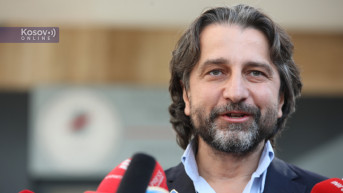
In the tense finale of Kosovo’s local elections, the Self-Determination Movement suffered defeat “where it hurts the most” – in Pristina. The victory once again went to the British architect and former student, Perparim Rama. After the results were announced, Rama declared that in Pristina, “democratic culture triumphed over the cult of the individual.”
The mayoral race in Pristina was one of the tightest contests of this year’s local elections. The first round, held on October 12, showed a razor-thin margin between Perparim Rama of the Democratic League of Kosovo (LDK) and Hajrulla Çeku of Self-Determination, separated by only a few hundred votes. In the second round, Rama defeated his opponent, winning 51.54% of the vote.
During the campaign, Rama accused Kosovo’s caretaker Prime Minister and Self-Determination leader Albin Kurti on Facebook of using state investments as an instrument of electoral pressure—“buying” citizens’ goodwill with public money.
He emphasized that, as mayor of Pristina, he would not remain silent in the face of an “autocratic mentality that divides citizens into ‘ours’ and ‘theirs.’”
He also condemned Kurti’s statement at a campaign rally in Pristina as an open threat to democracy and to the people of Kosovo, stressing that public funds do not belong to the prime minister or any political party, but to the people of Kosovo.
Following his victory, he stated that citizens had chosen cooperation over blockade and democratic culture over the cult of personality.
Professional Career
Before entering politics, Rama worked as an architect and urban planner. His projects include residential and commercial buildings, hotels, and urban development plans in several countries. He worked in England, where he studied architecture, as well as in the U.S., Switzerland, the Czech Republic, and Albania.
In 2012, Rama represented Kosovo at the Venice Architecture Biennale with the project Filigree Maker—Kosovo’s first participation in the event.
He is known for his leading role in spatial planning for the London 2012 Olympic Games, his work on Doha’s urban vision (the capital of Qatar), and for projects in New York, Dublin, Basel, Prague, and even Damascus, Syria.
The Kosovo War
CNN reported on Rama several years before he entered politics. He told their journalists that in 1992, at age 16, while visiting relatives in the United Kingdom, he decided to apply for asylum there, claiming that the situation in Kosovo was deteriorating and that Serbian paramilitary and police units were recruiting Albanian youth to fight against Croats, Slovenians, or Muslims in Bosnia and Herzegovina.
Seven years later, during NATO’s bombing of the Federal Republic of Yugoslavia, he was working in New York for an architectural firm. He told reporters that he had lost contact with his family until, two months later, his younger sister called to tell him that they had safely reached the Macedonian border.
At that time, the United States opened its borders to 20,000 refugees—Rama’s family among them.
“My sister’s phone call stopped me from returning to Kosovo to fight,” Rama told CNN.
After the war ended, his parents decided to return to Kosovo, and Rama publicly thanked the British government for its hospitality.
“I am very grateful to the British government for allowing me to stay there during the Kosovo war,” he said.
Political Career
As a candidate of the Democratic League of Kosovo (LDK), Rama was elected mayor of Pristina on December 7, 2021. During his campaign, he promoted a vision of Pristina as a “green city,” prioritizing pedestrians, public and alternative transport, reducing car dominance, and expanding green areas. He also pledged to address parking issues, build a network of family medical centers, renovate schools, improve waste management and recycling, and enhance road safety.
“I will be a mayor remembered for bold, large-scale infrastructure projects that will develop Pristina for decades to come,” Rama declared.
Museum of Reconciliation Instead of the Christ the Savior Church
As a mayoral candidate, Rama stated in an interview with Klan Kosova that the Church of Christ the Savior in central Pristina could play “a positive role in the future.”
He noted that many still see the church as a symbol of aggression, and that until the Serbian people acknowledge the harm caused and express an apology, this perception will remain deeply ingrained in the collective consciousness.
He proposed that the church be transformed into a space for cultural and national reconciliation—or turned into a Museum of Reconciliation.
Key to the City for Djukanovic and Kandic
In April 2025, Rama awarded the Key to the City to human rights activist Natasa Kandic for “her role in documenting Serbian crimes during the war in Kosovo.” He said this symbolic act was meant to thank her for “protecting truth and justice.”
Previously, in 2022, Rama presented the Key to the City to then–President of Montenegro Milo Djukanovic, expressing the gratitude of the citizens of Pristina and the people of Kosovo “for everything he has done for this country throughout its history.”
He said it was a great honor to meet Djukanovic and thanked him for helping the people of Kosovo during difficult times and for supporting Kosovo’s independence and prosperity.
Biography
Perparim Rama was born on January 20, 1976, in Pristina. His father, Kadriush Rama, was a painter and professor at the Academy of Arts; his mother, Nazmije Rama, was a teacher; and his grandfather, Feriz Hoxha, was a geography teacher and professor.
At the age of 16 (in 1992), he moved to the United Kingdom, where he completed his architectural studies.
He is married to Kristal Ivezaj, with whom he has three children. Kristal was born in the United States and comes from an Albanian highland family. She left America and moved to Pristina for Rama.

comments