
WHO IS WHO – William Walker: Author of the controversial Racak Report and a great friend of Kosovo
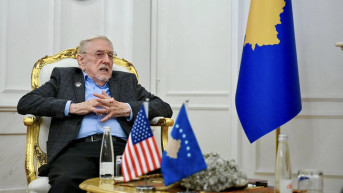
Once again this year, the commemoration of the Racak anniversary did not pass without the presence of William Walker, former head of the OSCE Verification Mission— the man who, on the very day when 45 Albanians were killed, on 15 January 1999, declared that it was a massacre carried out by Yugoslav forces against Albanian civilians. His claim would later become the basis for the bombing of the Federal Republic of Yugoslavia a few months afterward. For this reason, he is warmly welcomed in Kosovo, regarded as a sincere friend, and credited with being owed eternal gratitude.
The clash between Yugoslav forces and members of the KLA in the village of Racak, in the municipality of Stimlje—where commemorations are still held today—was used as the pretext for the NATO bombing campaign, which lasted 78 days. The basis for this act of aggression, carried out without a decision of the United Nations Security Council, was the report of the OSCE Verification Mission, headed precisely by William Walker.
The report stated that civilians had been killed in Racak, despite the Yugoslav side presenting numerous pieces of evidence indicating otherwise. For Pristina and Walker it was a “massacre”; for Belgrade, an “operation against KLA terrorists.”
Walker reached his conclusion only a few hours after entering Racak—before investigative authorities. Walker was allowed to enter, but Serbian investigators and the prosecutorial team were not.
That day in Racak, he told journalists that he had “seen all the hallmarks of a massacre… many bodies, many men killed by gunfire from different directions, mostly at close range. It is a gruesome, horrifying sight.”
In front of numerous cameras, he telephoned NATO’s Supreme Allied Commander Europe, Wesley Clark, and told him: “This is a massacre. I am standing here and I see bodies.”
That it was not a massacre is still asserted today by former investigating judge from Pristina, Danica Marinkovic, who at the time presented evidence on Racak and testified before the Hague Tribunal. She preserved all the documentation on the case, even though she herself barely escaped alive from Pristina.
She has clearly stated that William Walker “shamelessly speaks about something he himself knows was not a massacre of innocent Albanian civilians in Racak.”
Five years ago, she said:
“Walker’s lies are short-lived. Imagine, he is appearing again now, and his associate Helena Ranta admitted what really happened in Racak—her conscience awakened. Walker should be tried. I regret that I never met him to tell him everything I have to say. I did meet his deputy, John Drenkijevich, and he prevented me from entering Racak and threatened me with The Hague. I knew they were hiding something.”
Nevertheless, documented in the report as a massacre, Racak, as diplomat Dragan Bisenic writes, became the decisive event for the U.S. administration and allied Western governments to launch military action against the Serbs, as it was seen as a clear sign that the worst from Bosnia would be repeated:
“Walker, whom the State Department viewed as a ‘freelancer with obvious sympathies for Kosovars,’ did not even seek instructions from Washington. He immediately convened an emotional press conference and described the events in Racak as a crime against humanity. Madeleine Albright also understood the value of what had happened. If there were people in the administration who believed Walker had gone too far, she was not among them. She picked up the phone and called him: ‘Bill, you’re doing a great job. You were right about Racak.’”
Noam Chomsky also wrote about Walker in his work The New Humanitarian Militarism – Lessons from Kosovo. Writing about Walker and Racak, he noted that Walker was “a man whose name is also associated with the bloody events in El Salvador in 1989, where, as U.S. ambassador, he oversaw American aid that enabled local authorities to murder six leading intellectuals in the country, a Jesuit priest, his housekeeper, and her daughter.”
Nevertheless, no one listened to the claims of the Serbian authorities. Walker stood by his position. For him, as he himself stated, the event in Racak was a historic moment that changed the fate of the Balkans.
Finnish expert Helena Ranta also stated that the autopsy results indicated that the victims had been executed. However, two years later, in a scientific publication released in Finland, a group of forensic medicine experts analyzed all the documentation and reached an unequivocal conclusion that Ranta’s report had not been accurate.
She herself later confirmed that attempts had been made to influence the findings of the Finnish pathologists’ team—not only by Walker, but also by other diplomatic circles and representatives of Serbia.
“Walker wanted my findings and those of my team to align more closely with his report, to name a culprit for Racak. I could not do that because I am a scientist, not a politician, diplomat, or anything else. It is true that he wanted me to confirm his findings, but I could not do so,” Ranta said in an interview with Insajder in 2017.
At the time, addressing media reports that Walker had thrown objects at her before the press conference at which the investigation results were presented, she said that an incident had indeed occurred, that Walker had insisted on naming a perpetrator for the killings, and that he had broken pencils when she refused.
The Book “Racak: A History of a War Crime”
The event that led to the suffering and dismemberment of a country, the loss of lives, and the destruction of infrastructure appears to have so “inspired” Walker that he wrote a book about it, Racak: A History of a War Crime.
He promoted the book in Kosovo, where it was published by the Dukagjini publishing house, and in presenting it to the public said that those were two or three of the most important days of his life.
“It does not occur to me that what happened in Racak affected a change in something as vast as the entire Balkans. I am here to try to persuade people to read a book about some of the things that happened during 1998–1999,” Walker said.
“An Exceptional Man and a Great Friend of Kosovo”
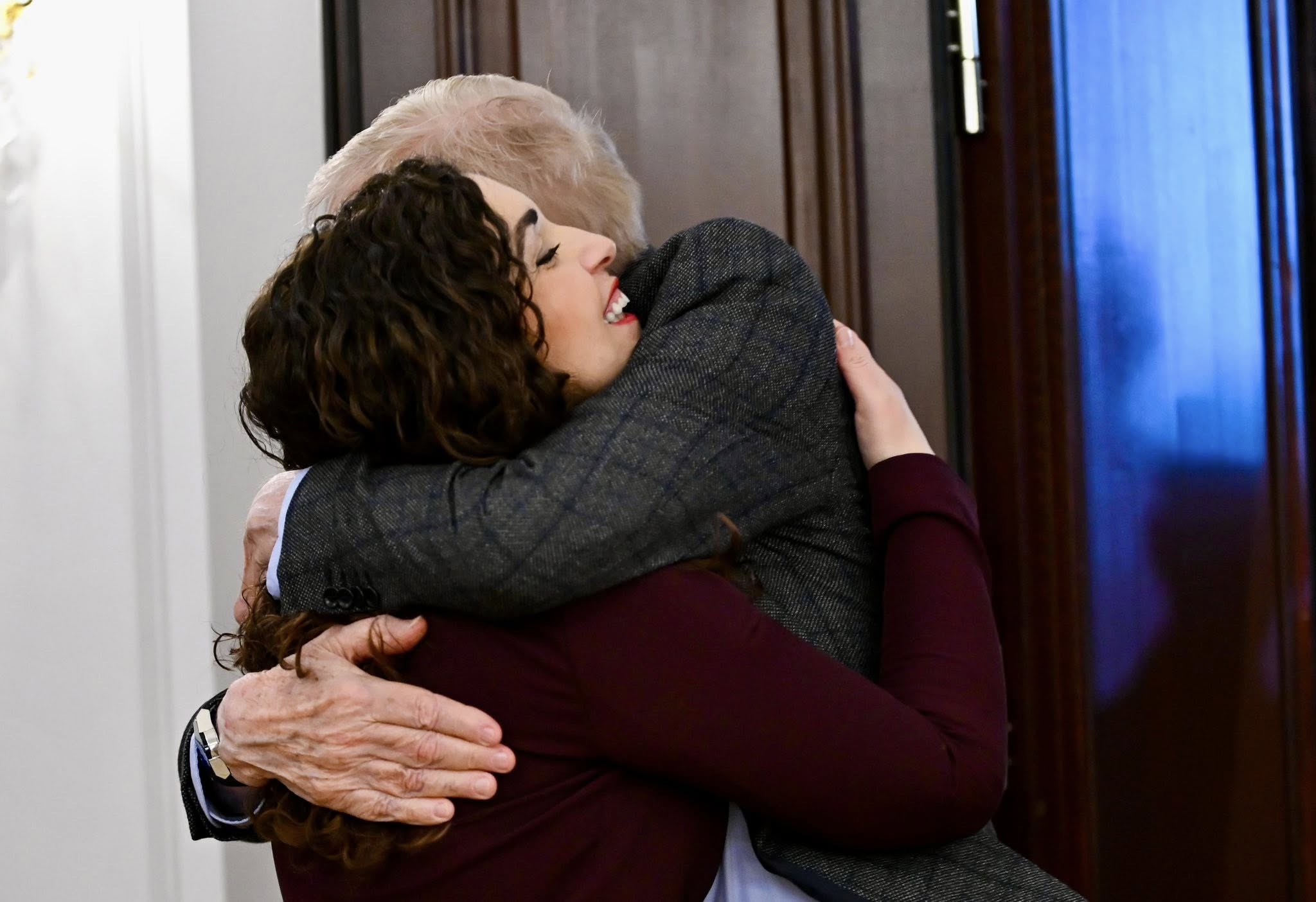
He is a welcome guest in Pristina, where there is hardly anyone who does not know him. Walker’s meetings with Kosovo officials are always cordial, and they do not miss the opportunity to pay tribute to what he did and to express “eternal gratitude.”
“An exceptional man and a great friend of Kosovo,” “a man who in Kosovo’s darkest moments spoke and defended the truth,” “a voice that turned pain into a call for justice”—these are the epithets with which Kosovo officials once again welcomed Walker in Pristina this year.
In October 2024, Kosovo President Vjosa Osmani awarded him the Order of Freedom and the Order of Independence in Washington.
She stated at the time that Walker and the other award recipients—Ambassador Daniel Fried, Josh Black, and Mira Ricardel, as well as Congressman Tom Lantos posthumously—“stood with us, shoulder to shoulder, in the efforts for peace, freedom, and independence, and built a legacy that will forever be respected by the people of Kosovo.”
“Persona Non Grata” in the FRY, Supporter of a “Greater Albania,” and Opponent of Trials of KLA Leaders
Walker was born on 1 June 1935 in Kearny, New Jersey. He graduated in political science and spent three years at a military academy. He has been involved in diplomacy since 1961, spending most of his career in Latin and Central America. He served in Honduras, Brazil, Peru, El Salvador, Bolivia, and elsewhere.
On 17 October 1998, OSCE Chairman Bronisław Geremek appointed him head of the Kosovo Verification Mission. Prior to that, he served as Special Envoy of the UN Secretary-General and head of the United Nations Transitional Administration for Eastern Slavonia, Baranja, and Western Sirmium in Croatia.
Just days after Racak and his claims of a massacre, the Government of the Federal Republic of Yugoslavia decided to declare him persona non grata. However, a week later, at the request of the European Union and following the intervention of the President and Prime Minister of the Russian Federation, the FRY government led by Momir Bulatovic froze that decision.
Walker said at the time that he was surprised by such a decision.
Respected among Albanians, he does not hide his support for the idea of a “Greater Albania.”
“The aim of this project I am working on is for all Albanians— in Kosovo, in the diaspora, and in Albania. I am working on a joint project for their unification. Albanians worldwide were united in the 1990s exclusively for the purpose of liberating Kosovo. I was with them when they declared independence. Albanians won and came together to celebrate. Now is the time after independence, for the final step, for us all to be together, to realize this achievement,” Walker said in 2017, as reported by the media at the time.
He testified against former FRY President Slobodan Milosevic in The Hague. On the other hand, he does not conceal his support for KLA leaders in The Hague.
During his visit to Kosovo last year, he stated that “the way the accused former KLA leaders are being treated does not constitute justice” and that such a trial is a disgrace to international justice.
He also objected to the length of the investigations, the criminal proceedings themselves, and the fact that the accused remain in detention.
“I have always been a great admirer of the Hague court. I went there to testify against Miloševic. I feel very strongly that what happened here should be revealed to the world again, and a trial is the best way to do that. However, the process imposed on Hashim Thaçi, Jakup Krasniqi, and Kadri Veseli is not justice. In my opinion, it is injustice. To have an investigation that lasts almost 10 years, followed by a prosecution lasting more than three years, and to keep the accused in detention with very limited access to the outside world—this, to me, is a crime,” Walker said last January.
Back in 2020, he said he had not seen evidence against former KLA leader Hashim Thaçi and others, stating that “Milosevic’s ministers should be tried.”
The importance Pristina attaches to preserving the narrative of the Racak massacre is also reflected in the fact that denying it is punishable. This was most vividly experienced by Ivan Todosijevic, former president of the Provisional Authority of the municipality of Zvecan and a former minister in the Kosovo government, who in 2022 was sentenced to one year in prison for “inciting hatred, national, racial, religious, or ethnic division or intolerance” due to his statement that the Racak massacre was fabricated. However, a year later, the Supreme Court in Pristina acquitted him of all charges.
Meanwhile, at the end of last year, the Kosovo Special Prosecution filed an indictment, with a proposal for trial in absentia, against 21 individuals for the criminal offense of “war crimes against the civilian population” in the village of Racak.


0 comments