
India Returns to the Balkans
Written by: Zeljko Sajn for Kosovo Online
Following Serbia and North Macedonia, New Delhi is strengthening its political presence in the region at a time when a new multipolar order is taking shape.
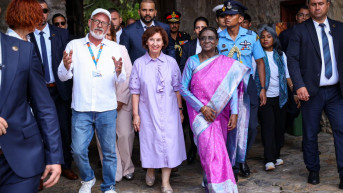
The visit of the President of the Republic of India, Droupadi Murmu, to North Macedonia represents far more than a ceremonial state occasion. After Serbia, North Macedonia has become the second country that emerged from the dissolution of the former Yugoslavia to be visited by an Indian president, demonstrating that New Delhi once again considers the Western Balkans an important component of its foreign policy strategy.
The visit comes at a time of profound changes in the international order. The war in Ukraine, conflicts in the Middle East, growing tensions in the Indo-Pacific, and the increasingly pronounced fragmentation of the world have contributed to the emergence of new centers of power. Today, India, as one of the world's largest economies and one of the leading members of BRICS, is increasingly regarded as one of the key actors in the emerging multipolar world.
Unlike the bloc divisions of the Cold War era, New Delhi pursues a policy of strategic autonomy. It maintains close relations with the United States, develops cooperation with the European Union, while at the same time preserving its traditional partnership with Russia and deepening ties with countries of the Global South. It is precisely this policy that has enabled India to become one of the most influential international actors today.
Against this backdrop, its choice of the Balkans is no coincidence. The region once again finds itself at the crossroads of the interests of major powers, while the countries of the Western Balkans seek to attract investment, develop infrastructure, and strengthen their international standing. India sees this as an opportunity for long-term political, economic, technological, and cultural cooperation.
It is particularly symbolic that, after Serbia, North Macedonia became the next destination for the President of India. In doing so, New Delhi signaled its intention to develop relations individually with the countries that emerged from the dissolution of the former Yugoslavia, while also reviving historical ties dating back to the era of the Non-Aligned Movement.
The most significant message of the visit, however, was conveyed not only through the official talks between the two presidents, but through its symbolism.
President Droupadi Murmu presented Skopje with a bust of Mahatma Gandhi. In the city where Saint Mother Teresa was born, such a gift carries a meaning that transcends diplomatic protocol. Gandhi, the symbol of non-violence and the struggle for freedom, and Mother Teresa, who fulfilled her life's mission in India and became a universal symbol of humanitarianism, have connected the two countries in a way that no international agreement could achieve.
This gesture also carries a deeper historical message. As early as the time of Jawaharlal Nehru, India was one of the founders of the Non-Aligned Movement together with Josip Broz Tito, Gamal Abdel Nasser, and other statesmen. Today, as a multipolar world takes shape, New Delhi is once again affirming the principles that have long been central to its foreign policy—strategic autonomy, dialogue, respect for the sovereignty and territorial integrity of states, and the peaceful settlement of international disputes.
This is precisely where the special symbolism of the visit lies. Gandhi represents the philosophy of non-violence, Nehru embodies the statesman's vision of international cooperation, and Mother Teresa symbolizes universal humanity. Their legacy continues to connect India and the Balkans through values that transcend politics—peace, dialogue, human dignity, and mutual respect.
During the talks, the two presidents reaffirmed their readiness to strengthen cooperation in the fields of information technology, artificial intelligence, pharmaceuticals, agriculture, tourism, education, healthcare, and investment. They also exchanged views on current international issues, emphasizing the importance of respect for international law, the territorial integrity and sovereignty of states, as well as the need for the peaceful resolution of disputes and reform of the United Nations.
Following its engagement with Serbia and North Macedonia, it has become evident that India is not seeking short-term political gains in the Western Balkans. Its strategy is based on a long-term presence through economic cooperation, culture, and diplomacy, drawing upon historical ties established during the era of the Non-Aligned Movement while adapting them to the challenges of the 21st century.
The significance of this visit is further underscored by the fact that India is today not only the world's most populous country and one of the fastest-growing economies, but also one of the key actors within BRICS and a candidate for a permanent seat on the United Nations Security Council. As a country striving to build bridges between the West, Russia, and the countries of the Global South, India bases its international role on the principles of strategic autonomy, respect for the sovereignty and territorial integrity of states, and the peaceful settlement of disputes. For this reason, its growing engagement in the Western Balkans forms part of a broader foreign policy strategy aimed at establishing itself in the region not only as an economic partner, but also as an important geopolitical interlocutor at a time when a new multipolar international order is rapidly taking shape.
At a time when the world is searching for a new balance among the major powers, India seeks to demonstrate that its international influence will rest not only on economic and military strength, but also on the civilizational legacy embodied by Mahatma Gandhi, Jawaharlal Nehru, and Mother Teresa. It is precisely for this reason that the bust of Mahatma Gandhi presented to Skopje represents far more than a state gift—it symbolizes India's return to the Balkans and conveys the message that enduring bridges between nations are built through culture, history, mutual respect, and the universal values of peace and humanity.
0 comments