
Why Belgrade should host the Trump-Putin meeting
Written for Kosovo Online by Srdjan Garcevic, founder of The Nutshell Times
The Serbian president, Aleksandar Vučić, recently suggested that Serbia should host the meeting between Vladimir Putin and Donald Trump, which would hopefully lead to the end of the war in Ukraine. While that might have surprised some, it is not only a practical but also a poetic proposal.
That is not only because both Putin and Trump are very popular in Serbia—a rarity for Europe, as Serbs were the nation that was most enthusiastic about Trump and believed in his victory throughout the campaign.
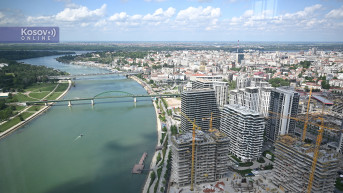
Belgrade is the only European city apart from Istanbul, where you can fly to both New York City and Moscow. Serbia's wise decision not to impose punitive sanctions on Russia while supporting Ukraine's sovereignty and strengthening the relationship with the West (and especially the US) not only positioned the country as a place where both sides can be heard but also showed the benefits of a fair and open approach to international relations. Serbia has been a refuge for many well-educated Russians and Ukrainians feeling the destruction and aiming to maintain their pre-war lives but also managed to straighten its economy - set to be one of the few to show strong growth in Europe in 2025 - by maintaining impartiality in its dealings all global players. While Switzerland - who also offered to host the meeting - has a long reputation for neutrality as well as cozy cities below the Alps beloved by world leaders, its decision to sanction Russia placed it firmly on one side of the conflict. Moreover, while the genteel lake cities below the Alps are wonderful to spend time in, they reflect the global reality much less than the rapidly (and somewhat painfully) growing Belgrade, with its ties with China, Russia, the US, and the EU.
More importantly, Serbia's shrewd and inclusive diplomacy earned it a reputation for punching above its weight. In the past few years, Belgrade hosted not only major global dignitaries such as Xi Jinping, Olaf Scholz and Emmanuel Macron, but also the meeting of the Non-Aligned Movement and the Serbia-Africa Dignity conference just last December. Belgrade can also be trusted to provide necessary secrecy: it was here that some of the Afghanistan peace talks between the former and current government were held in secret, which was only revealed after the Taliban takeover in August 2021.
This is just par for the historic course as Serbia has always been where the balance of Eastern and Western global powers was decided. A beautiful baroque chapel in Sremski Karlovci, named after our Lady of Peace, marks the spot where the 1699 treaty of Karlowitz ended the Great Turkish War between the Ottomans and the Holy Alliance and allowed peace and development in much of central Europe. In the coming decades, Požarevac (in 1718) and Belgrade (1739) were where the balance of power was tweaked and finally settled until the 19th century. All of these changes in the borders between the two great powers were deeply felt in Serbia: not only were the key battles to ensure them waged on Serbian-populated territory, and many of the warriors, especially on the Habsburg side, were ethnic Serbs, but they promoted great migrations of Serbs from the Ottoman occupied lands, which were left mostly deserted. Serbs went from Kosovo, Metohija, and Šumadija - some all the way to the present-day Ukraine, where they settled in Novoserbia (around Kropyvnytskyi) and Slavo-Serbia (around Bakhmut). These historical experiences and the vast tragedies Serbs suffered in World War I and World War II have taught us the importance of great powers getting along.
For Trump and Putin to meet in Belgrade, the first European capital to be aerial bombed after WWII, would also be a symbolic gesture towards putting an end to the chaos that the dissolution of Yugoslavia, and especially the Kosovo War, created in international relations and law. Global pundits across the board, from Noam Chomsky and Jefferey Sachs to John Mearsheimer and the late Henry Kissinger, warned about the precedents set by the NATO bombing of Yugoslavia and the 2008 illegal declaration of independence by the Priština separatists and how denial of sovereignty undermines the global security architecture. Unfortunately, the political forces in the West who opposed and undermined Trump's pragmatic pacifism also ignored the issues they caused, leading to destabilization across the world, from Ukraine through the Middle East to Taiwan. Hopefully, Serbia, a country that started rising from the ashes due to its neutrality, can be where peace and prosperity return to the world after all the tragic destruction of the past four years.

0 comments