
Why haven't the EU's "punitive measures" had an effect on the authorities in Pristina?
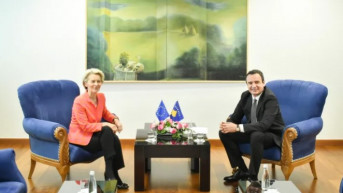
"After more than a year, it is clear that the 'anger' of officials in Brussels towards the Kosovo authorities, for provoking dangerous tensions in the north, was too mild and unconvincing. Many even wonder if the measures existed at all."
Prepared by: Milos Garic
Summarizing his impressions at the end of his four-year mandate in Kosovo, EU Office Chief Tomas Szunyog stated about ten days ago that the events in the north during the past year were his greatest challenge, adding that due to the complexity of the situation, the EU had to react by imposing 'punitive measures' on Pristina.
Despite the expectations of Kosovo officials, and Albin Kurti in particular, that the measures would be lifted several months ago, Szunyog said this would happen when there is consensus among all 27 member states.
The head of the EU mission in Pristina recalled that last year saw an extremely serious crisis in northern Kosovo and that the EU had to respond. The declaration of June 3, 2023, was adopted by 27 countries, and its lifting requires the agreement of all.
In recent weeks, talks have been held in Brussels on this issue, but the key fact is that the 'punitive measures' have not produced concrete results, and the authorities in Pristina have not been particularly troubled by them over the past year. Why?
As stated several times by the EU, the measures were supposed to involve not inviting Kosovo to high-level meetings, suspending bilateral visits, and halting funds planned through the Investment Framework and IPA fund. How and to what extent this was implemented is best known by the services in Brussels. In any case, the government led by Albin Kurti has not complied with the European Union's demands to calm tensions, call new local elections, and reduce the use of police force in northern Kosovo, in predominantly Serbian areas.
Futile Hopes
Political analyst Milan Vukovic from the Center for Social Stability says that when the European Union decided to introduce punitive measures against Pristina in June last year, many hoped this would lead to at least a slight shift in European policy towards Serbia.
"Given that the European Union, as a mediator in the dialogue between Belgrade and Pristina, has shown itself to be very biased and almost supportive of Albin Kurti and the so-called Kosovo state, it was a shift from previously purely rhetorical condemnations of the numerous unilateral measures by the provisional institutions in Pristina that perpetually worsened the position and survival of the Serbian people in Kosovo and Metohija. However, Pristina's rejection of the demands to de-escalate violence in northern Kosovo, which arose after Albanian mayors forcibly took power in four northern Kosovo municipalities with a Serbian majority, finally led to the condemnation of Albin Kurti's clearly anti-Serbian policy being raised from verbal to a higher, more institutionalized level. Today, more than a year after the introduction of these punitive measures, European officials are increasingly vocal about the need to lift them as soon as possible. When we look at the situation on the ground, we see that they have not brought any change, nor have the Pristina authorities really suffered any repercussions, which should be one of the goals of these types of sanctions," Vukovic points out for Context.
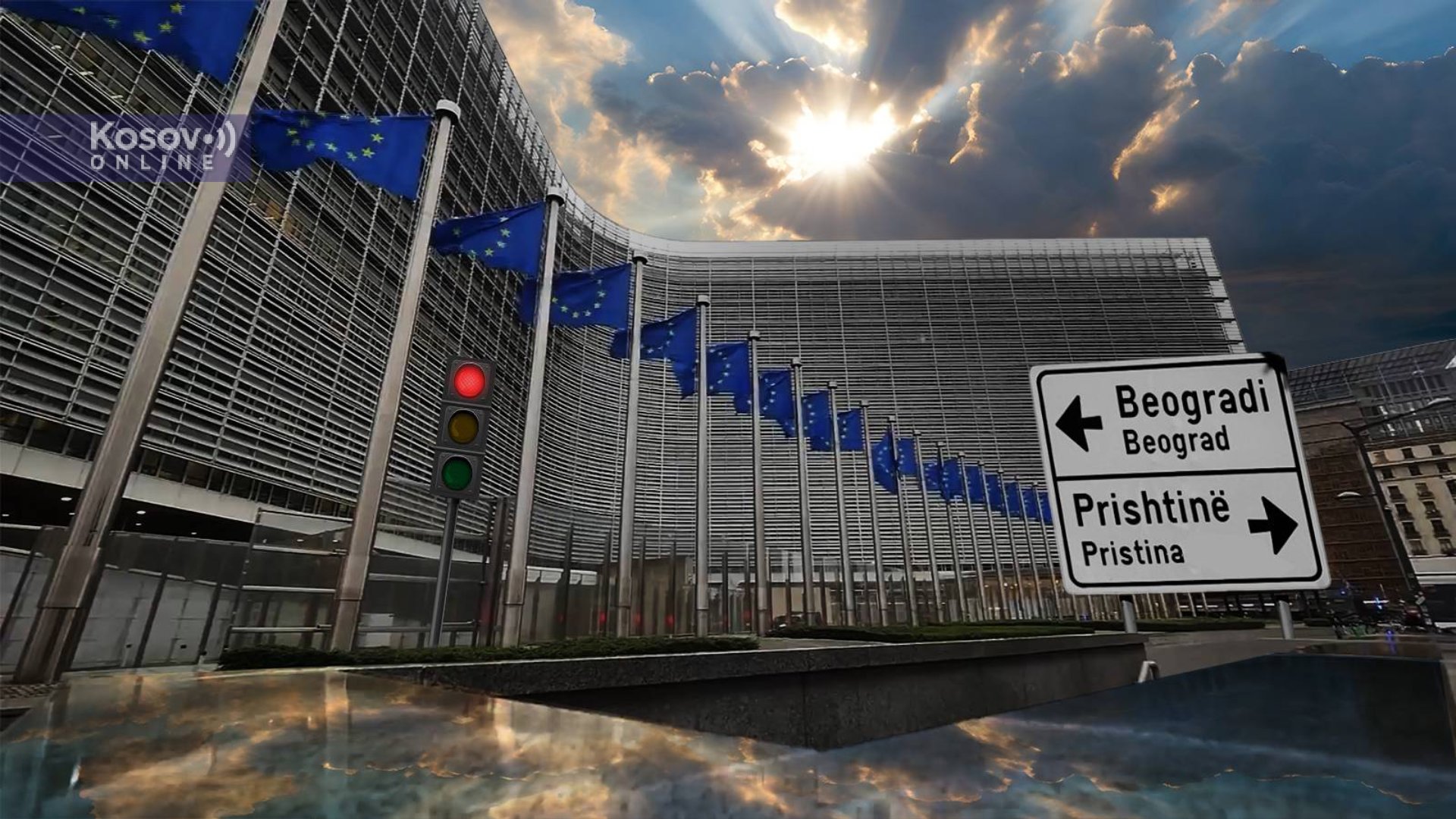
He notes that despite the EU's 'punitive measures,' the authorities in Pristina continued to make unilateral decisions to the detriment of Serbs.
"The measures that included the temporary suspension of the Stabilization and Association Agreement, freezing European funds for the so-called Kosovo state, and the inability of Kosovo representatives to attend meetings with European officials unless related to dialogue, practically remained dead letters on paper. Albin Kurti, Vjosa Osmani, and other Pristina representatives continued to appear at numerous regional and international gatherings and hold high-level meetings with ambassadors and other European officials. Even 'under sanction,' Kurti has meanwhile implemented a series of scandalous unilateral measures, such as banning the entry of goods from central Serbia into Kosovo, abolishing the dinar, and militarizing the so-called Kosovo Security Forces. The EU's reaction to this was a reward in the form of introducing visa liberalization for the citizens of the so-called Kosovo and continuing to support the entry of the false Kosovo state into the Council of Europe and other international organizations. The evident discrepancy between sanctions on paper and what is happening on the ground is a clear indicator that the introduction of these punitive measures was yet another attempt by European officials to deceive the public and maintain the illusion of impartiality, while repeatedly supporting Albin Kurti and his policies of hatred, violence, and discrimination against the Serbian people that he systematically implements in Kosovo and Metohija," concludes Milan Vukovic.
Kurti Values "Greater Albania" More Than the EU
International politics and security expert Ivan Miletic notes that the European Union's measures have had no results because negotiations on the normalization of relations between Belgrade and Pristina have not progressed since the meeting in Ohrid.
"Since then, we have had a series of unsuccessful meetings and incidents on the ground, which have led the whole issue into a deadlock. Meanwhile, we have received news that the main actors in the negotiations, from the US and EU sides, are moving to new positions and that from September we will have completely new actors who will be responsible for resolving this Balkan Gordian knot on behalf of the international community. All this is happening as we approach the US elections in early November, which have the potential to change the administration in Washington and bring in a new one that could have a majority in both Congress and the Senate. If this happens, there is a high probability that we will get a new ambassador in Belgrade, as well as new representatives of various administrations in the embassy itself, which could bring a completely new dynamic to resolving defined risks in the Balkans by Washington," Miletic believes.
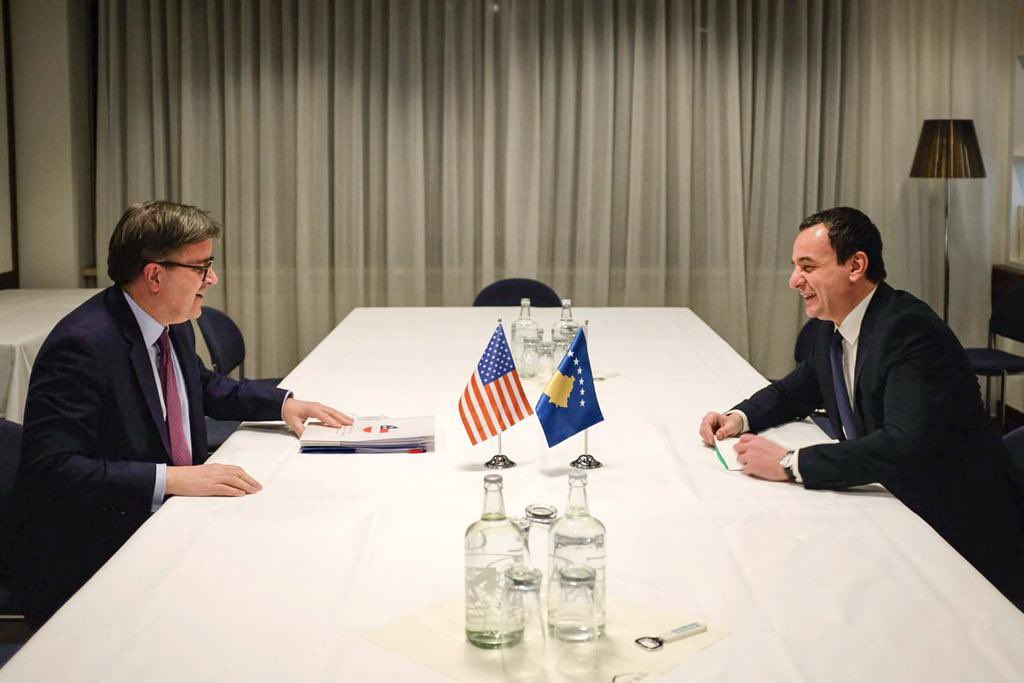
News has also arrived from Washington about the appointment of a new envoy for the Western Balkans.
"Alexander Sasa Kasanof has been selected as the Deputy Assistant Secretary for the Western Balkans, as well as for Press and Public Diplomacy in the Bureau of European and Eurasian Affairs of the State Department. From his brief biography, we see that he was a close associate of Victoria Nuland and worked in Kyiv during the Maidan events in Ukraine. We need to take all this into account to understand how it will affect us, because it does not only depend on the discussions of the administration representatives in Belgrade and Pristina on how the Balkan Gordian knot will be untied or cut, in which Kosovo and Metohija are just one layer of intertwined influences of regional and great powers. That is precisely why the mentioned punitive measures of the EU have not had any particular result, because Albin Kurti is not interested in Kosovo as part of the EU, but exclusively as the Piedmont of what he sees as the future, and that is Greater Albania. Greater Albania is Albin Kurti's main political goal and he will do everything to reach that goal. On this path, he will sacrifice the well-being of the citizens of Kosovo, if necessary, their lives, and create a general security chaos to use what he considers a historical moment to achieve his political dream," explains Miletic.
He recalls that this strategy of Albin Kurti is one he learned from his mentor and political father, Adem Demaçi, who began his struggle under the auspices of Moscow sponsors during the time of Federal Yugoslavia from Tito's era.
"From then until today, they have managed to establish the desired path and obtain the framework of the desired statehood, under the protection of NATO, which they want to incorporate into the state they wish to form in the Balkans by joining another NATO member, thus creating Greater Albania. No measures from the EU will stop them on that path, because just as they did not see their place in the Yugoslav federation, they do not see it in the EU as a broader European project. Moreover, they see, from the example of Croatia, how the EU project is bad for achieving grand ideas because it locks in the factual situation and dilutes nationalist projects by integrating smaller systems into larger ones, such as NATO and the EU. For this very reason, with the arrival of new negotiators from the US and the EU, we can expect new dynamics and risks and challenges regarding Kosovo and Metohija, as well as the need on our part to understand how to preserve the security of Serbs in Kosovo and Metohija and the national interests of Serbia in the new balance of power," concludes Miletic.

comments