
Bjelic: The future of the Open Balkan depends on its members; institutional cooperation needed between ministries
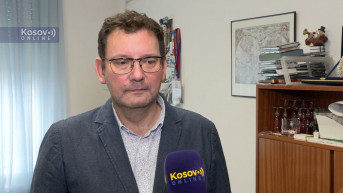
Professor at the Faculty of Economics in Belgrade, Predrag Bjelic, stated for Kosovo Online that the future of the Open Balkan Initiative depended on its member states. According to him, it is necessary to establish institutional cooperation between ministries to make the work within the Initiative more operational.
Bjelic sees the Open Balkan as the first initiative originating from the region, unlike others that are externally stimulated, however, he notes that many agreements signed within the Open Balkan are not implemented due to the lack of a common framework.
"There are many agreements in various areas, but everything needs to be put into a common framework and operationalized, depending on the top-level meetings held once or twice a year. It is necessary to establish institutional cooperation between ministries to make it much more operational. Whether this will happen is a big question. I am afraid there is some obstacle in terms of the overlapping political influences from abroad that can affect it. We saw a wine fair, which was previously organized. That is, for example, a visible side of this initiative, although I think that cooperation is more driven by companies and chambers of commerce that have good cooperation within the region than the implementation by governments", Bjelic evaluated.
The greatest achievements of the Open Balkan, he says, are measures to facilitate trade and border crossings, agreements between states on recognizing authorized economic operators initiated in CEFTA but operationalized in the Open Balkan, as well as the joint promotion of the region through events such as fairs.
He also points out that there is some overlap with CEFTA in certain aspects.
"For example, the facilitated border crossing and CEFTA's green corridors, which can be seen at the border when you arrive, as there is a separate channel for truck passage. Many things have not been operationalized, and it will now depend on these three sides and the harmonization of the relationship that CEFTA has with the Open Balkan. This is especially important for Serbia, as we know that there are different initiatives within CEFTA to further develop cooperation within the Berlin Process. The joint regional market has been inaugurated, which is also the goal of the Open Balkan. There are overlaps, so priorities for both integrations must be strictly defined", Bjelic believes.
Our interlocutor says that at one point, it was evident that Albania was politically withdrawing from this initiative, despite being, in his opinion, one of the biggest advocates of the entire process. He also emphasizes that it would be crucial for Serbia if Montenegro and Bosnia and Herzegovina joined the Open Balkan.
"These are, in fact, our most significant partners in the region. They are a part of CEFTA, and CEFTA is now somewhat unblocked; negotiations are ongoing for an agreement on resolving trade disputes, which is very important because these disputes are what hinder CEFTA. We will see whether there will be political will in the future, as political influences from the region and abroad are essential for the future of both initiatives", Bjelic says.
Our interlocutor explains that the Open Balkan emerged at a political moment when North Macedonia and Albania were blocked on the European path, and it was a regional response to that situation.
"On the other hand, since CEFTA was politically blocked due to the Kosovo-Serbia relations, it was a favorable moment for Serbia, North Macedonia, and Albania to create their own regional integration. This is, let's say, the first initiative that comes directly from the region. All these others are stimulated from the outside, and it primarily came to life politically, although its basic purpose is economic, meaning the liberalization of trade in the region. It does not have a fundamental liberalization in terms of reducing tariffs on the trade of goods and services, as is the case in CEFTA, but by some measures, it goes beyond what was agreed upon in CEFTA", the professor explains.
As he says, the Open Balkan is actually a subregional integration in which three of the seven signatories of CEFTA are involved.
"Any cooperation is welcome, and any liberalization further contributes to the development of regional trade. I believe that the initiative's drawback is that only three parties are involved, and even if more of them join, the question arises, what do we need this for when we already have CEFTA? Some strategic decisions need to be made, and coordination is required because the goal should be to establish the most liberal market in the region and join the European Union", Bjelic says.


0 comments