
Decision days for America
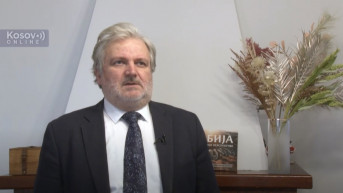
Writing for Kosovo Online: Dragan Bisenic, journalist
The crisis in the north of Kosovo has been going on for three weeks, and there is still no way out of it, even after the stay of the European and American envoys in Pristina and Belgrade, Gabriel Escobar and Miroslav Lajcak.
Lajcak and Escobar presented Kurti with a proposal from the international community with three main points - de-escalation on the ground, holding elections in the north as soon as possible and returning to dialogue and the normalization process. Escobar said that the tensions had to be calmed down immediately, which means "We hope that the mayors will not try to use those municipal buildings and that the Kosovo police will withdraw from the buildings, but also that the Serbian protesters will leave those locations." He said that it was necessary to hold new elections, and when they happened, "The Serbs should participate in them without any preconditions".
It was difficult not to notice Gabriel Escobar's dissatisfaction and anger, which he brought with him from Pristina to Belgrade, and which, one might say, we rarely had the opportunity to see on his face during the decades of Balkan diplomatic service. The American Envoy, it seems, encountered an unexpected, completely inflexible wall of rejection in the Kosovo government for all the initiatives he brought with him. Albin Kurti, one would say, does not consider the "envoy" to be a magical role that will change or soften his views. It was clear from the beginning when Kurti let his guests wait for him on such an important matter, while he enjoyed the football match. Everything else was just a variation of this attitude. Kurti sought to demonstrate that he was not at all impressed by announcements that the CSM would be made with or without him, or that he had only two days to decide how to set it up according to American demands before sanctions were imposed.
Immediately afterward, he hinted that "turning your back" on these proposals meant "turning your back on the European proposal, means turning your back on the EU, including the United Kingdom and the US." He added that "if Pristina does not want a partnership, then it will move away from the alliance with NATO, which in itself is a big consequence". If Kosovo wanted to join the process of Euro-Atlantic integration, it had to fulfill it. The question was whether it would be realized now or within a future government, said the American diplomat, and he said of Kurti that he was an "individual" who "does not have the instinct for cooperation and coordination".
A good expert on the region, Daniel Fried, stated that Kurti had managed to "damage relations with the US without any identifiable interest". "I think he made an error in judgment." He defined the sovereignty of Kosovo in such a way that he felt that he could not ask for anything but the maximum. And he had made a bad situation worse. The quarrel with the Americans harmed the interests of Kosovo in a way that I did not understand, Fried described.
Kurti, as things stand now, looks like he won't give in on all issues the way he's being asked to, and if it's meant to look like public capitulation and humiliation, then he won't give in at all. Due to his attitude "from above" towards the representatives of the American administration, he is today a unique politician in Europe, without being from the "pro-Russian camp". He twice demonstrated to the American representatives that his position is superior to theirs. He told both Ambassador Hovenier and Gabriel Escobar that he had been elected by the will of the people and that they were just bureaucrats in some apparatus. It is not seen that the demands of the US are being supported, not only by Kurti but also by President Vjosa Osmani. And she, although she undoubtedly enjoys more trust in American circles than Kurti, is not ready to accept Escobar's message, but instructs him to look for a solution at another counter, let's say to ensure that 20 percent of the voters write a petition and thus request new elections because it seems that Kosovo is running out of creativity for different and more effective solutions.
Although ultimatums and "carrots" are coming from the American side at the same time, it does not seem as if there are conditions for Kurti to return to American positions, because he crossed the lines from which it is possible to connect the “torn threads” without harming his own reputation and credibility with his electorate.
It has already been announced what would follow if Kosovo did not agree to the demands made by Escobar. This would allegedly be the declaration of Kosovo officials as personas non grata, the return of the north of Kosovo to the state before 2004, when KFOR had complete control, the blocking of finances from the US and the EU, a passive attitude towards Serbia's campaign for the recognition of Kosovo, blocking entry into international organizations and the possible exclusion of Kosovo from any international organization of which it is already a part - some of the sanctions of the transatlantic community, divided into two phases if Kosovo's Prime Minister Kurti rejects the demands of the US and the EU that he received during the visit of Escobar and Lajcak to Pristina.
Although Kurti appears to be behaving irrationally, he probably has two things in mind to base his behavior on. The first is the belief that the Americans invested so much political and financial capital, as well as their prestige, in Kosovo during the past three decades, that they would now turn it all into "dust and ashes". He knows that politics is not conducted that way. That is why he persistently relativizes the current relationship, turning it into a "misunderstanding" with some envoys, while in fact, as he said, "relations with the EU and the US are excellent." Another, more long-term idea that he has in mind is the future of the Albanian Corps in the Balkans. Kurti clearly has before him a united, "Greater Albania" that he is fighting for and that he is convinced will appear in 20, 30, or 40 years. He believes that the strength of the Albanian national idea will keep him on the political scene until these ideas are realized.
An impression of the mood of Kosovo's voters could be gained from a recent survey published by the American Republican Institute. When asked in which matters compromises should not be made even if they would contribute to improving the functionality of Kosovo, 80 percent of the respondents answered that these were issues of national identity and the creation of the Community of Serb-majority Municipalities, which is almost a double increase compared to the 2021 survey, and as many as 84 percent of those surveyed asked that no concessions be made in the dialogue with Serbia, which is an increase of 34 percent compared to the 2021 survey.
Forty-four percent expect normalization of relations with Serbia within 5 years, 11 percent within a year, 14 percent from 6 to 10 years, 6 percent expect more than 15 years, and 11 percent believe that relations will never be normalized.
Also, 41 percent expect that Serbia will recognize independent Kosovo in 5 years, 8 percent of them believe that it will happen in a year, 16 percent of 6-10 years, 8 percent believe that it will be longer than 15 years, while 11 percent believe that that will never happen.
When asked what concessions should be given for the recognition of Kosovo, 79 percent answered that no concessions should be given, and 5 percent chose the creation of an ethnic Community of Serb-majority Municipalities.
When asked who they considered responsible for the recent increase in tensions, 83 percent answered that it was the Serbs, 5 percent that it was the Albanians, and 10 percent both. The possibility of escalation into a larger conflict worries 55 percent of those surveyed.
This is the profile of the average voter that Kurti apparently wants to represent. That is why it seems that he is heading in the direction of new elections where he had chances to confirm his positions again. This will again mean the end of the current dialogue, which obviously neither the EU nor the US wants.
Gabriel Escobar is submitting his report to the White House tomorrow. "I didn't give Kurti any deadline, what I asked for in Pristina is - I asked what the next steps were. Miroslav Lajcak and I said that after this visit we had to submit reports. The White House is asking me to give the latest information about what is happening on Friday, and he (Lajcak) also has to report to Josep Borrell what is happening. But it is the next step for me, it is not a deadline. Based on the next report, we will make some decisions about the future, but it is not any deadline for no one," Escobar said.
In the stages of dialogue and negotiations, someone gives, and someone takes. This time, it is on Kurti's side to give something, and that is the Community of Serb-majority Municipalities. But to show how reluctant they are to make concessions, the negotiators are pulling the strings as hard as they can. It is a matter of their knowledge and skill to tighten as much as possible, but not to break the wire. Kurti's "hazard" is risky, because if the wire breaks, sometimes both the wire and the negotiator end up in the abyss.

0 comments