
All American slaps on the wrist to Kosovo Albanians: How Albin Kurti became part of the problem
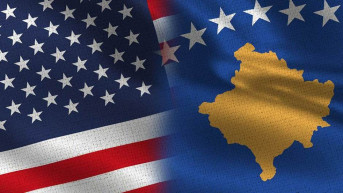
From the end of the war in 1999 until the current list of warnings to Albin Kurti after the recent events in the north of Kosovo, the Americans from time to time undertook a series of educational measures against the leaders of the Kosovo Albanians, Rugova, Thaci, and Haradinaj... But Albin Kurti, who in the last couple of days managed to enrage the Americans to the extent that they banned him from meetings with US officials, canceled the participation of Kosovo soldiers in NATO maneuvers and suspended lobbying for further recognition of Kosovo's independence, he has been at war with the State Department since 2013.
In mid-June 1999, a group of men dressed mostly in faded camouflage uniforms occupied a bus on a local road somewhere between Urosevac and the Macedonian border. Their checkpoint, as they called it, consisted of several broken tin barrels and broken planks held together with wire. It was not possible to go further without their permission. At least that's what they claimed.
They pointed the barrels of the "Kalashnikovs" towards the country as they explained to the American colonel, who in face and voice bore an uncanny resemblance to Robert Duvall in Apocalypse Today, that since they had won the war, they had the right to control the country.
"I'll try to simplify.”If you don't leave immediately, I will tear down the barricade and arrest you," Joe Anderson, who fifteen years later rose to the rank of commander of US forces in Afghanistan, told them.
"We can do this the easy way or the hard way." Did you understand what I told you?"
The man he was talking to, a freshly shaven man with a red cap and an almost new uniform, was not overly impressed by the American's performance. He listened to him disinterestedly until an armored vehicle "Bradley" headed towards his "checkpoint" with an automatic cannon pointed straight at the leader of the group of members of the Kosovo Liberation Army.
A few seconds later, there was a pile of sheet metal folded around the remains of the boards on the side of the road. Just in case, just at that moment a "black hawk" flew over their heads, raising a cloud of reddish dust in its wake. KLA checkpoints never appeared again.
It was the first in a series of educational measures that the Americans, from then until the list of warnings to Albin Kurti after the recent events in the north of Kosovo, practiced on more or less important leaders of the Kosovo Albanians.
Americans in Pristina
Duels, albeit rare, between Americans and Albanians then moved to Pristina, where the newly formed United Nations mission somehow tried to rein in the violence and take control from yesterday's guerrillas reassigned to the positions of ministers, mayors, and local businesses.
At that time, the Kosovo Transitional Government, headed by Hashim Thaci, moved into the four-story building in the city center. Thaci's government, formed based on the agreement reached by the leaders of the Kosovo Albanians in early 1999, believed that it had the legitimacy to rule Kosovo, at least with the same power as UNMIK, which was trying to put Sergio Vieira de Mello on his feet - the man for special tasks of the then head Kofi Annan's UN.
The tension between Thaci and the Americans over the authority lasted until the representatives of Washington, pressured by criticism from all sides due to the twenty murders per month and the considerable anarchy that reigned, did not order the former political leader of the KLA to dissolve the government and conclude an agreement with the main rival - the then leader of the Democratic Alliance of Kosovo, Ibrahim Rugova.
In mid-December 1999, Thaci and Rugova signed an agreement that defined how Kosovo would be governed until the first elections, whereby the executive and judicial powers remained in the hands of UNMIK head Bernard Kouchner, while the titles that they held until then two of the most influential leaders of Kosovo Albanians, Prime Minister Thaci, and President Rugova, simply ceased to exist.
The Americans presented this development of the situation as a new success, but only a few days later Rugova decided that he would still retain the title of president until the election, which he gave up after another meeting with American diplomats.
Violence against the Serbs
By the end of 1999, the Americans had given several more harsh lessons to the leaders of the Kosovo Albanians, especially those who had just taken off their KLA uniforms, mainly because of the wave of violence against the remaining Serbs and other non-Albanians.
In the first six months after the arrival of 45,000 NATO soldiers and about 1,500 members of the international police, about 400 Serbs were killed in Kosovo, which the Americans, at first occasionally, tried to stop by directing the local leaders quite considerately to assume that the building of democracy would lead to an increase in violence.
When at the end of December of that year the situation became unbearable to the extent that the representatives of the Kosovo Serbs no longer wanted to participate in any way in the building of future institutions, the Americans in a harsh tone convinced all the former guerrillas that the violence had to stop or they would face the consequences. A few days later, the level of violence dropped sharply, far below the then-regular twenty murders per week.
Until the end of 2000, American diplomacy on the ground had a serious action in Kosovo only once, on the eve of the first local elections in October, which were preceded by confrontations between guerillas recruited into politics with supporters of Ibrahim Rugova and journalists.
In the months leading up to the vote, a dozen of Rugova's supporters and candidates were killed, while several were wounded or tortured. A bomb was also thrown at a building in the center of Pristina that housed the headquarters of several smaller political parties and the offices of the government of FR Yugoslavia. Several journalists were also wounded, and the fate of one of them, Marjan Melonasi, has not been clarified to this day.
The wave of violence stopped after another harsh warning from the Americans, just before the elections in which Rugova's party won about 44 percent of the votes.
Rise of Ramush Haridanaj
That year, the Americans, in search of some kind of political stability, protected Ramush Haradinaj after the confrontation with the rival Musaj clan in June 2000, not far from Decani.
Haradinaj then led a group of about thirty members of the Kosovo Protection Corps in an attack on the property of the Musaj family, close to the political concept of Ibrahim Rugova.
On that occasion, Haradinaj was wounded by shrapnel from a grenade allegedly fired from a hand-held launcher, but after the "hysterical intervention" of the Americans, as West European members of the UNMIK police said at the time, he was first transferred by helicopter to Bondsteel near Urosevac, and then to the Ramstein base in Germany.
The shooting not far from Decani, which, according to eyewitnesses, looked like a real small war, to a considerable extent shook the reputation of the international police in Kosovo, but also caused a rift among various Western intelligence services that were active in Kosovo in 1999 and 2000, trying to put conflicting groups that operated under the auspices of the KLA under some kind of political control.
"It was essentially an insult to our intelligence," said one of the international police officers involved in the investigation into the attack on the Musaj family. "The Americans collected all the evidence, including grains taken out of the wall around the house of the Musaj family, and at the Bondsteel base they showed us a new, unwrapped, white T-shirt, trying to show that Haradinaj was not wounded during the incident." It was announced several times that the investigation into the case could be reopened, but it never happened.
From the moment he returned from Germany, no one dared to oppose Ramush Haradinaj in the Decani area, including Hashim Thaci's party.
Macedonian War
During 2001, the surname Haradinaj was often associated with conflicts in Macedonia and the south of Serbia. As the crowning proof of that claim, it is stated that Ramush Haradinaj "easily gave up" the services of his chief military adviser, former Yugoslav People’s Army officer Gezim Ostreni, who had the same role in Macedonia that he previously had in western Kosovo.
In such a distribution of forces, according to Western intelligence, Ramush's brother Daut had the task of coordinating the transport of weapons and personnel, mostly members of the Kosovo Protection Corps, from Kosovo to the territory of Macedonia.
In an attempt to reduce the influence of the Kosovo guerrillas on the war in Macedonia, the administration of then-US President George Bush compiled a "black list" of organizations and individuals that represent an obstacle to the stability and development of democracy in the Balkans, which included the commander of the Macedonian branch of the KLA, Ali Ahmeti and Daut Haradinaj.
They consider the Americans the most deserving of the fact that Ahmeti's armed formation, in the middle of the war, shifted the goal of the struggle from the unification of western Macedonia and Kosovo to the rights of the Albanians in that country.
Apart from Macedonia, Ramush Haradinaj was also actively involved in the riots that shook the south of Serbia for almost two years, and on behalf of the Albanian leaders, along with the inevitable Hashim Thaci, in 2000, under enormous pressure from the Americans, he was forced to sign the Gnjilan Agreement, which binds the Albanians to the unilateral cessation of hostilities and the disbandment of the Liberation Army of Presevo, Bujanovac, and Medvedja.
Daut's influence on further events in Macedonia was neutralized by the fact that, before the 2005 elections, he was sentenced to prison for his participation in the torture and murder of four Albanians after the war. Daut Haradinaj's name is still on the US blacklist of persons who pose a threat to stability in the region.
The Americans also took credit for persuading Ramush Haradinaj to give up the former Chief of Staff of the Kosovo Liberation Army, Sylejman Selimi, who was his political advisor until he was sentenced for war crimes in 2019.
How did Kurti become part of the problem
Kurti, who in the last few days managed to enrage the Americans to the extent that they banned him from meetings with US officials, canceled the participation of Kosovo soldiers in NATO maneuvers, and suspended lobbying for further recognition of Kosovo's independence, has been at war with the State Department since in 2013.
During the demonstrations of his Self-Determination Movement at the end of June of that year, the then US ambassador to Pristina, Tracey Ann Jacobson, was injured, after which Philip Reeker called him "a clown who wants to be violent".
The other American officials did not have a better opinion of Kurti at that time either, considering him a problematic brawler without a clear political concept and valid support among the Albanians.
Not long after the international community crossed him off the list of potential solutions for the problems that were piling up at the top of the Kosovo authorities, Kurti won 12 percent of the votes in the first elections in which Self-Determination took a serious part and announced a jump in the hierarchy on the
Kosovo political scene
In a new division of political roles, Self-Determination decided on a series of violent actions, which began in early October 2015, when Kurti and a group of his party's MPs threw tear gas during a session of the Kosovo Parliament and caused additional anger from international officials who were not sympathetic to them anyway.
They rebelled against the Brussels agreement and the demarcation with Montenegro, demanding that the government abandon those agreements. They were then joined by the head of the Alliance for the Future of Kosovo, Ramush Haradinaj, who threw maps at the head of that body at the meetings of the Commission for Demarcation. The popularity of Self-Determination continued to grow.
Americans are considered the most deserving of the fact that Kurti's first government, in 2020, lasted only 50 days before it was voted no-confidence in the parliament.
A year after that, Kurti once again convincingly won the elections and formed a new cabinet, swearing that he would not make new compromises in relations with Belgrade and that the plan made by former Finnish president Martti Ahtisaari was the "ultimate price" he was ready to pay for Western support for the declaration of independence in 2008.
Diplomats, on the other hand, believe that there is no place in the world where the Americans have more influence than in Pristina, but that Kurti, relying on the support of voters, simply refuses to obey the wishes of Washington.
American Secretary of State Antony Blinken also reacted to the incidents in northern Kosovo two days ago, accusing the Pristina authorities of provoking them and calling on Albin Kurti to immediately stop the violent measures and return to the dialogue with Belgrade, which is conducted with the mediation of the EU. "We strongly condemn the actions of the Kosovo government that are escalating tensions in the north and increasing instability," Blinken said on Twitter.
Soon after, Albin Kurti spoke up and reprimanded the US Secretary of State for this statement. "I think it's not only unfair, wrong, and harmful, but at the same time, it's very naive. Maybe Secretary Blinken will explain this further one day, but it definitely wasn't helpful," Kurti told the Guardian.
In addition to Blinken, the American ambassador in Pristina Jeffrey Hovenier's claim that Kurti ignored his calls to calm the situation in the north of Kosovo, for which he will have to face the consequences, could represent a serious indication of the direction his political career will move in the future.
Written by: Rade Maroevic, journalist
0 comments