
The solution to the Kosovo problem suggests political retirement for many
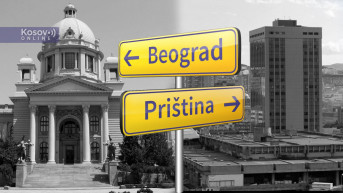
Serbian President Aleksandar Vucic’s policy of reaching a compromise with Pristina is, and will be, exposed to enormous resistance, and will reach a peak in the upcoming parliamentary debate, Orhan Dragas writes.
If the current European draft agreement between Belgrade and Pristina becomes a “legally binding document”, it will not remove the issue of Kosovo as one of the most important on Balkan’s political scene overnight. It will take years to implement what was agreed upon and for the legal systems of both Serbia and Kosovo to be adjusted according to the new solutions.
It will take time for the two societies, Serbian and Albanian (in Kosovo), to adapt to the new reality that the agreement will bring. Because it will be the first agreement where they participated in its creation, not presented to them from somewhere to sign without their being informed about the content beforehand.
The paper from the Rambouillet negotiations (1999) and the one from negotiations in Vienna (2007) were rejected by Serbia, although both were later revived, regardless of the Serbian rejection. The one from Rambouillet was incorporated into UN Security Council resolution 1244, which is widely liked in Serbia and Russia, and Ahtisaari’s plan from Vienna was woven into the Constitution of Kosovo.
However, the agreement in sight will bring about an enormous change to political life in Serbia. With this agreement, the issue of Kosovo will cease to exist as a political topic in the way that everyone has dealt with it from 1990 onwards.
Kosovo will no longer be an inexhaustible reservoir for politics soaked in myth, historical revenge, blood and soil. Kosovo will become a political issue composed of an economy, health, human rights, rural development, and nurturing tradition and identity through education and culture.
Serbian President Aleksandar Vucic’s policy of reaching a compromise with Pristina is and will be, exposed to enormous resistance. In the parliamentary debate on Thursday, that resistance will reach its peak.
This is about the resistance of politicians and parties who will have to fight simply for their political existence. The ground on which they became who they are is slipping away from under their feet. The only policy on which they built their careers and their retirement, the Kosovo policy, is disappearing before their eyes.
These “status quo” people have 30 to 40 deputies in the Assembly. They won at least 15% of the votes in the last elections, which is a force to be reckoned with. There are even more of their political supporters and sponsors outside the Assembly, in the universities, and the Academy. Media editorial offices and art associations are full of them. These are generations of conservative nationalists who see the Balkan region as an area over which Serbia has the right to rule. Particularly over Kosovo.
They built their careers, social status, and the power and money that come with it on only one topic: Kosovo. They grew up and reached their retirement, clinging to Kosovo as a myth, not a practical policy. They treated it as a matter of war, not peace, as geography and space, not as a community of people with their own attitudes, plans and life ambitions.
Their resistance will be strong because the Serbian-Albanian agreement on Kosovo will remove Kosovo from the list of political matters in the way they have been dealing with it for decades. The issue of Kosovo is moving into everyday topics they know nothing about or have any policies on economic, investment, environmental, social, or even cultural.
The following months will be spent in the effort of these people to prevent Serbia from becoming a country without unresolved historical conflicts.
They will fight to avoid the issue of Kosovo, its victims, borders and history from being moved into school textbooks and commemorations, where they belong. They will demand those issues to remain political programmes around which all political life will be conducted, just as it has been conducted for the last 33 years.
An army of politicians and their influential supporters will soon retire because their only issue is being removed from the agenda. They are simply unable to “retrain” themselves and learn to relate to Kosovo, the Kosovo Serbs, and the Albanians differently than before.
And that is why their resistance in the coming months would be under the “status quo” banner. It was their sole political agenda until recently, not only regarding Kosovo but in general, and from next week they will defend it more fiercely than ever.
In their Kosovo agenda, that is, in their entire policy, there is nothing about Kosovo and Serbia for the second half of this year or the next, let alone for ten years ahead.
In their programme of freezing Kosovo, there are no ideas about people, their jobs and life plans. There is no forecast of what will happen to the Serbs in Kosovo and Serbia if an agreement is not reached. It does not concern them, nor do they want to think about it, because it requires looking into the future. The past ceases to be the policies on which votes and influence are won, which is why there is considerable fear of a future they never thought about.
This fear is real, concerning how unrealistic and unsuccessful Serbia’s policy was when they created and advocated it, and today they fear its disappearance. By resisting the agreement between Serbs and Albanians, they will only resist their country and their people.
While they are doing this, they will, in fact, think only of themselves and their fading careers. The great Serbian writer Borislav Pekic described this as follows: “The future will either be like the present, so it won’t need us, or it will be different from it, so it won’t understand us.”
And today, it is more important than ever to remember another thought of Mr Pekic, who said: “Look straight ahead. Because if you were supposed to look behind you, you’d have eyes in the back of your head. Love the land of your children and not that of your forefathers. Because honour doesn’t depend on where you’ve been, but where you’re going.”
Written by Orhan Dragas, the founder and director of the International Security Institute based in Belgrade
0 comments