
Is there any reason for optimism after the EU leaders' statements about the Western Balkans?
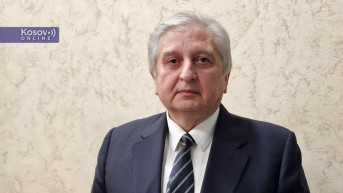
Writing for Kosovo Online: Zeljko Sain, Politika's special correspondent from Skopje
The Bled Summit gave new hope to the countries of the Western Balkans that they will be a part of the European family by 2030, and until then the talks between the EU and these future EU members will be conducted on the seesaw of European optimism and Balkan pessimism, since the Western Balkans has already been burned by the European hypocritical policy, aimed more at sending messages to the Russian Federation than at finding a solution for admission to the EU.
French President Macron not only represented an inversely proportional position to the political leadership of the EU - the position of Ursula von der Leyen and Charles Michel - but also contradicted himself. On the one hand, he emphasized the speed of the movement of the Western Balkans towards the auspices of the EU, but, on the other hand, he slowed down the whole process with the need for reforms of the EU itself. If we recall the statement of Macron after the EU summit in Sofia in 2018 and the leaders of Austria, Germany, and Bulgaria, we can notice that there is no agreement between them on enlargement. Although they agree that the future of the Western Balkans is in the EU, they differ on when and how.
What is insisted on when it comes to the Western Balkans is stability and security. Let's also recall the statement of the then President of the European Parliament, Antonio Tajani, who said that stability in the Balkans also meant stability in the EU, which was also advocated by the former German Chancellor Angela Merkel, who, although she was one of the main mentors for the expansion of the EU to the countries of the Western Balkans, showed skepticism that the Western Balkans could become part of the European family by 2025. If we connect it with her and Orlando's statement that they signed the Minsk agreements to prepare for today's events in Ukraine, is there any room for optimism in the interpretation of the promises that European leaders make to the countries of the Western Balkans?
When Macron emphasized that the enlargement of the EU could only happen if it itself was reformed beforehand, bearing in mind his proposal in cooperation with German Chancellor Scholz, it seems that he saw that reform in the Ohrid route for the implementation of the Brussels agreement for the normalization of relations between Belgrade and Pristina and implementation of constitutional changes in the Republic of North Macedonia. Instead of the stability of the Western Balkans, which they insisted on, they themselves caused tensions and great dissatisfaction among the citizens, even sparks in the inter-ethnic conflict. Time will tell from which political or leadership views Macron delays EU enlargement again, as the Minsk agreements did.
On top of all that, Kurti propagated the idea of creating a 'Greater Albania' in the midst of the Republic of North Macedonia, where he was declared the President of all Albanians. However, that topic, which stirred the already restless sea in relations in these areas, was marginal in Bled, even Macron did not mention it in his message from Paris to Belgrade and Pristina, but he asked Vucic and Kurti to engage in the elections and calming the situation in the north of Kosovo.
The European leadership did not comment on such outbursts by Kurti, and we wonder how Cicero, the Roman statesman, philosopher, linguist, and orator, one of the most versatile minds of ancient Rome, known for his detailed analysis of the leading people of the world, full of details about their tendencies and flaws, would describe them. It would be extremely useful if we could read his analysis of Kurti's attack on the territorial integrity and sovereignty of Serbia, Montenegro, the Republic of North Macedonia, and Greece, to see from his point of view the mind of a man who sees himself as the successor of Adem Demaci, and the Prime Minister of "Greater Albania".
Despite the firm arrogant attitude and bulky ambitions, Albin Kurti - we cannot dispute –is also adorned with modesty, admittedly, but when it comes to political culture, experience, and education, which he showed at an informal dinner in Athens, where Greek Prime Minister Mitsotakis was the host. Kurti presented a Hitlerian style there as well, shameless arrogance and inclination towards fascist ideology, and just a few days ago in Tetovo he supported the promotion of the idea of a "Greater Albania", which also includes a part of the Greek territory.
Instead of the host and all the statesmen present, who at various gatherings, especially after the beginning of the Ukrainian war, declared respect for international public law and the territorial integrity and sovereignty of each country, the Prime Minister of the Republic of North Macedonia, Dimitar Kovacevski, gave a welcome speech, "toasting" Kurti for all which he did in his country, where he renamed a part of the veteran-partisan street in honor of Adem Demaci, the creator and ideologist of the creation of "Greater Albania".
Kovačevski uttered a barrage of harsh words, attitudes, and thoughts, while this political drama was silently observed by the leaders of the Western Balkans. This happened during the two-day visit of the US Deputy Secretary of State Escobar, who arrived to put pressure on the Republic of North Macedonia to vote for constitutional changes, and fulfill Bulgaria's condition, and allow itself the continuation of European integration, even though it had already been promised by the Prespa Agreement when this country has already changed the Constitution once and changed its name. In his speech, Escobar stated that he had not come to torture, nor to create a new government in the name of the US Government, but to point out to the Macedonians that their place was in Europe, because both physically and through their political involvement they belonged there, and that path was possible only by changing the highest state act.
We will see what will happen until November when the deadline for introducing Bulgarians as a constituent element in the Republic of North Macedonia Constitution expires. This step is supported by the USA, the EU, NATO, as well as the Republic of North Macedonia Government, as well as all Albanian parties in Macedonia. However, in order to change the highest state act, the support of VMRO-DPMNE is necessary, because, without the votes of its MPs, the required two-thirds majority in the parliament cannot be achieved. Well, there are no guarantees that this is the last obstacle for the Republic of North Macedonia on its way to the EU.
If we analyze the last twenty years, all the countries of the Western Balkans have faced various demands in order to fulfill the goal of joining the EU. But, having fulfilled them, they remained in the same place. Macedonia already changed the Constitution and the name of the country, which promised it admission to the EU, and we can see where it is now. And not only that – if it does not fulfill the condition, it is threatened with international isolation and a padlock on the European door.
While the EU is constantly slipping away from the Western Balkans, and it is not excluded that the admission will be postponed again for another five years, or after the end of the war in Ukraine, there is a fear that Kurti will expand the conflict in the Balkans with the idea of a "Greater Albania". Maybe by then, the EU will get a new name, and maybe it will just become history. The underestimation of the Western Balkans and its mentality led many empires to history and entries in school textbooks.


comments