
The USA and the Kosovo question (6): "The Second Battle of Kosovo" in the US Congress
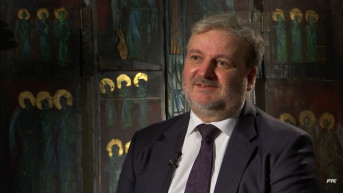
Writing for Kosovo Online: Dragan Bisenic, journalist
In October 1988, DioGuardi, Dole, Lantos, Alfonse D'Amato, Senator Paul Simon, Senator Larry Pressler, and others sent a letter to Secretary of State George Shultz calling attention to the fact that "Yugoslavia and the League of Communists of Yugoslavia are facing serious political and economic problems the last weeks" indicating that "important decisions will be adopted in the coming days that will have a great impact on the Yugoslav political system".
"We are writing to you to express our serious concern about the deteriorating situation in the Republic of Serbia. As you know, there is an ongoing attempt by the Serbian leadership to eliminate the autonomy of the Autonomous Province of Kosovo, as has already happened in the Autonomous Province of Vojvodina. This process creates a crisis of enormous dimensions in Yugoslavia, not only among ethnic Albanians, who make up more than 80 percent of the population of Kosovo, but also among the inhabitants of Vojvodina, another ethnically mixed environment.
They demand that the USA inform Yugoslavian officials at all levels of the extreme seriousness of these actions and that such actions will have negative consequences for Yugoslavia and US-Yugoslavia relations. It is further stated that on several occasions members of the Congress met the Yugoslav ambassador Zivorad Kovacevic in order to "express their dissatisfaction with the development affecting the Albanian population in Kosovo."
Hearing the accusations against him from the pro-Albanian congressmen, Eagleburger used to say a few juicy curse words in Scowcroft's presence. It was the way he had baffled his colleagues in the State Department since the days of Kissinger. Strobe Talbott, former Time correspondent from Belgrade and then Madeleine Albright's assistant at the time of the bombing of Serbia in 1999 described in his book "At the Highest Levels" how the two enjoyed playing with their knowledge of the Serbian language.
In June 1989, an Albanian rally was held in Washington for the "liberation of Kosovo from Serbian occupation" and for the release of Demaci from prison. The US Congress adopted the first resolution on the rights of the Albanians. The resolution of the House of Representatives (H.Con.Res. 314) and the Senate (S.Con.Res. 124) were adopted, condemning Serbia for violating human rights in Kosovo.
Joseph DioGuardi came to Belgrade in November 1989 and brought with him a letter from Senator Dole and 12 other senators, who demanded immediate "liberation of Kosovo".
The following year, in 1990, when the Constitution of Serbia was already amended in 1989 and when there were violent demonstrations in Kosovo as well as the Trepca miners' strike, several important meetings were held in the US Congress. One of the most important was the session of the Helsinki Commission in April 1990. From that meeting, there was a report whose author we cannot determine, but in any case, one of the participants of the hearing. The original style of the document has been retained in the citation of this report.
The Helsinki delegation of the US Congress visited Kosovo on April 10, 1990, and talked with the Serbs about their suffering. On that occasion, a member of this delegation, Congresswoman Mrs. Helen Delich-Bentley, invited us to come before the US Congress and testify on the spot about our Serbian cause in Kosovo and Metohija. She repeated her invitation by phone to St. Synod, which was discussed at the joint session with St. Synod on April 19, 1990, and on Saturday, April 21, 1990, the three of us flew by plane to Washington, where we arrived the same evening and were welcomed and accommodated by our priest in Washington, Miroslav (We did not accept the hotel booked by Mrs. Bentley in order to reduce costs for her). We stayed in Priest Lazarevic's apartment until Wednesday, and on the Octave Day of Easter, we served in his church and had lunch together with Serb believers in the church hall, where they told us about the state of our Serbian cause in the US Congress and what we should say there. Father Miroslav and especially Mrs. Kosara Gavrilovic, a court interpreter in Washington, helped us with the translation into English of our letter and statement for Congress, which Mrs. Bentley asked us to prepare beforehand in English, as well as other evidentiary material about the persecution of the Serbs in Kosovo from Shqiptars.
On Monday afternoon (April 23, 1990), we visited Mrs. Delich Bentley in Baltimore (where her constituency as a member of Congress is) and she explained to us the entire program of tomorrow's work of that Congressional body for human rights (the so-called Caucus), where will perform, along with various congressmen and us, 6 Serbs and 13 Albanians. Namely, on the same evening they arrived from Belgrade, probably at the invitation of Mrs. Bentley, writer Dobrica Cosic, Professor of the Law Faculty in Belgrade Radoslav Stojanovic, and lawyer Slobodan Vuckovic, otherwise a delegate in the Assembly Serbia and independently of all of us, 13 Shqiptars from Kosovo also arrived. That same evening, we found out that Mrs. Bentley invited our Eastern American Bishop Mr. Hristofor, and recommended that as many Serbs as possible come from the USA to attend this "hearing" and testimony because the US Shqiptars will also do so in large numbers. In general, until now, only the Albanian side has been represented before the US Congress, with the presence of always a large number of Albanian listeners and peaceful demonstrators, so only this year Congresswoman Bentley managed to include the Serbian side to be heard before the Congress, and that's why she recommended that a larger number of US Serbs come to the designated congress hall, which indeed happened. About 300 Serbs came from Washington, Pittsburgh, and Cleveland, while there were about 500 from Shqiptars.
On Tuesday, April 24, 1990, from 3 to 8 p.m., the "second Battle of Kosovo" really took place in the US Congress, as Congresswoman Bentley remarked at one point. After we gathered around noon and prepared in the office of Mrs. Helen Delich Bentley (in a special building in the center of Washington, where the offices of all congressmen are), around half past three we were driven only by her car to the "Hart Senate Building", where we were greeted by a few hundred Serbs and Serb women in the hall and corridors in front of the hall ("Hart Auditorium") and even more Shqiptars, who raised their fingers in the "V" sign, while the Serbian women responded by raising three fingers in the sign of the cross. As Congresswoman Bentley previously informed us, the scheduled hall was already occupied by Shqiptars, so upon her intervention, the hall was emptied, and then, gradually, the left half was filled by Shqiptars, and the right half by the Serbs (by the way, neither of them had space to stand in the hall, so they were in the corridors and slightly "fighting"), while we, the invited witnesses of both sides, were seated in the first rows. Along with Bishop Pavle, Bishop Hristofor was released into the first rows and a dozen Serb priests. Before the discussion began, Bishop Atanasije left from our side and said goodbye to the Albanian representatives in the first row (they were several professors and writers from Pristina), after which Shqiptar Rexhep Qosja came and said goodbye to Dobrica Cosic and some other Serbs.
After some delay, the session of this Congressional Committee ("Caucus") for human rights was opened by the chairman, Tom Lantos (a Hungarian Jew, initially sympathetic to the Albanian side, but towards the end, he was softer towards the Serbian cause, because he heard unknown facts from the Serbian side and because, they say, he was dissatisfied with the low level of certain pro-Albanian speakers among congressmen). Then various congressmen and senators spoke, or their letters and statements were read, each from different sides, presenting the issue of human rights in Eastern Europe, Yugoslavia, and Kosovo. (These were: the vice-president of "Caucus" John Porter, David Aasen from "Amnesty International", George Zaritzky from "Freedom House" from New York, and a number of others, then a written statement by Bob Dole (the main inspirer of the pro-Albanian policy of the US Congressmen and the USA President George Bush's administration itself, because, it seems, Bob Dole is originally an Albanian from Southern Italy or maybe even from Kosovo). All these mentioned Americans spoke strongly pro-Albanian, sometimes stating notorious lies, such as that the Albanians in Kosovo were "banned from the language, schools and universities were abolished" and the like. The worst was the letter of the mentioned Bob Dole in the pro-Albanian and anti-Serbian campaign, but he was also surpassed in the unscrupulousness of spreading lies and slanders by the former Congressman from New York, Joe DioGuardi, the current President of the Albanian lobby, a man apparently paid by the Albanians to, without choosing the means, propagate the "endangerment of Shqiptars in Kosovo", who are "experiencing real apartheid" in Kosovo and Serbia!?! Although the time for these individuals was limited, at least that's what we were told, for 10-12 minutes, DioGuardi spoke for 40 minutes, pouring all sorts of lies about the "suffering" of Shqiptars and the "tyranny" of the Serbs. True, all the congressmen and speakers were focused on communism in Serbia, but they mostly saw the Serbs in it, and therefore the Serbian people! After DioGuardi's speech, the Shqiptars present greeted him with thunderous applause, and they were much more restless than the Serbs during the session, so the chairman warned them to "stop demonstrating". It must be admitted that, nevertheless, the entire atmosphere in the hall was democratic and that during the nearly five hours of the session there were no major disturbances, although at times the atmosphere in the hall was very tense because even here in Washington, Shqiptar aggression and the terror of injustice over the truth were evident. The Serbian cause seemed to be "buried" and many of us, who attended such gatherings for the first time, were almost depressed, to put it mildly, by the superficiality of the approach of most of the US Congressmen to the Kosovo tragedy of our nation, as well as the Albanian one, who is harnessed to such a "wagon" of unscrupulous propaganda lies and public farce.
The impression was somewhat improved by the statement of Congressman Jim Moody (from Milwaukee, who was also recently in the Delegation in Kosovo), who pointed out the complexity of the country of Yugoslavia, the importance of Kosovo for the Serbs, the Serbian troubles in Kosovo and the recent positive development of events in Kosovo.
A part of this session of the Congressional Caucus for Human Rights was devoted to human rights in Yugoslavia in general, so the young Croat Paraga (convicted in Yugoslavia) spoke as an invited witness to the violation of those rights, and then Dobrica Cosic, who specifically referred to the violation of human rights in Kosovo, especially to the detriment of us Serbs.
Then the chairman gave the floor to Ms. Bentley, as the person in charge of the Serbian side's witnesses from Kosovo, to introduce us to another "panel" (round table) dedicated to the issue of human rights in Kosovo. She first said, "Who would have believed that the second Battle of Kosovo would take place in the US Congress"! And then she added, "What Jerusalem is for Jews, the Vatican for Roman Catholics, Mecca for Muslims, Canterbury for Anglicans - that is Kosovo for Serbs." She continued to present the Serbian problem in Kosovo and present that side of the Kosovo problem. Then she called the three of us to present our testimony, i.e. to read our statement (written, which we attach to this report, in Serbian and English). Unfortunately, we were told by the chairman that we only had "two minutes of time", to which our translator Ms. Gavrilovic responded, so she was told to be shorter, and she read the abbreviated version of our statement in only 10 minutes. The main thing in our statement was: if the Shqiptars have certain reasons for dissatisfaction with the situation in Kosovo and have conflicts with the authorities and the militia, the Serbs in Kosovo and Metohija have far more reasons for dissatisfaction, because the communist authorities tyrannized the Serbian village and its holy places for decades, but the Serbs never turned their dissatisfaction with the situation in Kosovo against their Albanian neighbors, as the majority of Albanians did until yesterday, who used the full support of the communist authorities in their aggression against the Serbs and the holy places of the Serbian Orthodox Church, as evidenced by numerous documents (and we submitted to the Congress the book of the Endowment of Kosovo and a large file of written testimonies in Serbian and English about the suffering of the Serbian life and its sanctuaries in Kosovo and Metohija from neighbors Shqiptars and the authorities). Our text also mentions the attack on Bishop Pavle personally and the Serbian nuns, which left a strong impression on those present, except for those congressmen who, in the majority, had already left with their anti-Serb views before even hearing the testimony of the Serbs.
Tomorrow: The first small victory of the "Serbian cause" before the Congress

0 comments