
AfD: The fake state of Kosovo failed - Germany to withdraw recognition
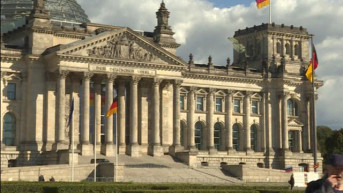
MPs of the Alternative for Germany (AfD) in the Bundestag submitted a request in which they demand that Berlin withdraw its recognition of Kosovo.
"The fake state of Kosovo failed - separated after the illegal aggression of NATO against the FR Yugoslavia (1999) and despite the unilateral declaration of independence in 2008 without a referendum, while tolerating the expulsion of hundreds of thousands of Serbs, Jews and other non-Albanians and disrespecting the will of the Serbian minority in the north Kosovo, which has been recognized by many countries, Kosovo is not only the poorest 'state' in the Western Balkans, but also the second poorest 'state' in Europe, after Moldova," they state in the request.
They also state that unemployment among young people in Kosovo is almost 60 percent, and total unemployment covers almost a third of the population.
"The largest number of European jihadists (per capita) in Syria came from Kosovo," warns the request signed by MPs Petr Bistron, Markus Frohnmaier, Tina Krupale, Eugen Schmidt, Dr. Alexandra Gauland, Stefan Koiter, Steffen Kotre, Matthias Metzdorf.
They also indicate that the former Prime Minister of Kosovo, who was involved in heroin smuggling and organ trafficking, the former leader of the KLA, Hashim Thaci, was indicted before the Special Court for Kosovo in The Hague.
AfD points out that the government in Kosovo is led by the nationalist Self-Determination party of Prime Minister Aljbin Kurti, which in its program envisages the creation of a "Greater Albania" through the annexation of Kosovo to Albania, with the assessment that "Greater Albania - which consists of Albania, Kosovo, the Presevo Valley in the south of Serbia, which is inhabited by Albanians, western North Macedonia and part of Montenegro" is becoming increasingly popular among Albanians.
They also note that the rights of the Serbian minority in Kosovo are not respected, and that since 1999, 220,000 Serbs have been expelled, while a total of 150 Serbian churches and monasteries in Kosovo have been destroyed.
"According to the US State Department's report on religious freedom, a large number of incidents and discrimination against the Serbian Orthodox Church were recorded in Kosovo. Among other things, SOC has property rights unrecognized. According to the 'Europa Nostra' network, the Visoki Decani monastery, which UNESCO declared a world cultural heritage in 2004, is among the seven most endangered cultural monuments in Europe," the request states.
It is also pointed out that until today the Kosovo authorities are blocking the establishment of the Community of Municipalities with a Serbian majority, which was agreed back in 2013 as part of the political dialogue between Serbia and Kosovo.
"At the same time, even Kosovo observers note that it was one of the central elements of the April 2013 agreement. Thus, the position of the Serbian minority in Kosovo remains uncertain, as it was before. According to Serbian government data, 278 ethnically motivated incidents against the Serbian minority have been recorded in Kosovo since 2021," reminds AfD.
That is why, based on the above facts, according to the opinion of the international law expert, prof. Matthias Herdegen, Kosovo's independence is disputed "due to doubts about its own effective state power", AfD reminds, adding that the recognition of a state is not only related to the existence of three features of the state - people, territory and state power - but, as Herdegen points out, also to a political decision.
"Not even the opinion of the International Court of Justice contradicts this. The opinion exclusively deals with the issue of whether the unilateral declaration of Kosovo's independence is contrary to international customary law or United Nations Security Council Resolution 1244. However, the International Court of Justice in the cited opinion did not explicitly address the issue of whether Kosovo was even allowed to claim the right to self-determination and thus to secession. The expert service of the Bundestag comes to the conclusion - 'In short, it can therefore be said that due to the high degree of politicization and weak international legal regulation (withdrawal of recognition) of states, withdrawal of recognition is (politically) possible'. This is emphasized by leading lawyers, including Professor Shaw, who says that - because recognition is, ultimately, a political matter, no matter how it is legally conditioned, it logically follows that if a country perceives a certain political situation in that way, that it justifies the withdrawal of recognition, the state will undertake actions that correspond to its political interests", explains the AfD.
AfD MPs point out that nine countries have announced that they are withdrawing their recognition of Kosovo's independence - Somalia, Burkina Faso, Gabon, Eswatini, Libya, Guinea, Antigua and Barbuda, the Maldives and Saint Lucia, and that five of the EU members do not recognize Kosovo - Greece, Spain , Romania, Republic of Cyprus and Slovakia.
"Although Hungary recognized Kosovo, it votes against Kosovo in international organizations. This also refers to the possible admission of Kosovo to the Council of Europe", remind MPs Bistron, Frohnmaier, Krupale, Schmidt, Gauland, Koiter, Kotre and Mezdorf, whose request could soon be the subject of discussion in the Bundestag.

0 comments