
Albares: Spain has its national position on Kosovo, but will not stand in the way of its rapprochement with EU
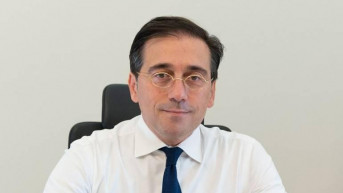
Spanish Foreign Minister Jose Manuel Albares reiterated today that Spain would “never stand in the way” of Kosovo making progress in its rapprochement with the European Union, despite continuing to refuse to recognize the territory’s independence. As evidence of that commitment, he cited the decision adopted in 2024 to recognize Kosovo passports as valid travel documents, Spanish media outlet Democrata reported.
“We have our own national position on Kosovo, but that does not mean that we will ever be an obstacle,” the Spanish foreign minister said during his address at the EU Enlargement Forum held in Brussels today.
In his remarks, Albares stressed that Madrid would remain willing to contribute to advancing relations between Pristina, Belgrade and the institutions of the European Union.
In this regard, Albares emphasized that throughout the years he had been “very clear” about Spain’s position.
“We will never be an obstacle to the Belgrade-Pristina dialogue, and we will never be an obstacle to Kosovo’s rapprochement with the European Union,” the Spanish foreign minister reiterated.
As a concrete example, he cited Spain’s decision to recognize Kosovo passports as travel documents, which coincided with the entry into force in January 2024 of the visa-free regime for Kosovo citizens making short stays in the Schengen Area.
“Spain was not an obstacle, and we recognized Kosovo passports as travel documents,” the minister recalled, presenting the move as evidence that Madrid could assist Pristina in moving closer to Brussels without changing its position on Kosovo’s independence.
Spain is one of the five European Union member states that do not recognize Kosovo’s independence, which was unilaterally declared in 2008.
According to the Spanish media outlet, this position was intended to prevent the Kosovo case from being interpreted as a precedent for domestic secessionist movements, although the Spanish Government has repeatedly rejected any comparison between the situation in Kosovo and those in Catalonia or the Basque Country.
During his address at the forum, Albares also defended the rationale for establishing a “significant financial package” for the Western Balkans in order to prevent people in the region from becoming frustrated by the slow pace of economic convergence with the European Union.
“Most of them, I would say almost all of them, have made major efforts in the direction we have indicated to them and are success stories,” he stressed, while warning that despite the progress achieved, the gap between the region and the economic level of EU member states continued to widen.
He warned of the dissatisfaction that could emerge among the population when citizens saw their countries meeting Brussels’ requirements without this translating into a sufficiently significant improvement in their standard of living.
“We are fulfilling our obligations, we are doing so very well, you tell us that we are doing very well, and yet year after year we are falling further behind,” he said, describing the sentiment prevailing among many citizens in the region.



comments