
Anniversary of the First Conference of the Non-Aligned Movement; Vucic: Peace is safeguarded by the unwavering sovereignty of every country
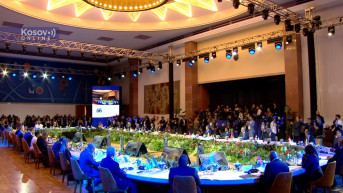
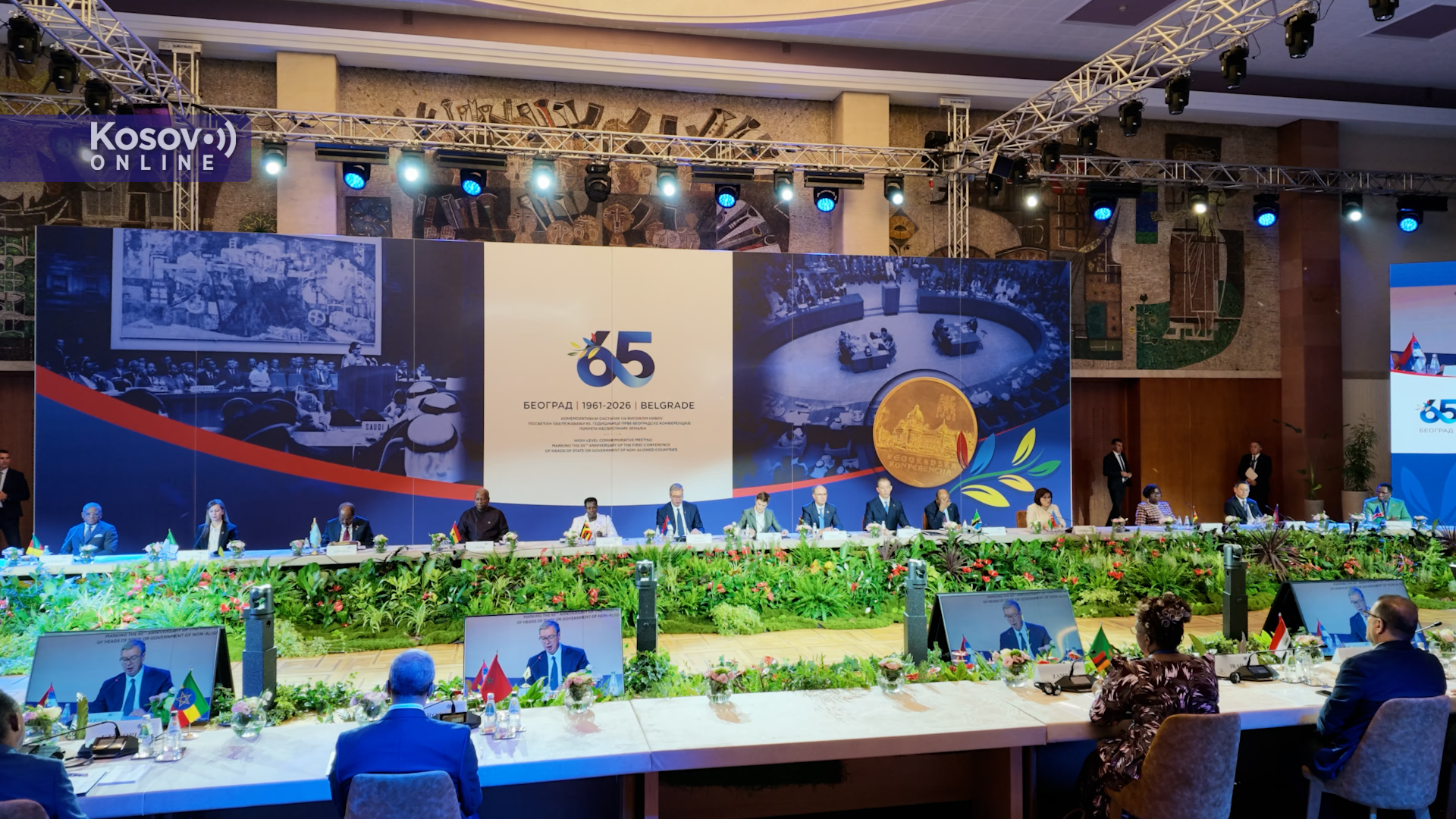
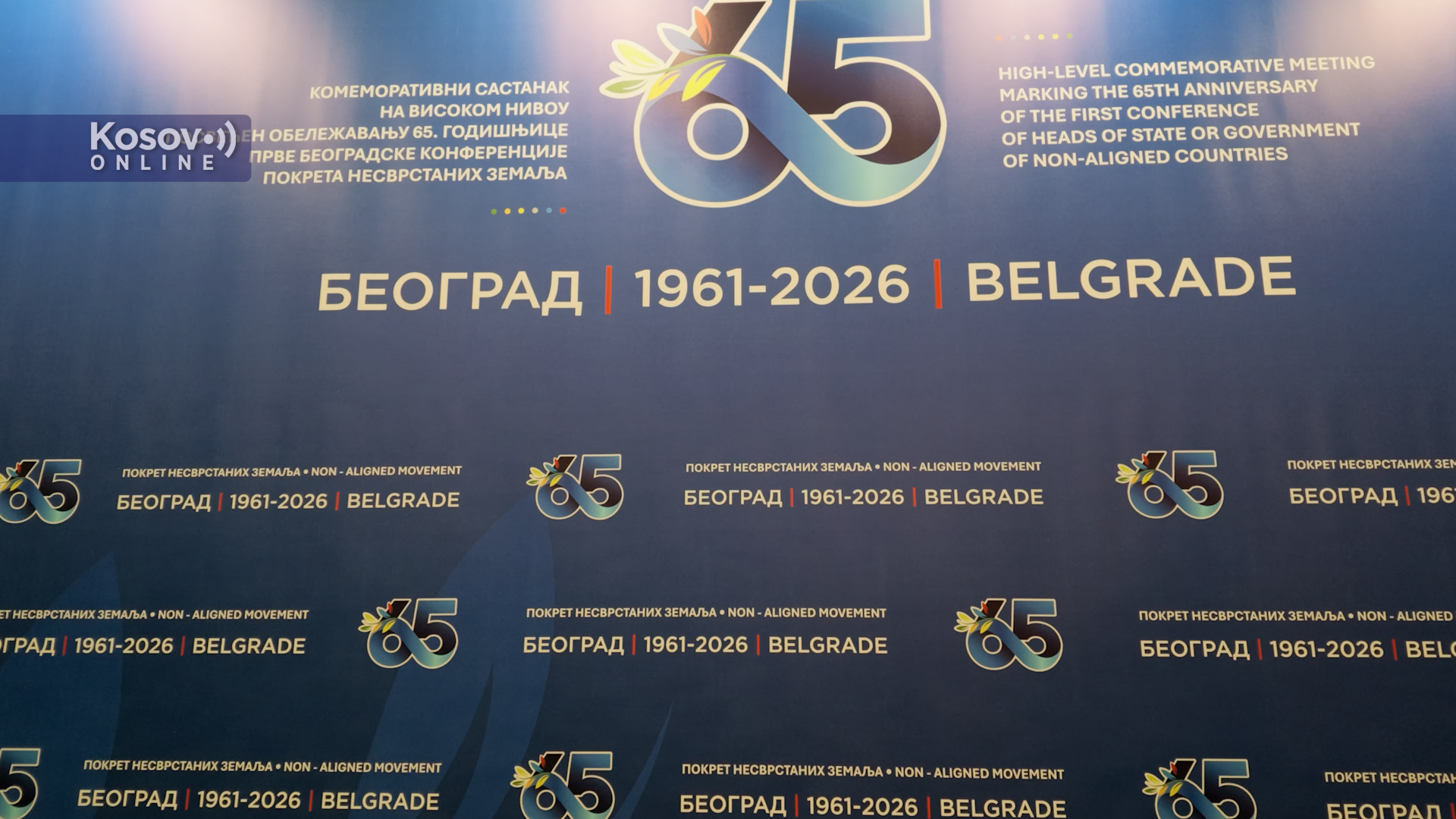
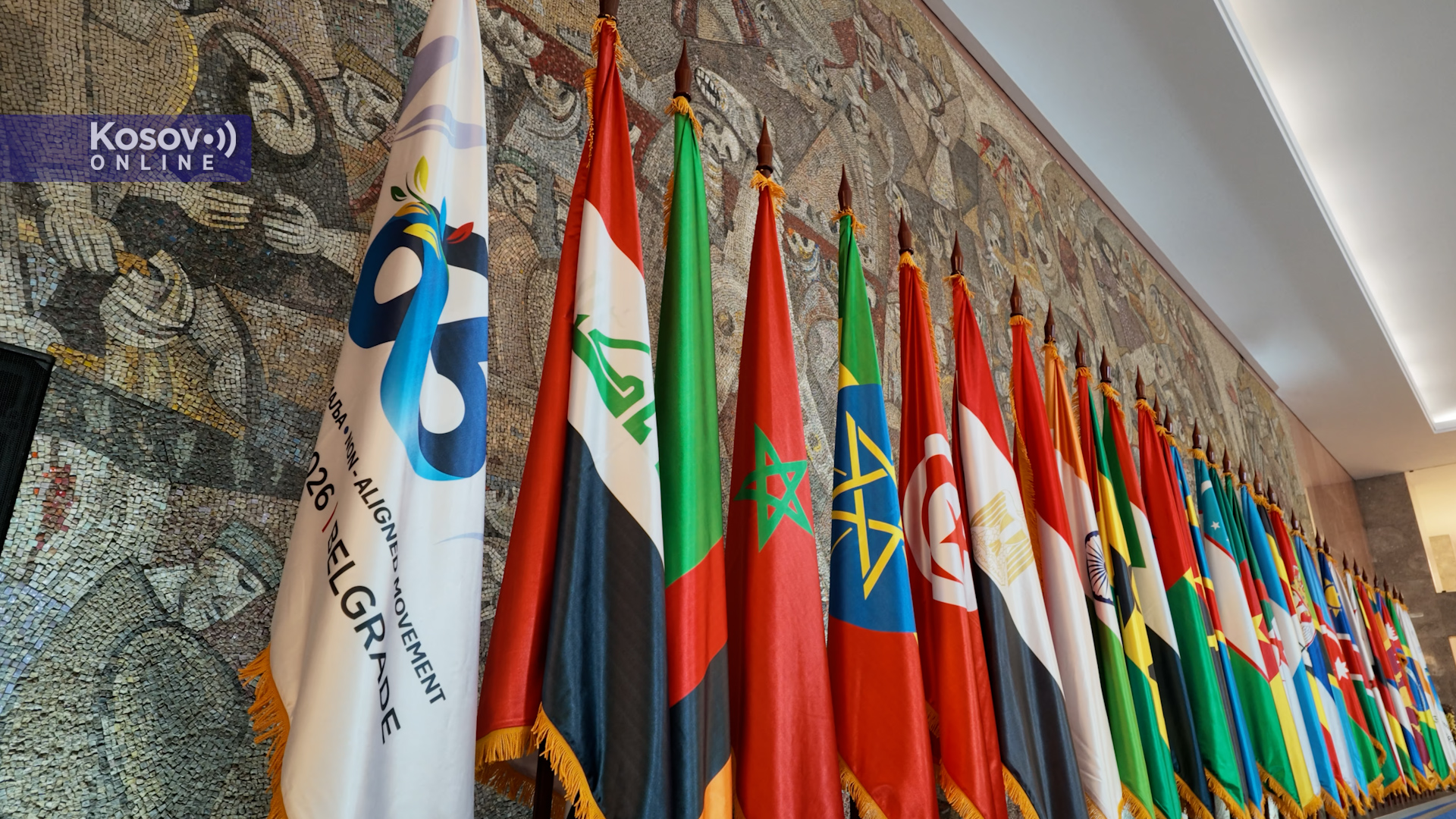
Serbian President Aleksandar Vucic said today that peace was not preserved through fear, but through continuous dialogue, mutual respect, and the unwavering sovereignty of every country, stressing that the Non-Aligned Movement remained the strongest bastion of multilateralism, defending the idea that the world must belong to everyone. Vucic made the remarks while opening a meeting in Belgrade marking the 65th anniversary of the First Conference of the Non-Aligned Movement.
President Vucic recalled the words of Jawaharlal Nehru, who said that the world could not be divided into masters and servants, nor into those who made decisions and those whose fate was merely recorded.
“He defined a moral compass that still guides a large part of humanity today. In the same spirit, Gamal Abdel Nasser emphasized that our freedom was not given to us as a gift, but won in defense of justice and equality. Equally unforgettable are the words of Kwame Nkrumah, who always stressed: ‘Let us organize ourselves, not so that we may become part of a divided world, but so that we may recreate it as a community of free people,’ while Sukarno reminded us that the voice of small nations is stronger than any arsenal of weapons,” Vucic said.
Noting that Yugoslavia’s position, and consequently Serbia’s, had been that peace was not preserved through fear, but through continuous dialogue, mutual respect, and the unwavering sovereignty of every country, Vucic said that those great statesmen had not created a political alliance, but had laid solid foundations for the most democratic platform within the United Nations, where decisions were not made in exclusive offices of the great powers but through sincere dialogue among all those who shared the same dream of freedom.
“At a time when the foundations of the global order are being shaken by selective approaches to international law, the Non-Aligned Movement remains the strongest bastion of multilateralism, defending the idea that the world must belong to everyone, and not only to those whose economic or military power happens to be dominant at any given moment,” Vucic said.
He noted that the Non-Aligned countries had remained firmly committed to the fundamental principles of the United Nations, according to which the voice of every independent country carried equal moral weight regardless of its geographical size or material wealth.
Large number of member states consistently respect Serbia’s sovereignty and territorial integrity
Vucic expressed particular and profound gratitude for the fact that a large number of Non-Aligned Movement member states consistently respected Serbia’s sovereignty and territorial integrity, providing strong support for the preservation of its constitutional order and the protection of its state interests on the international stage.
“Our sincere understanding and mutual solidarity demonstrate that our long-standing partnerships are not merely a memory of a glorious past. They constitute a living and effective alliance that has proven itself at every crucial historical moment,” Vucic said.
According to him, when international law was violated, it had to be defended consistently, regardless of where the violation occurred or who was involved.
“For Serbia, this is a matter of particular and vital importance. In our efforts to preserve our sovereignty and territorial integrity and to find a sustainable and compromise solution to the issue of Kosovo and Metohija, we remain committed to international law and the Charter of the United Nations, because what applies to some must apply to all,” Vucic stressed.
The Serbian President said that six and a half decades ago Belgrade had been a stage for courage and freedom and had become the home of one of the most significant movements in the history of modern diplomacy.
Recalling the origins of the idea behind the Non-Aligned Movement, he said that the world at the time had been deeply divided, marked by major geopolitical confrontations, an arms race, nuclear ambitions, and the danger that the fate of entire nations could be decided without their voices being heard.
In those circumstances, the leaders of the Non-Aligned Movement had the courage to forge a different path, Vucic said, adding that it had been a path of independence, dialogue, and cooperation, in which the size of a state did not determine the value of its voice.
“That is one of the most important messages of the Belgrade Conference, and it remains equally relevant 65 years later,” Vucic said.
He noted that today’s reality was characterized by divisions and uncertainty in international relations, often resulting from the selective interpretation and application of international law, as well as the application of the law of the stronger.
The world was witnessing, he said, new wars and armed conflicts, growing mistrust among the major powers, economic and energy shocks, disruptions to global economic flows, climate change, and the rapid development of new technologies which, in addition to enormous opportunities, also brought new risks.
Vucic therefore stressed the need for dialogue and cooperation.
“We must stand together in defense of an equal, just, and freedom-based international order,” Vucic emphasized.
Principles on which the Movement was founded remain relevant today
Noting that today all countries were strong enough individually to lead themselves, Vucic stressed that they were stronger together within a movement that was needed now more than ever.
“When there is a temptation to reduce international relations to a policy of force, we are here to remind one another that the sovereign equality of states, respect for international law, the peaceful settlement of disputes, and the Charter of the United Nations are the foundations upon which the international order must rest. The principles on which the Non-Aligned Movement was founded remain relevant today: the need for multilateralism, the need for equality, the need for every voice to be heard and not only the voices of the most powerful. And above all, the need to resolve differences through dialogue rather than conflict,” the Serbian President stressed.
He said Serbia proudly preserved the tradition of one of the founding countries of the Non-Aligned Movement, adding that over the decades it had built close relations and sincere friendships with countries in Africa, Asia, Latin America, and the Caribbean, based on respect, solidarity, and a sense of equality rather than domination or the imposition of will.
Those ties therefore continued to endure, Vucic said, adding that Serbia wanted to preserve and further develop that reservoir of trust.
“We do not want merely to reminisce about old friendships, but to continue building and expanding deep and long-term partnerships. We want our historic ties to acquire a new economic dimension: greater cooperation in agriculture, infrastructure, energy, digitalization, and new technologies,” Vucic said.
He stressed that Serbia did not believe that belonging to one region excluded friendship with other regions.
“Throughout history, our region has often found itself at the crossroads of major interests and great powers, which has frequently cost us dearly, but it has also given us the experience to understand that proximity alone is not always enough to create closeness, just as thousands of kilometers need not be an obstacle to friendship and cooperation. What truly connects us are the principles that matter to us—above all, the Charter of the United Nations, the sovereignty and territorial integrity of states, equality, and the right of every country to decide its own future,” Vucic said.
He stressed that Serbia was a country its friends could rely on and that Serbia did not forget those who had helped it in difficult times.
Vucic also noted that when others had faced the pandemic, natural disasters, and other crises, Serbia had sought to help as much as it could.
Three new cooperation initiatives
The Serbian President said that the desire remained to continue building such relations in the future, with more trade, more investment, more students coming to Serbia and more people from Serbia traveling to Non-Aligned countries, as well as greater cooperation in agriculture, technology, healthcare, and every field that could benefit citizens.
“That is why it gives me great pleasure that here in Belgrade we are looking not only at our shared history, but also toward the future by launching three new initiatives for cooperation among our countries,” Vucic said.
He explained that the first initiative, “Non-Aligned Digital,” would focus on strengthening knowledge, expertise, and capacities for the development and management of digital communications and security infrastructure.
The second initiative, he said, would be a Non-Aligned Movement Film Festival in Belgrade, a new annual platform for cultural dialogue and cooperation bringing together filmmakers, cultural institutions, and creative communities from all Non-Aligned Movement member states.
“This will be further strengthened during Expo 2027,” he added.
The third initiative would be an international seminar for young diplomats from Non-Aligned Movement countries, conceived as a meeting place for a new generation of diplomats, an opportunity to exchange ideas, and a platform for building lasting professional connections.
“Expo 2027 in Belgrade will also be an opportunity for us and for many of our friends to come together, showcase their countries, and launch new business partnerships for the future. More than 140 participants from all regions of the world have already registered, and we are particularly pleased that this will be the first Expo in Southeast Europe in the 21st century. That is why we do not view it solely as a Serbian project, but as an opportunity for the entire region,” he said.
Vucic stressed that Serbia would continue to preserve its old friendships while giving them new, richer, and more dynamic substance.
“We will be ready to talk with everyone, to help whenever we can, and together with you to defend peace, international law, and the right of every state to be respected,” Vucic said.
Non-Aligned Movement was a rationally sound response
Ugandan Vice President Jessica Alupo conveyed a message from President Yoweri Kaguta Museveni, who said that the Non-Aligned Movement had been a rationally sound response by parts of the world’s population to the narrow-minded thinking that had emerged.
In his message, Museveni recalled that Karl Marx had identified five social systems that had emerged by the time he wrote The Communist Manifesto in 1848.
“These were the primitive communal systems of early hunter-gatherer societies, in which everyone was equal. Then there was the slave-owning system, such as the one in Rome; feudal systems in which a small number of people owned the land while peasants paid rent to use it; and the capitalist system based on profit—the difference between costs, input costs, the final price of a product, and the wages paid to workers, or the proletariat. The owners of profits were the middle class, the bourgeoisie, who owned the means of production—that is, factories, shops, and businesses,” Museveni stated in the message read by Alupo.
The Ugandan President’s message added that there was also the newer socialist system, under which the means of production would be owned by the state through state-owned enterprises, while the people would belong to cooperatives.
He said thinkers such as Adam Smith had helped demonstrate that private enterprise, specialization, and exchange were more efficient and rational than the production methods of primitive man, who had attempted to grow his own food, build his own house, and treat himself with medicinal herbs.
At the microeconomic level, according to the message read by Alupo, capitalism had been more efficient than the earlier systems of feudalism, slavery, and primitive communal society.
However, the message continued, by 1929, when the Great Depression broke out, it had been discovered that capitalism was also inefficient and irrational at the macroeconomic level.
The cause of the 1929 Depression had been low effective demand, Museveni said in the message read by Alupo. People did not have enough money to buy the goods produced by capitalist companies.
“And so John Maynard Keynes proposed the system of the ‘welfare state’—the social state. In other words, give people money even if they are doing nothing, so that they can buy what capitalist companies produce. Therefore, when confusion arose over whether one was a capitalist or a socialist, we rationally said ‘no.’ We said that we needed both, to a certain extent. That is why we have the forum of the Non-Aligned Movement. And this is before we even begin discussing the sovereignty of states within the political system,” Museveni stated in the message read by Alupo.


Djuric: Serbia proud of Belgrade’s historic role
In his opening address, Serbian Foreign Minister Marko Djuric said that 65 years ago Belgrade had brought together leaders from across the world united by their commitment to dialogue, sovereign equality, and mutual respect.
Welcoming participants to Belgrade, the birthplace of the Non-Aligned Movement, Djuric said the legacy of that conference remained highly significant in a world once again confronting deep divisions and challenges.
“Serbia is proud of Belgrade’s historic role as a meeting place and remains committed to preserving the legacy of friendship, openness, and dialogue,” Djuric said.
Following the plenary session, heads of delegations from the participating countries will symbolically plant a tree in the Park of Friendship at Usce. During the meeting, President Vucic will also hold a series of bilateral meetings with officials from participating countries.
Last night, he hosted a dinner marking the 65th anniversary of the First Conference of the Non-Aligned Movement, stressing on the occasion that Serbia pursued an independent policy, safeguarded its state and national interests, and extended a hand to everyone who respected its choices.
In a post on the Instagram account “buducnostsrbijeav,” Vucic said that 65 years had passed since the First Conference of the Non-Aligned Movement and that, although the world had changed, the importance of sovereignty, international law, and equality had not diminished.
The First Conference of the Non-Aligned Movement began in Belgrade on September 1, 1961, and, pursuant to a decision adopted by the Serbian Government last year, September 1 is observed in Serbia as Non-Aligned Day.

0 comments