
Atanasovski: Skopje and Belgrade are working on strengthening their brotherly relations, only divided by foreign policy orientation
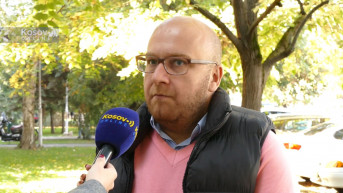
Macedonian analyst Blagojce Atanasovski assessed that the visit of Serbian Prime Minister Miloš Vucevic to Skopje indicates that Serbia and North Macedonia will continue to strengthen their economic, trade, cultural, and educational cooperation, noting that the two countries maintain strong ties in political relations as well, except for their foreign policy orientation.
Atanasovski reminds that Vucevic's visit to Skopje followed the visit of Hungarian Prime Minister Viktor Orbán, suggesting that North Macedonia is taking a new geopolitical course, where it is politically, economically, culturally, and in every possible aspect, connected with official Belgrade and Budapest.
"I think that in this regard, public messages can be expected that Macedonia and Serbia are friendly, or rather, brotherly countries, with no open bilateral issues, and that in the future they will cooperate much more in the areas of trade and economy, culture, education, and in all areas that should bring the two countries closer and develop their relations," Atanasovski told Kosovo Online.
He assesses that the further strengthening of Serbia and North Macedonia will primarily focus on increasing trade and economic exchange.
"I believe it will move towards the development of Corridor 10, which our government has officially announced, meaning economic-trade connections and investments expected to come from the port of Thessaloniki, following the construction of the highway and railway infrastructure leading to official Belgrade and Budapest. Investment in this project aims to enhance trade and economic cooperation between Hungary, Serbia, and Macedonia," Atanasovski pointed out.
Regarding political relations, the analyst emphasized that aside from the past issue of non-recognition of the church, the two countries have maintained almost brotherly relations for the past 33 years.
However, he notes that the key difference between Skopje and Belgrade lies in their foreign policy orientation.
"Serbia is a neutral country, while Macedonia is officially a member of NATO, but the common point is that Serbia also aspires to become a member of the European Union in the long term. However, there are bilateral problems, particularly the non-recognition of Kosovo, which is a condition preventing Serbia from joining the Union. Similarly, Macedonia, as a country aiming to become a member of the European Union, faces its own challenges—due to opposition from its eastern neighbor, Bulgaria, it also struggles with EU membership," he said.
He pointed out that the desire for EU membership should be an additional motivation for Serbia and North Macedonia to elevate their cooperation to a higher level, and that these ties could be beneficial for the region if the EU accession process is delayed.



0 comments