
Bakoyannis: Non-enforcement of the Visoki Decani Monastery judgment is a failure to uphold the rule of law, establishing the CSM is essential
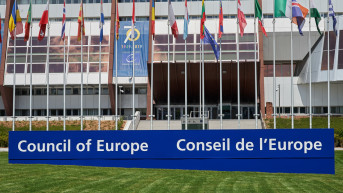
Non-enforcement of the Constitutional Court decision regarding the Visoki Decani Monastery represents a significant failure of Kosovo's institutions to respect the principle of rule of law, and the establishment of the Community of Serb-majority Municipalities is considered a necessary condition for effective protection of minority rights, as stated in the Information Note of the rapporteur for Kosovo's membership in the Council of Europe, Dora Bakoyannis, presented today before the Political Committee of the Parliamentary Assembly of the Council of Europe, regarding Kosovo's membership request.
In this document, which Kosovo Online had access to, it is also noted that the Kosovo authorities should refrain from expropriations that were not in line with the Constitution and the legal system of Kosovo.
Rapporteur Bakoyannis has identified three main unresolved issues regarding Kosovo's membership request to the Council of Europe: the Constitutional Court judgment regarding the Visoki Decani Monastery, effective protection of the Serbian community in the northern municipalities, and land expropriation in municipalities with a Serb majority.
"Addressing the land dispute related to the Visoki Decani Monastery in the Decani municipality, in a 2016 ruling, the Constitutional Court confirmed the monastery's legal ownership of 24 hectares of land. To this day, not only has the court's decision not been enforced, but it has also been sharply criticized by politicians, including prominent public officials, undermining the role of the Court as a guarantor of the Constitution," Bakoyannis stated.
She emphasized that during her visit to Pristina, she discussed this issue with the Prime Minister and the President of Kosovo, as well as with Father Sava, the abbot of the Visoki Decani Monastery.
"I was clear that the judgment is a matter of rule of law and must be enforced, as unanimously demanded by the international community. The monastery is a treasure belonging to all communities in Kosovo," Bakoyannis stated in the document.
During her visit to Pristina, she emphasizes, she received various explanations for the reasons why the judgment was not implemented, ranging from concerns about far-reaching consequences if used as a precedent, to legitimizing the wrong decisions of the Milosevic regime.
Bakoyannis highlights that she consulted various legal experts from the Council of Europe and other relevant international organizations and that the experts confirmed the finality of the Constitutional Court's decision from 2016, insisting that the decision was final and binding and that any attempt to review such a decision would result in a general climate of legal uncertainty, a decrease in public trust in the judicial system, and consequently in the rule of law.
"All in all, the non-enforcement of the decision should be seen as a political choice and represents a significant failure of Kosovo's institutions to respect the principle of the rule of law," Bakoyannis concluded.
In the section dedicated to the protection of the Serbian community in the northern municipalities, she notes that the establishment of an inter-municipal association is not a requirement according to the standards of the Council of Europe, but that in the case of Kosovo, the establishment of the Community of Serb-majority Municipalities, besides being a milestone towards the normalization of relations between Pristina and Belgrade, is also an international obligation and the most concrete way to ensure the effectiveness of protecting the Serbian community in the northern municipalities.
She recalls the First Agreement on Principles Governing the Normalization of Relations between Kosovo and Serbia from 2013, within the dialogue framework, which states that there will be a Community of Serb-majority Municipalities in Kosovo, ratified as an international agreement on June 27, 2013, by the Assembly of Kosovo. She also points out the Agreement on the Path to Normalization between Kosovo and Serbia from February 27, 2023, and its implementation annex from Ohrid dated March 18, 2023.
She notes that in October 2023, the EU Special Representative for the Belgrade-Pristina Dialogue, Miroslav Lajcak, presented a new draft statute of the Community of Serb-majority Municipalities without executive powers.
"In recent months, the situation in the northern municipalities, a region governed by Kosovo Albanian mayors who do not enjoy popular legitimacy (3.47 percent of voters), and where Kosovo Serbs represent approximately 96 percent of the population, has caused serious concern," the document states.
It also points out the "actions of marginalization of the Serbian community in northern Kosovo intensified earlier this year with the announcement of a new regulation by the Central Bank of Kosovo banning all currencies for transactions except the euro."
Considering that the Government of Serbia financially supports healthcare and educational institutions in northern Kosovo, this regulation is perceived, Bakoyannis emphasizes, as hostile to the survival of the Serbian community.
"All in all, in light of the specific context and developments in the region, the establishment of the Community of Serb-majority Municipalities is considered a necessary condition for the effective protection of the human rights of national minorities," Bakoyannis concludes.
Regarding land expropriation in municipalities with a Serbian majority, Bakoyannis states that expropriation is an important rule of law issue "with broad political repercussions," intensified by the specific circumstances in Kosovo.
She recalls that since 2022, the Kosovo authorities in the municipalities of Leposavic and Zubin Potok initiated the process of land expropriation for 118 parcels totaling approximately 133 hectares.
"Representatives of the international community, including the European Union, EULEX, OSCE, and the United States, have expressed deep concern about these decisions, claiming that the procedures were not in line with Kosovo's laws and regulations," Bakoyannis emphasizes.
She notes that, among other things, the decisions did not define the "public interest that makes these expropriations necessary," as required by Article 44 of the Constitution and the Ahtisaari Plan.
"Such actions are not in line with the rule of law and further undermine trust between the Serbian community and Kosovo institutions. Authorities should refrain from any expropriations that are not fully in line with the Constitution and legal system of Kosovo and make greater efforts to justify the reasons for expropriation to both directly affected parties and the broader public, especially in the current security situation in northern Kosovo," Bakoyannis assesses.
Bakoyannis also adds that the validity of the international community's criticism was confirmed by a court that overturned the decision on expropriation in January 2024, based on the government's failure to adequately explain the necessity and public interest of such a decision.
Bakoyannis emphasizes that during her last visit to Kosovo, she expressed concern about the new Draft Law on Property Expropriation proposed by the government, which, according to her, omits the provision from Article 3.1 of the current law, which states that "movable and immovable property of the Serbian Orthodox Church is inviolable and will not be subject to expropriation." She adds that this provision directly stems from the Ahtisaari Plan, namely Article 1.4 of Annex V.
"As noted by other international actors, this omission risks creating legal confusion, may lead to contradictory interpretations of the Kosovo legal framework in a particularly sensitive area, and increases the likelihood of legal disputes. It is of utmost importance that the Kosovo authorities ensure strict compliance with the Ahtisaari Plan and refrain from illegal expropriation of land affecting national minorities," Bakoyannis concludes.


0 comments