
Barac: The Vienna Convention does not apply to states with partial independence
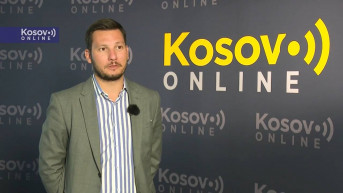
Srdjan Barac, an associate of the Center for Social Stability, notes that the incident involving Kosovo's President Vjosa Osmani at the Skopje airport was a result of the application of the Vienna Convention on Diplomatic Relations, which does not apply to states with partial independence.
"When we talk about the Vienna Convention, we are talking about states that are members of the United Nations, recognized states. Here we are talking about a state with partial statehood and the president of a partial state that does not have all the elements of statehood and therefore cannot be afforded and have privileges in full capacity," Barac told Kosovo Online.
According to him, based on reports and statements at the Skopje airport, a "misunderstanding" occurred between Osmani and the officials, which then escalated into an incident.
"Probably, there was a slight misunderstanding regarding the significance Vjosa Osmani wishes to have for herself and what the Skopje Airport official assessed, namely that she neither had the designation nor the diplomatic preferences that imply the confidentiality of the bag's contents, nor was her privilege endangered in that way. They simply wanted to inspect her bag. She refused this, as we have now seen, and this led to a certain scuffle, which could be considered a diplomatic incident because it goes beyond established practice," Barac said.
He primarily blamed Osmani's security detail for the incident, noting that they reacted in an undiplomatic manner.
"I would conclude that there was likely a failure on the part of Vjosa Osmani's officials, who reacted in what I would call an undiplomatic manner, putting North Macedonia's representatives in a position where they had to defend their officials and institutions. They still represent their state and show that their state has a certain strength. We can draw an analogy from past events that have since been clarified. Generally, misunderstandings occur, or things get lost in translation," Barac explained.
When asked if the incident could be interpreted differently, this researcher does not rule out the possibility of "inter-Albanian games" regarding who is the central figure in North Macedonia.
"It could be a basis for the theory that someone sent a message to draw her attention to the fact that she is not so welcome. On the other hand, the whole process got out of control. These are simply their games. Whether it was Kurti or someone else who intervened and wanted to send a message about who is the main figure in North Macedonia concerning the Albanian factor, I would rather leave it as a game between them, and let them finish it themselves," Barac concluded.


0 comments