
Becirovic: Consequences of Kosovo's declaration of independence are still felt today; the latest example being Venezuela and the annexation of Essequibo
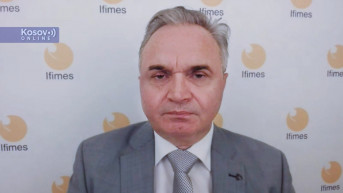
After the declaration of independence of Kosovo, although it was presented as sui generis in the international community, we still feel the consequences of that act. Recently, we had a referendum in Venezuela regarding the claiming of rights to the territory of Essequibo, neighboring Guyana, Zijad Becirovic, Director of the Institute IFIMES, says.
Three days ago, Venezuelan citizens voted overwhelmingly to claim rights to the disputed territory of Essequibo, rich in oil and long controlled by neighboring Guyana.
President Maduro of Venezuela today presented a new map of the country that includes the mentioned territory, stating that he had approved permits for companies to begin exploring the land for future oil, oil, and mineral exploitation.
Becirovic states for Kosovo Online that when it comes to Essequibo, the primary interest lies in significant oil deposits, not the desire for territory.
"It is about significant oil deposits, and that's why Venezuela has a great interest, not because of the territory, as Venezuela is quite a large country. We must take into account that this practice needs to be stopped, not just condemned. The key is the UN Security Council, which should ensure peace in the world and respect for international law, but unfortunately, the Security Council is being avoided. The United States did this, Russia is doing it now with Ukraine, but other major powers are doing it too. International law is at a crossroads, and I fear that the world is sinking into anarchy. UN reform is necessary because of the consequences of World War II, which happened a long time ago, and now different circumstances need to be adapted to. I sincerely hope that a new war will not be needed to establish a new world order", Becirovic says.
Becirovic believes that when it comes to Kosovo, it was presented in the international community as sui generis.
"However, later, in certain parts of the world, some territories within certain states wanted to declare themselves as a state, so that sui generis effect had consequences for others. On the other hand, after the declaration of Kosovo's independence, the trend of support from major powers for the creation of such states has declined", Becirovic says and emphasizes.
"In the UN, we have 193 member states, but even though there is a principle of self-determination, there is also a pragmatic situation that has arisen in the international world order after major conflicts. As a result, one nation lives not only in one but in several states, as is the case, for example, with the Hungarians, where two-thirds of the population live outside the home country. The same is true for Serbs, Albanians, and other nations, but that does not mean that borders can be changed and international law violated", Becirovic concludes.


comments