
Bilcik: Formation of the CSM would reduce tensions in the north and contribute to the progress of the dialogue
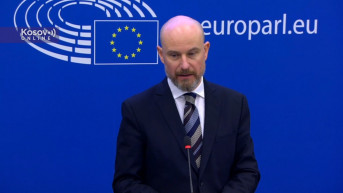
European Parliament rapporteur for Serbia, Vladimir Bilcik, emphasized that the absence of substantive dialogue and agreement has created a difficult situation when speaking about the heated tensions in Kosovo following the events in the village of Banjska, Pobjeda reports.
Bilcik highlighted that serious efforts to establish the Community of Serb-majority Municipalities (CSM) would reduce tensions.
"The only way forward is genuine engagement by both sides in the dialogue. The increase in tensions and the insecurity felt by the Serbs in Kosovo are the result of no progress in the dialogue. I would emphasize once again that there is a relatively quick diplomatic solution that would help reduce tensions, and that is serious work on the Community of Serb-majority Municipalities. This would demonstrate Pristina's commitment, and when that happens, I believe we would see progress in the dialogue. At the same time, it is very clear that what happened in Banjska - the concentration of significant resources and weaponry - could not have been done by individuals. That's why we need a proper investigation," Bilcik said in an interview with "Pobjeda".
When asked if he supported the stance of some members of the European Parliament who believe that the EU should consider a new strategy for the dialogue between Belgrade and Pristina, as well as for the Western Balkans in general, Bilcik responded negatively.
"No, I definitely do not support that idea. I believe that we have had a dialogue for several years now. The European Union's mediation in the dialogue between Belgrade and Pristina is the only basis that has long-standing and full support from all member state institutions, and in recent years, from the United States as well. There is no reason to reconsider it. The only way forward is genuine engagement from both sides in the dialogue. And of course, given the recent events, it will also require a full and sincere investigation into what happened in Banjska. Essentially, this is something that is largely in the hands of Serbia and Belgrade. Furthermore, we should not use or abuse these events. We need as much commitment from Belgrade as we have needed from Pristina in the dialogue itself because that is the only foundation that can lead to the normalization of relations between Serbia and Kosovo and, ultimately, progress towards EU membership," Bilcik adds.
He appealed to all parties not to escalate the conflict, to avoid resorting to greater nationalism and nationalist actions, and not to exploit what had happened in Banjska for short-term nationalist gains.
"This should really be the ultimate reason to seriously address the tensions and try to focus on how to best achieve de-escalation," Bilcik stated.
He emphasized that dialogue had no alternative, even though the strategy used so far had not yielded results.
According to Bilcik, dialogue with Kosovo Prime Minister Albin Kurti is very difficult.
"This strategy is fruitful. It is very fruitful to the extent that the dialogue has been ongoing for more than a decade. This is not a new process. This process has intensified, essentially in concrete agreements and documents made, including those in Ohrid earlier this year. Everyone is well aware of what the open issues are, everyone is aware of what needs to be done. What we lack at this moment is clear and full commitment from all sides to really do it. And that includes the establishment of the Community of Serb-majority Municipalities. This is one issue that Belgrade is really looking for, and we have been waiting for Pristina to resolve it. But these negotiations have been extremely, extremely difficult with Albin Kurti. And I'm saying this as someone who is very openly critical of the Serbian side on many issues, but I think when it comes to the dialogue, we really need to carefully assess the situation in both Belgrade and Pristina," Bilcik said.
He agreed that the focus at this moment was on Belgrade and that it should be especially regarding the investigation into what had happened in Banjska.
"In EU institutions, there is currently a significant discussion among member states about possible measures that member states could take regarding Serbia. It's all on the agenda, but I just want to say and call for a peaceful analysis. We have no alternative to dialogue. All questions are clearly framed; everyone knows what the open issues are and what needs to be done. What is missing is a real commitment and dedication from both sides on the ground to get things moving. And here, I think we need to think carefully at the EU level about how to best use the tools we have to ensure that our partners take actions for economic, financial, and social benefits to achieve normalization of mutual relations so that people can truly look towards a European future and not live in constant fear, tension, and a constant focus on what has been an open question for over two decades," Bilcik emphasized.
He added that it was time to move forward, and the Balkans didn't need another conflict.
"We really need a peaceful solution at the negotiating table. And dialogue is the only way forward. So I am extremely cautious, and I would discourage any calls to reconsider or change the strategy because there is no credible 'Plan B'. Anyone who truly calls for this, I think, further undermines the dialogue itself, which I see as the only solution," Bilcik said.
When asked who was to blame for the events in Banjska, Bilcik stated that it was never black and white, and the situation was more than complicated.
"It takes two to tango, and the picture is not black and white, but the situation is very complex. But the truth is, tensions are escalating throughout the region. There is an increasing sense of real pressure on everyday life, especially among the Serbs concentrated in the north, who often feel abandoned, lonely, and truly in a very, very uncertain position in terms of how to continue with their daily lives. And that's the result of no progress in the dialogue. Here I would like to emphasize again that there is a relatively quick diplomatic solution that would help reduce tensions, and that is serious work on the Community of Serb-majority Municipalities. This would demonstrate Pristina's commitment, and when that happens, I believe we would see progress in the dialogue," Bilcik said.
He added that he didn’t want to point fingers at one side or defend the other.
"I don't think this contributes to calming things down. It contributes to further tensions. But yes, tensions have arisen because the dialogue, as it has been conducted, has not yielded results. I won't draw any conclusions, but that investigation must be thorough, justice must be served, and we need credible answers about what happened. I think Serbia has gained international credibility over the past few years in terms of practical commitment to the dialogue, unlike the Government led by Albin Kurti. Since his arrival to power in Kosovo, there are more and more questions about the Government's commitment to the dialogue. There are things that must be resolved on the ground in the dialogue because it's not about recognition as a starting point, but an attempt to address practical issues for the daily lives of people living in Kosovo so that they feel safe. And all these things really need to be the focus of the dialogue, and I think the Community of Serb-majority Municipalities is an important part of the answer. So, it's really a problem on the side of Pristina," Bilcik says.


0 comments