
Surlic: Danger of CSM fading into the background after Banjska incident, and that the pressure on Belgrade will increase
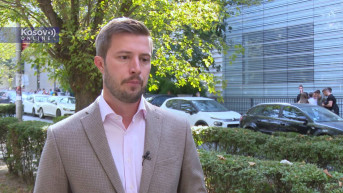
Stefan Surlic, an associate professor at the Faculty of Political Sciences, has assessed for Kosovo Online that after the events in Banjska, the main topic of discussion continues to be de-escalation. However, he believes that the new rhetoric from the EU and the US primarily focuses on exerting more pressure on Belgrade and less confidence in the idea of forming the Community of Serb Municipalities.
"Based on the debates in the European Parliament and what we hear from European officials, there is an insistence on continuing the dialogue, but with an emphasis on de-escalation. This could, in translation, mean greater political pressure on Belgrade and less trust in any idea of forming the Community of Serb Municipalities," Surlic says, responding to whether the EU and US pressures on Pristina to de-escalate the situation in the north and implement the CSM are diminishing after the events in Banjska.
Surlic adds that "if de-escalation is presented in the coming period as something that is the responsibility of Belgrade, then the CSM will also be presented more in the way Pristina wants it."
"That is, as a disruptive institutional framework where Serbs will actually hinder the functioning of institutions rather than achieve what is essentially autonomy in vital spheres," Surlic explains.
He emphasizes that the CSM has been the top priority so far, formally presented as such by international officials and the mediator, however, in his opinion, the de-escalation issue could significantly disrupt that idea.
"I fear the worst possible concept, the outcome of further dialogue, where a specific, unacceptable political condition is set for Belgrade, which is to implement the other points of the Franco-German agreement while pushing the CSM down the list of priorities," Surlic says.
He believes that the recent events have also halted the withdrawal of Kosovo police forces from the north.
"It has been halted; Pristina has now gained full support from international actors in terms of governing the situation on the ground. We hear unanimity that the Kosovo police and its units, including special formations, are solely responsible for security in the north. EULEX and KFOR will only assist where necessary, but they are not the appropriate forces responsible for security, which further complicates the position of the Serbian community, primarily in northern Kosovo," Surlic explains.


0 comments