
Bjelic: CEFTA is functioning; new protocols that will prevent blockages are being negotiated
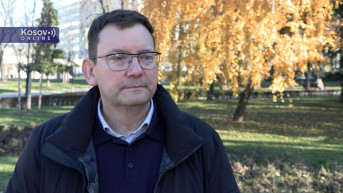
Despite certain blockades in the last two years, the Central European Free Trade Agreement (CEFTA) continues to function, according to Professor of International Trade at the Faculty of Economics in Belgrade, Predrag Bjelic. He points out the significance of Serbia taking over the presidency of CEFTA on January 1 and mentions that new protocols are underway to prevent trade barriers and resolve disputes.
"Serbia is expected to take some initiatives, to set an agenda, and to make a step forward. CEFTA is very important for Serbia. After the European Union, CEFTA is our closest regional integration, and we export a lot of goods to those markets. In relation to the European Union, Serbia is in a special position because we have a large surplus, making our economy the most competitive among all countries, or contracting parties of CEFTA. What is important is that CEFTA continues to function," Bjelic says for Kosovo Online.
He notes that there have been certain blockades since two years ago, especially since June, when the Kosovo government banned the entry of Serbian goods into Kosovo.
"According to data, there has been a decline in our exports, and the decision to ban is illegitimate and not in line with CEFTA rules. The basic problem is that there was no mechanism to protect signatories from such so-called illegitimate behavior of other members. However, CEFTA continues to function. All the privileges that exist in trade with all signatories, both in the trade of goods and services, still exist, and that is still the basic framework in which trade is conducted in the region," Professor Bjelic says.
He emphasizes that work is underway on an additional protocol that should introduce a mechanism for resolving trade disputes among CEFTA members, based on the principles of the World Trade Organization.
"Until now, there has been a limited mechanism where, for example, a problem is raised that someone is violating the agreement, but then all contracting parties must agree that a violation has occurred. Of course, the violator will not agree to that. Thus, it was not possible to resolve trade disputes in that way. Another mechanism should be introduced now, based on the rules of the World Trade Organization, where the damaged country initiates a dispute and then panels are organized where experts in international trade discuss it. In fact, they will provide expert opinions on whether there is a violation of the rules or not," Bjelic says.
He adds that negotiations on this additional protocol to resolve trade disputes in CEFTA are currently concluding, and if achieved, it would be a significant step forward in the further functioning of this initiative. This would, as he says, help remove the barriers set by the Kosovo government and serve as a preventive measure against introducing any similar barriers in the future.
"Because that is not the only barrier; this one is extreme, given that it involves introducing a trade blockade that completely prevents the flow of goods. This is very harmful in international trade, and the WTO always qualifies such measures. But there were also other measures, non-tariff ones, which other partners introduced toward Serbia, and Serbia introduced toward other partners. Some barriers were designed, and some are the result of harmonization with the European Union. For example, Montenegro and Serbia, which have gone furthest in integration, by applying EU rules, actually create obstacles to trade with CEFTA. That was one of the problems," Bjelic notes.
He states that harmonization is now underway, and there is a new offer from the European Union for those elements where full cooperation within CEFTA is achieved to be included in the EU's common market. However, he adds that this will only apply to segments where full cooperation within CEFTA has already been achieved, and it is now an incentive for additional growth and development of this initiative.
Bjelic also emphasizes that CEFTA and the Open Balkan are not competitive initiatives.
"Open Balkan has not gone much further, and many elements it has adopted have either already been negotiated in CEFTA or are an integral part of the plan for a common regional market. In the Open Balkan, we do not yet have a clear vision; there is no one comprehensive document; it is a set of signed documents, many of which are not yet applied. Open Balkan has gone further in one segment, and that is facilitating trade at border crossings, but it is questionable how much all of that works in practice. I think it was more of an attempt, since CEFTA was blocked, for the three member countries of the Open Balkan, Serbia, Albania, and North Macedonia, to collaborate much better," Bjelic says.
He adds that at that time, North Macedonia and Albania did not have a clear European perspective, and initiatives like the Open Balkan meant something to them.
"In addition to CEFTA, there is also the Berlin Process, an EU initiative that introduces and requires an upgrade of CEFTA and the creation of a common market; there can be existing conflicts. For example, in the harmonization of sanitary and phytosanitary measures in the Open Balkan, the application of European principles is not clearly indicated, and then it can be in conflict with the rules of CEFTA and the common market in the Western Balkans," Bjelic explains.


0 comments