
Djurdjevic: CEFTA ripe for reorganization, Belgrade-Pristina agreement the key to its functioning
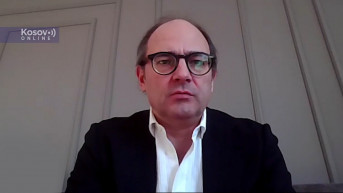
Nenad Djurdjevic, an advisor to the president of the Chamber of Commerce of Serbia, says that in the last three years, practically no agreement or decision at the political level have been reached within the Central European Free Trade Agreement (CEFTA). Regardless of Serbia taking over the presidency of this initiative on January 1, it will be difficult to unblock its functioning, given the current situation in relations between Belgrade and Pristina.
Although the CEFTA agreement is supposed to ensure unhindered trade between the signatories, Serbia, Albania, Bosnia and Herzegovina, Montenegro, North Macedonia, and Kosovo, the unilateral decision of the Kosovo government to block the distribution of Serbian products is still in effect.
"In the previous period, decisions in CEFTA were only harmonized at the technical level; no political decision was made, and given the current political situation, primarily at the level of Belgrade and Pristina, I do not expect that to change," Djurdjevic says for Kosovo Online.
Djurdjevic also points out that chairing CEFTA is a formal matter, and each member presides alphabetically each year, and decisions are made unanimously. Also, there is practically no system of sanctions for members violating the agreement.
"What needs to be emphasized is that CEFTA is a very significant market for the economy and business of Serbia. CEFTA is Serbia's second partner in terms of exports and imports after the European Union. Therefore, we are in surplus with all countries or parties in CEFTA when it comes to exports. So, this speaks to the great importance of that market for our economy. Therefore, Serbia's presidency of CEFTA is important, and I hope that Serbia will find a way to improve relations or at least to unblock the current situation," he notes.
He recalls the situation in 2019 when Serbia, starting the Open Balkan process, showed goodwill at a time when the Kosovo government's taxes on Serbian goods were in effect, so it adopted a certain number of measures at the political level.
"So, it is important for Serbia, and I hope that this year some way will be found to unblock it. It should be borne in mind that practically all meetings, or all ministerial meetings, should be organized in Belgrade since Serbia, as the presiding country, will have a leading role in setting the agenda and conducting the process, which will be a challenge in itself given the relations between Serbia and Kosovo," our interlocutor emphasizes.
He points out that measures have been taken by the government in Pristina toward finished products from Serbia. He reminds that the blockade introduced in June was initially complete, but they relaxed it when they realized that it harmed their companies and the economy because many imported items from Serbia are practically semi-finished products that need to be further processed or raw materials used for further production.
Djurdjevic also points out that CEFTA, as envisaged, operates in such a way that all decisions are made unanimously, and there is no mechanism that can regulate and resolve disputes that have proven to exist.
"So, that mechanism and the agreement made in 2006–2007 are ripe for change, for reorganization, and the Chamber of Commerce has been putting it on the agenda for a long time. We even put forward some ideas on how to use this new growth plan for the Western Balkans to achieve a reconfiguration of regional economic cooperation and even reorganization of that process within CEFTA. Based on what has happened so far, and again following political relations, it is hard to expect any great gain in 2024. But maybe there will be some political agreement between Belgrade and Pristina, so that helps to unblock political decisions within CEFTA. But given the current situation and decision-making, it is quite difficult to imagine," our interlocutor concludes.


0 comments