
Bozinovic: Rohde's attribution of Decani to Kosovo is not a gaffe but Berlin's official policy
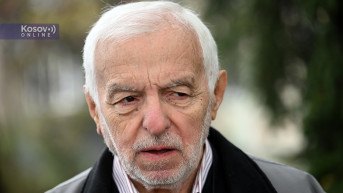
The recent labeling of Visoki Decani as a "Kosovo monastery" by the German ambassador in Pristina, Jorn Rohde, is unlikely to be a gaffe, according to diplomat Milovan Bozinovic. He suggests that it is a well-thought-out formulation in line with Germany's policy in recent years.
Bozinovic, speaking to Kosovo Online, notes that it is the ambassador's duty not to make such mistakes accidentally and not to cause confusion with his formulations that could be expected, and wouldn't favor any of the parties in a controversial case like the Kosovo issue.
"It is not accidental, not only because it's hard to imagine it's a mistake, but because it's part of a policy that has been pursued in recent years. Such a formulation is not accidental," Bozinovic, who was Serbia's ambassador to Berlin, says.
He emphasizes that, on one hand, there is an attempt by Albanian authorities in Kosovo to construct their own history of Kosovo, which would then legitimize their aspirations to have their own state.
"On the other hand, we have Western states, with Germany unfortunately leading the way, strongly supporting them. You cannot be convincing in your efforts to be an independent state if you do not have a past that explains it all and makes it logical. Then, the truth is not held onto at all, and all these claims that are not new but have been going on for several decades, go in the direction of completely abusing the truth. None of this is supported by serious science, which Albanian pseudoscientists and publicists no longer want to consult. However, this then finds a positive response among those who insist, for their geopolitical reasons, that Kosovo indeed becomes a fully-fledged state recognized by others," Bozinovic says.
He adds that German foreign policy in the past few years, since the arrival of the new government, has "undergone a deep transformation and degradation."
"They are no longer a serious state, whose political evolution I have been following for several decades, which knew how to find a formulation, a solution around difficult issues that may have been more critical than those today, leading to compromise or hinting at it, giving people hope that it is possible. What German foreign policy is saying today is a rough, Manichaean approach to things – there is nothing but excellent, which is then with us, or very bad, which is against us. There is no longer finesse, no search for a middle solution. This is, therefore, a militant policy that is also exclusively in the service of the NATO pact," Bozinovic claims.
He finds it paradoxical that this is done by a party that is green, left-oriented, and should be progressive.
"German foreign policy has experienced regression, which has its European consequences, as it has set European policy back. Their approach to the war in Ukraine is a militant exclusivity, how they want Russia to capitulate, and as the head of diplomacy, Annalena Baerbock, explicitly said, that will never happen, and Europe will be in great difficulty if something does not change there," he emphasizes.
Bozinovic also comments on the relocation of the memorial plaque for fallen Serbian soldiers at the Orthodox cemetery in Pristina, initiated by French Ambassador Olivier Guerot and Rohde, describing it as a "sad phenomenon," something that is not done anywhere.
"To move it in a way that the side that will be hurt is not consulted or informed that it will be done, is an arrogant attitude that is simply unforgivable. Those who did it 'fell low.' It just doesn't work that way. We will see how they will justify it, allegedly, everything will return to how it was... But the painful impression of bias in a difficult dispute like the one between Serbs and Albanians remains, where there is such a blatant leaning towards one side. It is not a serious foreign policy; all of that must be done differently, especially when you have a conflict in which major powers are involved. Then they really must see how to bring these quarreling partners to some peaceful solution. Certainly not like this. This is a low blow," Bozinovic concludes.


0 comments