
Brankovic: Serbia faces trench warfare; Article 35 of the UN Charter allows for an urgent session of the Security Council
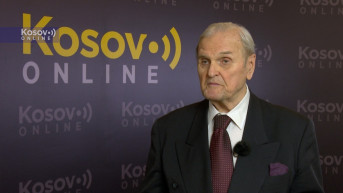
Diplomat and former Ambassador to the UN, Branko Brankovic, assesses for Kosovo Online that based on Articles 34 and 35 of the UN Charter, Serbia has the right to request an emergency session of the Security Council because the recent actions of Pristina evidently threaten the peace and security of the Western Balkans region.
"Article 34 of the UN Charter states that the Security Council may consider any issue, conflict, or any dispute for which it finds there is a danger of endangering peace and international security. Based on that, comes Article 35 of the Charter, which states that each member state has the right, in accordance with the previous article, if it believes that there is a danger to international peace and security, to request a meeting. In this way, based on Article 35, we submit a request for a Security Council session," Brankovic clarifies.
He explains that this request is not subject to the possibility of veto, but the crucial question is the interpretation.
"The question arises about what we are proposing. It is a matter of whether it is really something that threatens peace and international security, and the fact is that it jeopardizes peace in our region. Therefore, the Security Council will usually put it on the agenda. However, the question is whether that agenda item will be adopted. Nine positive votes are needed," Brankovic says.
He assesses that much will also depend on how the Quint countries vote.
"The question is to what extent the Quint countries will keep their word as they said - to postpone the abolition of the dinar because then we have more than nine votes, or will they, according to the old principle of total hypocrisy, make up something else and, nevertheless, because the majority has recognized Kosovo, they will try to reduce our chances of getting nine positive votes to bring our proposal to the Security Council meeting," Brankovic says.
He believes that Serbia faces trench warfare not only in the Security Council but also at the bilateral level.
"Some call it lobbying, and those of us who have dealt with it call it consultations. You consult with friends and those who have a different opinion. You try to convince them that what you want is still a better and fairer thing for peace and security," Brankovic says.
He adds that attention is paid to every detail in the preparation of the agenda proposal.
"Consultations are not only bilateral but in addition to the hall where speeches are made and resolutions are adopted or not adopted, there is also a large hall just for consultations of all Security Council members. When something is proposed, then you sit down and look at it, everything is scrutinized, every comma, every word, every point... Because everything is important. Either the text is agreed upon or not, then it goes to a vote, and the majority says whether or not these permanent members have something against it or not and whether they use a veto or not," the diplomat explains.
He says that Serbia is also facing an offensive on the bilateral level in the capitals of the world's leading powers.
"When the ambassador of a state in New York receives a request, he has to report to his ministry and seek instructions. In this way, on a bilateral level, when we send our ambassador to a major capital, the ministry immediately knows what we want. This speeds up the process, depending on the content," he says.
Brankovic says it is still too early to talk about the form of the future decision of the Security Council, but it can be in the form of a resolution or a statement.
"But, it should not be forgotten that every decision of the Security Council, whether it is a statement or not, is binding," Brankovic emphasizes.

0 comments