
Bugaqku: Political and constitutional crisis in Kosovo has shown there are gaps in the law
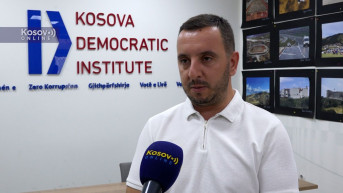
Legal expert from the Kosovo Democratic Institute, Vullnet Bugaqku, emphasized that the failure to constitute the ninth convocation of the Kosovo Assembly has revealed legal gaps, and that it is necessary to amend either the Constitution or the Assembly’s Rules of Procedure to simplify the formation of the legislative body.
Bugaqku believes that, once the Assembly is constituted, MPs must give special attention to the sections of the Rules of Procedure that relate to the formation and election of the Assembly Speaker.
He also believes that an agreement is needed on who leads the constitutive session, as this case, he adds, has shown that the presiding member Avni Dehari, under the influence of his party, the Self-Determination Movement, is pushing his own agenda.
“According to recent interpretations by the Constitutional Court, as well as the political and constitutional crisis we are experiencing, it is clear that there are legal gaps that must be addressed and amended during the constitution of the Kosovo Assembly. I want to emphasize the need to revise the Rules of Procedure to clarify the voting procedure, whether or not it permits the constitution process, especially the election of the Assembly Speaker. It would be wise for MPs to sit down and agree on amending the procedures and leadership of the constitutive session. You can see that the session being led by a single elderly MP became problematic, as he was pushing his own agenda under the influence of his parliamentary group,” Bugaqku told Kosovo Online.
He added that, regarding the nomination of a candidate for Assembly Speaker, a deadline should be established for the winning party to secure 61 votes. If the party fails to do so, the opportunity should then be given to other parties.
“That is why I believe that both the Rules of Procedure and the Constitution need to be amended in a way that makes the constitution of the Assembly simpler and more practical. One important issue is the nomination of the Speaker. A deadline should be set for submitting the nomination, and a possibility should be provided for other parliamentary groups to propose a candidate who can secure 61 votes. There is ample room to improve the Constitution or the Rules of Procedure,” Bugaqku said.
According to him, the Constitutional Court has established a practice of determining who has the right to propose a candidate for Assembly Speaker.
“In the past, the Constitutional Court has interpreted various situations, but it has now established a practice, primarily to determine who holds the right to propose and appoint the Speaker. The Constitution, in this decision, also defined how to conduct the constitutive session. We know that, in the case of the election of former LDK president Isa Mustafa as Speaker, the Constitutional Court ruled that his election was completely unconstitutional and reset the process. Now we have a ruling from June 26 of this year, in which the Constitutional Court confirmed the right and responsibility of MPs to form the Assembly. It emphasized that the primary responsibility lies with the largest parliamentary group, which must reach a compromise with other political entities to secure a vote,” he stated.
Bugaqku believes that after August 8, the Constitutional Court will issue a new decision, at the request of the PDK and LDK, to assess the constitutionality of how the sessions since June 26 have been conducted by Avni Dehari.
“I assume the Constitutional Court will find that, since the decision on June 26, the conduct of the session by Avni Dehari has been unconstitutional and not in accordance with the Rules of Procedure, as he imposed the formation of a committee that was not on the agenda, which prevented MPs from expressing their opinion for or against the candidate for Assembly Speaker,” Bugaqku said.
According to him, there are still uncertainties about what exactly the Constitutional Court will decide after August 8, which is when the moratorium on actions related to the Assembly’s constitution ends. He noted that one possibility is that the Court could rule that the procedures followed so far were not lawful and that the entire constitution process must return to square one.
“It is possible that the Constitutional Court will, in the future, set a deadline and scope of rights for the largest parliamentary group to propose a Speaker candidate. It may take an analogous approach similar to forming a government if the largest group fails to reach an agreement, thereby allowing a candidate from another group to be elected Speaker. There are many dilemmas and discussions, and one possibility is that the Court may simply rule on what happens after the 30-day deadline. Some argue this will lead to early elections, while others say the deadline was not valid because the process was unconstitutional. The Constitutional Court may revisit this again, or after August 8, it may rule that the procedures to date were not properly implemented and reset the entire process,” Bugaqku concluded.



0 comments