
Cafoku: The law on assessing discrimination in the “Presevo Valley” is good news for Albanians—and only the beginning
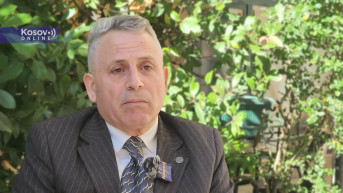
The draft law on assessing discrimination in the “Presevo Valley,” adopted by the Foreign Affairs Committee of the U.S. House of Representatives, is good news not only for Albanians living in that part of Serbia but for Albanians worldwide, says analyst and journalist at Radio Television of Albania, Roland Çafoku. He adds that the move undoubtedly constitutes pressure on Serbia and assesses it as “only the beginning.”
“This is not only good news for Albanians in the ‘Presevo Valley’; it is good news for Albanians everywhere. What we described as indifference by the United States and the administration of Donald Trump toward Albanians has, in fact, proven not to be the case. The United States is portraying Serbia as a country that has problems not only with its neighbor, Kosovo, but also within its own borders, with Albanians at the center of those problems. Thus, Serbia’s relationship with Albanians in general, with Kosovo as a state, and with Albanians in the ‘Presevo Valley’ has become an important issue in the U.S. Senate,” Çafoku told Kosovo Online.
He is convinced that, in this way, the United States and American diplomacy are sending a clear message to Serbia:
“Not only do you have a problem with a neighboring country and make demands toward that country that are unfounded, but you also continue to have major and serious problems within your own country, with Albanians in the ‘Presevo Valley.’”
It seems to him, he adds, that the United States wants to say: “How can you make demands when you do not respect human rights in Presevo?”
“And not only because there is just one MP from Presevo in the Serbian Parliament; we have also witnessed many actions that run counter to the human rights of national minorities living in the ‘Presevo Valley,’” Çafoku claims.
Viewed from a diplomatic perspective, he has no doubt that this amounts to pressure on Serbia.
“This is also a warning not to put forward demands that should not be made, while, on the other hand, violating the rights of Albanians in the ‘Presevo Valley.’ I believe this is only the beginning. We expect that, once the law is considered and adopted by the Senate, sanctions could follow, because we know how American diplomacy operates,” Çafoku said.
He also pointed to the historical significance of the United States for Albania.
“Although President Trump said that history may rhyme but does not repeat itself—history does repeat itself. From the founding of the first Albanian state in 1912, and then in 1913 when it was confirmed by the Great Powers, Albania was not aided and supported by European states. Of course, European states supported Kosovo’s independence, but the initiator and architect were the United States,” Çafoku recalled.
He therefore believes that if Albania has U.S. support at critical moments, it does not need the support the European Union can offer.
“It may sound like a radical thesis, but that is how it happened. If we look at history and speak in terms of historical facts, our guarantee has been the United States—such as in the case of Albania in 1919 and 1920 at the Peace Conference. America and President Woodrow Wilson wanted it and succeeded, and we preserved our independence. In 1999, and again in 2008, it was the will of the United States for Kosovo to be declared a state. Had this been left to the European Union and European powers, it is questionable whether that would have happened. Are there Albanians who believe that, had the United States not been decisive at those two moments, Albania would have a state or Kosovo would be a separate state? Very few think so,” Çafoku concluded.


0 comments