
Celic: Kosovo is governed by complete legal chaos, unlike anywhere else in the world
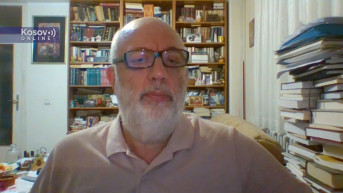
Associate Professor at the Faculty of Law in North Mitrovica, Dusko Celic, stated that the large number of appeals submitted to the Constitutional and Supreme Courts, as well as their subsequent rulings, demonstrate that “Kosovo is governed by complete legal chaos.”
“Unfortunately, we are witnessing proof that there is utter disorder in Pristina when it comes to the rule of law. To put it mildly, disorder—because they are incapable of respecting even the decisions of their own institutions,” Celic told Kosovo Online.
As an example, he cited the decision of the Supreme Court stating that MPs cannot simultaneously be both ministers and deputies, while in practice the opposite occurs.
“At one moment, they are MPs, and two hours later they are ministers. That is complete chaos, total disorder, which to me indicates—and I hope also to the political West—that what they have done with Kosovo is an entirely failed project. It is nothing like what they called a state. There is neither separation of powers nor rule of law in this legal provisional entity,” said Celic.
He emphasized that the same situation of “ignoring” is happening in the Kosovo Assembly, which does not respect the decisions of the Constitutional Court.
“This is clearly a case of the Assembly, which represents the legislative branch, ignoring another branch of government—the judiciary. In comparative law, such a thing has never been recorded. The decisions of any court, especially of the highest instances, are final and irrevocable; they must be respected by all entities, including the Assembly itself,” Celic argued.
As a possible explanation, he pointed to the intrusion of politics into the field of law.
“I see no other way to explain this than through the lens of politics. Through the lens of law, it cannot be explained. This does not exist anywhere else on the planet,” he said.
According to him, the aim is an attempt to prolong the deadline for constituting the Assembly and the government.
“I assume that perhaps in the autumn, when local elections are scheduled, new parliamentary elections might also be organized. I simply see no other rationale except a political one,” he specified.
He added that it is also likely a matter of the “balance of political forces” within the Constitutional Court—namely, the extent to which the legislative and executive branches influence individual judges.
Furthermore, he noted that even the judges themselves face an objective problem because Kosovo’s legislation and Constitution contain “legal gaps,” situations in which they are essentially asked to “create constitutional provisions.”
“I can to some extent understand the Constitutional Court’s restraint in this regard, because new decisions would in effect amount to creating constitutional provisions, which is never popular—especially, as we lawyers like to say, in the European continental legal system where courts are supposed to adjudicate based on norms, not create them. And yet here, in this ‘squaring of the circle,’ the Court is forced to fill legal gaps because the political majority in Pristina clearly wants to buy time by violating what is written and what they themselves adopted and called a constitution,” Celic concluded.


0 comments