
Celic: The Constitutional Court’s decision is the only logical one, but Albanians in Kosovo do not want a “Consociational Society”
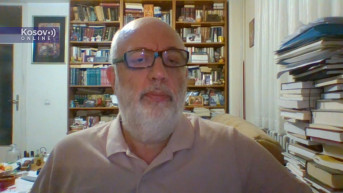
Associate Professor at the Faculty of Law in North Mitrovica, Duško Celic, stated for Kosovo Online that the acceptance of the appeal of the Serb List was the only “logical decision” of the Constitutional Court, but that the key problem is that the authorities in Pristina essentially do not want a “consociational society,” i.e. the participation of the Serbian community in all branches of government, even though this is the foundation of Kosovo’s constitution.
“It can reasonably be assumed that this decision upheld the request of the Serb List to suspend the deadline for the constitution of the Assembly in Pristina. In comparative law, there is this institute of a ‘suspension of the deadline,’ when the deadline physically continues to ‘run,’ but legally that time is not counted. I believe this decision relates precisely to that suspension, which can be important. I assume that the Court decided to halt the deadline because it assessed that the Assembly of Kosovo was not constituted. That, in my view, is the essence,” Celic explained.
He added that such a decision was the only logical one in legal terms and that the Constitutional Court could not have reached a different conclusion regarding the fact that the Kosovo Assembly did not elect all vice presidents.
Celic stressed that the key problem lies in the fact that the majority in the Kosovo parliament is openly violating the Constitution and legal norms.
“The intention is to constitute the Assembly without representatives of the Serbian people in its Presidency. In other words, such norms are being openly violated, most likely for political reasons,” Celic noted.
He explained that the reason lies in the fact that Kosovo’s society, according to both Martti Ahtisaari’s plan and the Constitution, was envisaged as a “consociational society.”
“In comparative law, such situations exist. Multiethnic, multinational societies are very often constituted as consociational, which means the mandatory participation of all nations in the organs of power, mandatory representation, and participation in decision-making,” Celic said.
He specified that several segments of the Kosovo Constitution address this matter.
“From mandatory representation in the Assembly Presidency, to mandatory participation in government, to mandatory involvement in judicial and prosecutorial authorities, the police, and also the full equality of the Serbian language in public use with the Albanian language. Naturally, none of this is being respected,” Celic warned.
He added that in practice, something entirely different is happening.
“This violence taking place in recent weeks and months, this saga over the constitution of the Assembly in Pristina, in fact shows us that the Albanian majority does not want Kosovo as a consociational society, but as a majority civic society. And in such a society, everyone formally has the same status, but in essence the rights of communities, especially those that are not in the majority—like the Serbs—are to a certain extent eliminated or erased,” Celic stated.
He concluded that the “realization” of this concept is reflected in the proclaimed constitution of the parliament despite the fact that no vice president from the Serbian community was elected.
“This represents the realization of the idea that Kosovo is not wanted as a consociational society and, what I fear is the essence, that this is intended to be established as a practice for the future,” Celic concluded.


0 comments