
Celic: The West will not insist on the formation of the CSM, Serbs should seek substantive autonomy
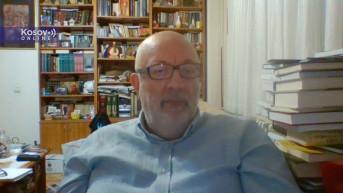
Assistant professor at the Faculty of Law, University of North Mitrovica, Dusko Celic, assesses that the EU and the US have not acted consistently in the Brussels negotiations from the start, which is why he does not expect them to be consistent in insisting on the formation of the Community of Serb Municipalities. He believes this presents an opportunity for Serbs in Kosovo to demand substantive autonomy.
"Unfortunately, the EU as a mediator, and even the US as shadow mediators, have not behaved consistently in these Brussels negotiations from the very beginning. Therefore, it was not to be believed that they would consistently insist that the Community of Serb Municipalities be a condition for any further progress in Kosovo's international integration," Celic stated for Kosovo Online.
He believes that the West has decided not to put too much pressure on Prime Minister Albin Kurti regarding the CSM issue because they feel he has already made enough "concessions."
"It is likely that Western circles consider Kurti to have made a sufficient concession by allowing some degree of passage and entry of Serbian goods into the territory of Kosovo and Metohija, although we see that he has done this only partially and has likely decided to avoid insisting on opening the Ibar bridge in northern Kosovska Mitrovica before the elections. I assume the political West has now decided not to put too much pressure on Kurti when it comes to the Community of Serb Municipalities," Celic said.
He says that the issue of the CSM has been surpassed for several reasons.
"The first reason is that, as it was negotiated, the CSM does not guarantee the protection of the collective rights of Serbs in Kosovo and Metohija because it lacks executive powers. The second reason is Kurti's behavior, consistently over the past two years, from which we can see that Kurti is not interested in any form of collective rights for Serbs. Therefore, this lack of insistence on the CSM might not necessarily be a bad thing for Serbs in Kosovo and Metohija," Celic explained.
This is an opportunity for Serbs to demand substantive autonomy, as he says.
"I think that based on their experience over the past two years, with brutal violations of their collective rights, even to the point of elements of apartheid, the Serbian people in Kosovo and Metohija should now raise the political bar and demand substantive autonomy," Celic emphasized.
He adds that such demands should not be made before the Kosovo elections because Kurti will continue his pressure and further undermine the remaining collective rights of Serbs.
"The likely next steps from Pristina will be a continuation of systematic violence, primarily aimed at suppressing the remaining collective rights of Serbs in Kosovo and Metohija, especially the right to education, from primary to university level, and the right to healthcare. These are the rights that remain under the system of the Republic of Serbia," Celic said.
He believes that the erosion of local self-government systems where Serbs are the majority will also continue.
"We now have the situation in Strpce, and in Gracanica, where measures are being implemented that, in a way, suffocate the collective rights of Serbs. These measures are directly against the minority rights conventions, including Article 16 of the European Convention on Minority Rights, which states that central authorities cannot take measures that affect the demographic situation in areas where the population is predominantly minority. They are doing this with these measures," warned the law professor.
In this context, Celic sees the halting of the construction of the University building in North Mitrovica, attempts to open the main bridge on the Ibar River, and the repurposing of properties and land without the legal consent and wishes of the majority Serbian population in the north.
"The government there is controlled by 3% of the population without consultations and directly against the will of the majority Serbian population. We can expect similar actions and measures until the elections, and I do not believe that Kurti will make any concessions except for partial trade access or something similar. In fact, I assume he will continue with populist measures that his extreme voter base may see as the right steps for gaining votes before the elections," Celic said.
On the other hand, he does not expect any more concrete steps from the EU or the US either. The EU is facing consolidation of its executive power, and the US has its presidential elections coming up.
"I do not expect them to be consistent in pressuring Albin Kurti, just as they haven’t been so far. I fear this situation is the most favorable for Pristina to continue trying to change the facts on the ground," Celic concluded.

0 comments