
Ciric: Kosovo has no right to nominate Prizren for the World Heritage List, it is not a UNESCO member
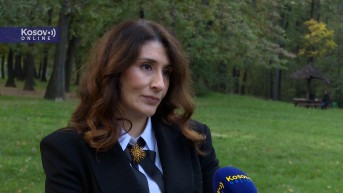
Serbia is the only state with the right to nominate any monument in Kosovo and Metohija for UNESCO protection, Jasmina S. Ciric, an art historian and assistant professor at the Faculty of Philology and Arts, University of Kragujevac, says, in response to Kosovo’s Prime Minister Albin Kurti’s announcement that the Kosovo government is preparing Prizren's historical center for nomination to UNESCO’s World Heritage List.
Ciric points to Articles 4 and 11 of the 1972 Convention on the Protection of Cultural Heritage, still in force today, which stipulates that only a UNESCO member state can demonstrate the historical continuity of a site in the nomination dossier for the World Heritage List.
In recent years, she notes, there has been a tendency to recognize broader areas and sacred environments as world heritage sites, not just individual monuments.
“Prizren as a city absolutely deserves such recognition, but there is another problem, which is – who has the right to nominate it. The so-called state of Kosovo, led by Prime Minister Albin Kurti, has no right to nominate any site, let alone Prizren’s urban area, primarily because it is not a UNESCO member, nor a member of the United Nations, and let’s not forget the violation of Resolution 1244. Despite the fact that Resolution 1244 is almost daily disregarded and violated, unfortunately for them and fortunately for us, it is still in effect,” Ciric emphasizes.
When asked what might be included in Pristina’s definition of Prizren’s historical center, Ciric speculates that it could be the city’s core.
"That would likely include the area around the Church of Our Lady of Ljevis, the surroundings of the Sinan Pasha Mosque, and let’s not overlook the immediate area around the Monastery of the Holy Archangels. As for the cultural layer to which this heritage belongs, it is entirely clear that we are talking about remnants of Serbian medieval heritage, since the entire city of Prizren was built on the remains of a medieval settlement. Historical data shows that the city also flourished during Ottoman rule. Across Kosovo and Metohija, there are well-preserved Ottoman-era clock towers, but these certainly do not belong to the medieval period and are not located within Prizren’s core urban zone," Ciric says.
She warns that we are witnessing serious cultural heritage manipulation almost daily.
“Every 15 to 20 days, we receive similar announcements. Whether it’s an act declaring a monument as ancient Albanian or Kosovar heritage, we are also seeing an increasing number of Albanian-language books published that claim these sites as Kosovar heritage, especially temples in Prizren, where the narrative is completely rewritten,” Ciric notes.
She also reminds that 20 years ago, Serbia nominated the Church of Our Lady of Ljevis for the World Heritage List. The site is now UNESCO-protected, although UNESCO adopted a designation that Serbia had not proposed.
“This is a monument of Serbian medieval heritage, but UNESCO accepted the term ‘medieval monuments in Kosovo,’ omitting the word ‘Metohija’ from the official name of our province,” Ciric explains.



0 comments