
Countryman: Confirmation of de-escalation is not in words but in actions of the Kosovo authorities
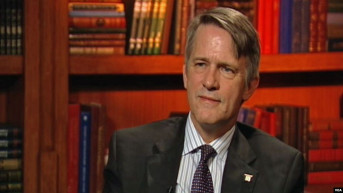
Retired American diplomat Thomas Countryman believes that the confirmation of de-escalation in the north of Kosovo is not in the words or terms of the agreement, but in the actions of the Kosovo authorities and the Kosovo Serb community, Voice of America reports.
Countryman, who served in the American embassy in Belgrade in the mid-1980s, says that it is necessary for the Government of Kosovo to facilitate the calming down of current tensions, which, he says, affect the dialogue on the normalization of relations between the two sides.
"If not a complete withdrawal, then at least by limiting access to members of the special police and moves that indicate an understanding of the need for political reconciliation and the establishment of legitimate leadership in the municipalities in the north of Kosovo," Countryman points out.
He points out that he does not agree with the claims, which can be heard from the ranks of the Kosovo authorities and a part of the public, that "the international community applies a kind of softer approach towards Serbia, in order to tear it away from the influence of Russia".
"Brussels and Washington are trying to solve open issues in that region. Such a thing implies the application of quiet, sometimes very loud, and unequivocal diplomacy. I understand such a perception of reality, but those who do it do not understand the reasons that could motivate such an approach," Countryman said.
Milica Andric Rakic, from the non-governmental organization New Social Initiative based in North Mitrovica, assures that it is necessary to do much more than what was agreed upon by the EU envoy Miroslav Lajcak and Kosovo's chief negotiator Besnik Bislimi.
"The fact that it has been agreed in substance does not solve the matter in the long term. From September, the crisis could return, because the agreement on, as they labeled it, the first steps towards de-escalation, is really not de-escalation. It is the transfer of police officers from municipalities, where they were less visible, to other places within those municipalities where their presence will be more noticeable, thus potentially creating a new neuralgic point where tensions between the police and citizens could arise. The situation could be partially settled, but not essentially," Andric Rakic says.
She is also convinced that the repeated elections in the municipalities in the north of Kosovo, with the guaranteed participation of the Serbian community, will not solve the situation if the members of the Kosovo Police do not completely withdraw from the north, because, as she states, they cause concern and discomfort for citizens of Serbian nationality.
"It is a step that is needed to prevent potentially bad decisions that could further raise tensions, such as the one to open the bridge that connects South and North Mitrovica, which the Serbian community is not ready for due to fear for their own security," Andric Rakic believes.



0 comments