
Velebit: The United States is increasingly highlighting the threats to the human and religious rights of Serbs in Kosovo and Metohija
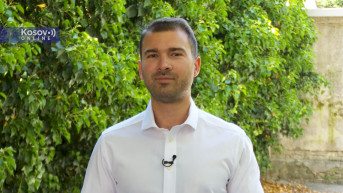
The establishment of a Strategic Dialogue between Serbia and the United States represents a historic step forward in bilateral relations and creates an opportunity for Belgrade to maintain a direct channel of communication with Washington, according to Vuk Velebit of the Pupin Initiative. He noted that while Washington is unlikely to fundamentally change its position on Kosovo, it is now speaking far more critically about Pristina’s unilateral actions.
Commenting on the significance of the newly established Strategic Dialogue, Velebit described it as a turning point in relations between the two countries.
“This truly is a historic week for Serbia–U.S. relations. For the first time in history, relations between Serbia and the United States have been elevated to the strategic level,” Velebit told RTS.
According to him, this framework will provide Belgrade with a permanent channel of communication with Washington.
“It will secure us a reserved seat in Washington and ensure that Serbia’s voice is always heard, while giving us a partner we can turn to regardless of which administration is in office,” Velebit said.
He also noted that, at the same time, the U.S. Department of State announced that its Strategic Dialogue with Pristina remains suspended until progress is made in fulfilling commitments toward the Serb community in Kosovo, describing this as a significant shift in Washington’s approach.
Velebit observed that Washington had previously focused more on Pristina, Sarajevo, and Podgorica.
“Today, Washington is looking more toward Belgrade because it understands that Belgrade is the key actor in the Western Balkans, just as Belgrade recognizes that Washington is also an important actor in the region,” he said.
Speaking about Kosovo, Velebit cautioned against expecting the United States to fundamentally alter its policy, while acknowledging what he sees as notable changes in its approach.
“We should not be under the illusion that America will completely change its position, but it is a fact that it now speaks much more critically about Pristina’s unilateral actions and increasingly points to the threats to the human and religious rights of Serbs in Kosovo and Metohija,” Velebit stated.
He added that the newly established communication mechanism would enable Serbia to respond more swiftly when problems affecting the Serbian community arise.
“Whenever our people face difficulties, we will have someone to call and will be in a stronger position than we were in the past. The Strategic Dialogue strengthens our position in Washington,” Velebit concluded.
Reflecting on the political significance of the new framework, Velebit said it is natural that Serbia and the United States do not share identical interests on every issue, but stressed the importance of having an institutional mechanism for dialogue.
“There will always be differences between the interests of Serbia and those of the United States, and that is entirely normal. Every country has differing interests in its relations with other states, especially when a smaller country such as Serbia cooperates with a global power like the United States. However, we should no longer be guided by defeatism or by events of the past. We should never forget what happened, but neither should we allow defeatism to prevent us from looking to the future,” Velebit said.
He emphasized that the Strategic Dialogue will enable Serbia to present its positions directly to the U.S. administration.
“The Strategic Dialogue will ensure that our voice is heard in Washington and that Serbs speak on their own behalf, rather than having others decide for us or define our position in Washington,” Velebit stressed.
According to his assessment, this political framework could also have a positive impact on economic cooperation.
“When American companies see that Serbia has a Strategic Dialogue with the United States, it will send a positive signal for new investments,” Velebit said.
Energy One of the Key Pillars of the Strategic Dialogue
The launch of the Serbia–U.S. Strategic Dialogue in the field of energy represents a continuation of cooperation initiated several years ago and could contribute to the development of gas infrastructure, energy diversification, and the implementation of major investment projects, former Assistant Minister of Energy Rasa Kojcic and financial markets expert Branislav Jorgic told RTS.
Kojcic recalled that energy cooperation between Serbia and the United States has been ongoing for years and that the newly signed memorandum builds upon that process.
“At this moment, it is becoming increasingly clear how essential energy stability and security are for every country. This creates an opportunity to further develop gas infrastructure and to launch the construction of the reversible pumped-storage hydropower plant ‘Djerdap 3’,” Kojcic said.
He explained that expanding gas interconnections and domestic infrastructure would enhance Serbia’s energy security while giving the country a new role on the regional energy map.
“This would further connect us and diversify both routes and sources of supply for our own needs. With such gas infrastructure, Serbia would also have the opportunity to become a transit country for natural gas, allowing us not only to meet domestic demand but also to derive additional value from these infrastructure projects,” Kojcic noted.
Commenting on the decision by the U.S. Treasury Department’s Office of Foreign Assets Control (OFAC) to extend the license allowing Serbia’s oil company NIS to continue operations until the end of July, Kojcic described the move as an encouraging signal.
He pointed out that licenses permitting negotiations on the transformation of the company's ownership structure had also been extended.
“I see this as a positive indication that the overall situation could be resolved in the coming period. At the global level, it is becoming increasingly evident how important it is to have a stable company capable of ensuring secure supplies of petroleum products for the domestic market,” Kojcic said.
He added that the current crises in the Middle East and disruptions to global oil supplies further underscore the importance of a resilient energy system.
Financial markets expert Branislav Jorgic assessed that energy security is one of the key prerequisites for attracting new investment.
“Energy provides stability for the state, the economy, and citizens. Every investor, whether foreign or domestic, values energy stability. Without it, we cannot become an attractive investment destination,” Jorgic said.
According to him, reliable energy supplies have a direct impact on industrial production, inflation, gross domestic product, the labour market, and employment.
Speaking about oil prices, Jorgic noted that renewed tensions in the Middle East have already triggered another increase in energy prices.
“Stable supplies of petroleum products are critically important for agriculture, industry, transport, and households. Any increase in prices directly affects the cost of goods and once again raises concerns about inflation,” Jorgic stated.
He added that, like many other countries, Serbia is seeking to mitigate the effects of global market disruptions, although such measures have their limits.
Explaining the importance of the proposed Djerdap 3 reversible pumped-storage hydropower plant, Kojcic said that such facilities make it possible to store electricity and respond quickly during periods of peak demand.
“When electricity prices are lower, typically at night, water is pumped into the upper reservoirs so that the plant is ready to generate electricity when demand increases,” Kojcic explained.
He emphasized that the project is a major infrastructure undertaking requiring feasibility studies, extensive technical documentation, and several years of construction.


comments