
Office for Kosovo and Metohija: Crimes in the Orahovac area marked the beginning of the ethnic cleansing of the Serbian people from Kosovo and Metohija
The Office for Kosovo and Metohija stated today that the crimes committed by members of the Kosovo Liberation Army (KLA) against Serbs and Roma in the Orahovac area in July 1998 will remain recorded in history as one of the bloodiest and most brutal attacks in Kosovo, calling for justice because, as the statement noted, “many of the perpetrators are still at large.”
According to the Office's statement, between 17 and 22 July 1998, approximately 100 Serbs from the municipality of Orahovac were abducted and taken captive. The remains of 46 of them were later recovered from mass graves, including 15 members of the Kostic family from the village of Retimlje.
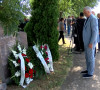
“The horrors endured by members of the Kostic family—the family that suffered the greatest losses in Kosovo and Metohija—and by other innocent Serbian civilians bear witness to the collapse of humanity and the ruthlessness of the chauvinistic and separatist ideology of the KLA. The memorial plaque in Velika Hoca today bears the names of 84 victims from the municipality of Orahovac who lost their lives between 1998 and 2000,” the statement reads.
The Office further stated:
“To this day, the KLA attack on Orahovac and the surrounding villages in the summer of 1998 continues to be portrayed by Albanian separatists in Kosovo and Metohija as part of a ‘glorious wartime epic,’ rather than as a bloody campaign in which innocent civilians were murdered and tortured solely because they belonged to a different ethnic or religious community. As we remember the murdered members of the Kostic family and the other victims of the criminal attack on Orahovac, we call for justice, as many of those responsible continue to live freely, while the ideologues of Albanian separatism in Kosovo and Metohija have never distanced themselves from these crimes.”
The statement adds that commemorating the victims from Orahovac and the surrounding villages serves to preserve the truth about “events that many today seek to consign to oblivion,” asserting that “the crimes committed in this part of Metohija marked the beginning of the ethnic cleansing of the Serbian people from Kosovo and Metohija.”
“The ideology of hatred that gave rise to the crimes in the Orahovac area remains alive to this day and constitutes the official ideology of part of the Albanian political establishment in Kosovo and Metohija. Viewed in this context, the pressures to which Serbs in Kosovo and Metohija have been subjected for years no longer appear as a series of isolated incidents, but rather as part of a much broader and more disturbing pattern of hatred and violence,” the statement concludes.
comments