
Dacic: Namibia's position on Kosovo is principled; it has always supported international law
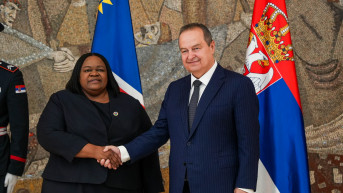
Namibia's position on Kosovo is principled, and Serbia can count on its support in the multilateral arena, just as Namibia can count on Serbia's support whenever needed in international forums, Serbian Deputy Prime Minister and Minister of the Interior Ivica Dacic said today during a meeting with Namibia's Minister of Home Affairs, Immigration, Safety, and Security, Lucia Iipumbu.
Dacic stated that Namibia is one of the countries that has consistently supported international law and has voted accordingly, in line with Serbia's expectations and the principles of the international legal order. He added that Namibia has not recognized Kosovo's unilateral declaration of independence.
He recalled that Namibia voted against Kosovo's admission to Interpol in both rounds of voting held in 2018 in Dubai.
At the Palace of Serbia, Dacic and Minister Iipumbu signed a Memorandum of Understanding between the two ministries concerning cooperation aimed at preventing serious crimes.
"I would like to express my great satisfaction over the visit of my colleague, Minister of Home Affairs, Immigration, Safety and Security Lucia Iipumbu to our country. I had the opportunity to speak with the police chief last year during the Interpol General Assembly, and I used that opportunity to invite the minister for an official visit," Dacic said, emphasizing that Namibia and Serbia are two exceptionally friendly countries.
He recalled that relations between Namibia and Serbia have been excellent for many years and date back not only to Namibia's formal declaration of independence in 1990, but also to the earlier period when the liberation movement SWAPO enjoyed the full support of Yugoslavia, including that of President Josip Broz Tito.
"Yugoslavia wholeheartedly supported Sam Nujoma, the first President of Namibia. Those relations date back many years and have remained unchanged to this day," Dacic said.
He noted that Serbia and Namibia share difficult historical experiences, including suffering caused by crimes committed by occupiers against their peoples throughout history, which, in his assessment, gives them greater grounds for mutual understanding than many other countries.
"Since I am currently serving as Minister of the Interior, Minister Iipumbu and I signed today a Memorandum of Understanding regarding cooperation between our two ministries, establishing cooperation aimed at preventing serious crimes, particularly in the fight against organized crime and international terrorism," Dacic said.
He specified that the cooperation covers the fight against organized crime, terrorism, terrorist financing, human trafficking, migrant smuggling, money laundering, economic crime, the illegal production and trafficking of narcotics, and cybercrime.
Dacic explained that the memorandum also provides for cooperation in professional development, specialized training at training centers, and other training programs for police officers and managers. He recalled that, during Tito's time and the period of former Yugoslavia, several hundred Namibian military officers received training in Yugoslavia.
"Our view is that this cooperation should continue," Dacic emphasized.
He pointed out that Serbia and Namibia maintain good but insufficiently developed relations and that efforts should be made to further strengthen them.
Noting that, during the visit to the Ministry of the Interior, the Namibian delegation will have the opportunity to learn about the work of the border police, special police units, and training programs at the Mitrovo Polje Training Center on Mount Goc, Dacic expressed hope that the good relations between the two countries would be accompanied by stronger cooperation not only in internal affairs but also in areas such as the economy, culture, and sports.
Minister Lucia Iipumbu thanked Serbia for its hospitality and said that she had held excellent discussions with Minister Dacic, which complemented the signing of the memorandum and contributed to strengthening ties between the two countries.
"We understood that we are seeking cooperation that will be mutually beneficial, continuing the ties initiated by our states and the relations established long ago. Today's signing represents an expectation of further cooperation between our two countries, our police forces, and our ministries. Serbia should support us and meet our needs in terms of training. We are also focusing on issues such as terrorism, cybercrime, and serious crimes such as human trafficking and economic crime, which is increasing. We know that this memorandum will form part of coordinated action through which we will strengthen our capacities using various mechanisms," Iipumbu said.
Minister Iipumbu explained that the nature of the agreement and its implementation essentially mean protecting "our citizens at the regional and global level, applying laws that will ensure the security of Namibia and Serbia, as well as our international organizations."
"We must ensure that this memorandum remains in force, that our ties remain strong, and that the capacities referred to in this agreement continue to develop. I would like to thank you for your commitment to continuing cooperation beyond this memorandum.
We are brothers and sisters, as has been said, and our ties go back to the period before Namibia gained independence," Iipumbu concluded.
0 comments