
Dacic: The patriarch was banned from entering Kosovo, and they say that the rule of law has been established there
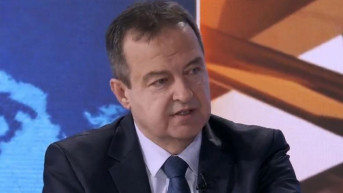
The Minister of Foreign Affairs of Serbia, Ivica Dacic, said that it was a great shame that Pristina had banned Patriarch Porfirije from entering Kosovo, adding that it is not about any citizen but about the head of the Serbian Orthodox Church, Happy reports.
"It is impossible that no one reacts. There should have been reactions yesterday. This is not about any citizen but about the head of the Serbian Orthodox Church. Then they say that the rule of law has been established in Kosovo and Metohija," Dacic said.
Minister Dacic added that Kosovo is the only place where a patriarch, a religious leader, can be prohibited from coming to the seat of his church in the Patriarchate of Pec.
"Individual politicians in Serbia praised Kurti, thus showing that they do not know about the opportunities that are happening to us and they worked against the interests of Serbia. Kurti started his political idea as a Marxist and a Leninist, today he is an extreme nationalist. He was with Demaqi and he took part in all these events in the 90s and then it is incorrect to talk about his positive political involvement. When we take all this into account, Kosovo and Metohija is the only place in Europe where a patriarch, a religious leader, can be banned from coming to his headquarters churches in the Patriarchate of Pec. It is only here that the family of a president can be on the arrest list and there is no reaction from the international community. Then we realize that there is no one who will look at us with the eyes of justice. We must be aware of all those organizational limitations", Dacic said.
Regarding the new provocation by the Albanian authorities, the Serbs' accusations that they fired from the barricades at KFOR, Minister Dacic said that this was a sequence of events aimed at causing incidents.
"Today, everyone has forgotten, as has the international community, how it all started, a referendum was not allowed, then elections, license plates, taxes... Constantly causing new incident situations and preventing us from moving forward, we are dealing with old fires. As long as Kurtia is there, there will be no peace. He is not inclined to reach a peaceful solution. He is constantly trying to avoid two things. One is to form the Community of Serb-majority Municipalities immediately, and the second is to avoid getting close to an agreement in which there is no recognition The goal of everything he does is the recognition of Kosovo," Dacic said.
He noted that Kosovo lacked a strategy for new recognitions and that Pristina itself recognized this.
"The last recognition of the so-called Kosovo was by Israel. Israel did not have to do it, but it only looked at its own interest. It is an indicator that the policy of mutual acceptance of their independence in the world is unsuccessful. They are using some numbers of countries that have recognized their independence, but that is not true. There are a total of 27 countries that have withdrawn the recognition of the so-called Kosovo. The Pristina authorities are trying to find a shortcut that would be like "Storm Operation". Their goal is to expel the Serbs and physically occupy the north and thus solve the Kosovo issue. That policy is visible from our side. We all clearly communicated what the red borders are. We will invest everything in peace, but we are sure that we will defend our people. What is important is to preserve the Serbian people in Kosovo and Metohija, if there are no people, then it is pointless to talk about all that. That is the bottom line and there are many risks. Kurti is the biggest threat to regional peace and security. If the international community is able to contain it, it will preserve peace. If it is encouraged and tolerated, the big question is to if it's going to end. Baerbok told me that there was no government in Kosovo that would agree to form the Community of Serb-majority Municipalities," said Dacic.
He pointed out that the most important thing for Kurti was to take a shortcut to an ethnically pure Kosovo.
"That time has passed and it will not come to that, and that is why there is great nervousness in Pristina," the minister said.
He said that the international community did not have answers to the questions asked, nor did it deal with the problem of how everything started in the north of Kosovo.
"Nobody comments on why the barricades were put up. They don't ask what is the cause of the barricades being put up! Theses are replaced and nobody wants to deal with those things," Dacic concluded.
comments