
Dencic: Costa’s key message is that the EU remains committed to enlargement, while the accession process will continue to be merit-based
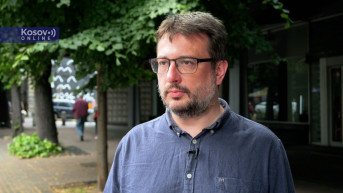
Nikola Dencic, Foreign Affairs Editor of Radio Belgrade’s First Programme, told Kosovo Online that during his visit to the Western Balkans, Antonio Costa demonstrated that the door to the European Union remains open, but not unconditionally, stressing that accession will continue to depend on reforms and merit. Regarding Kosovo and Serbia, Dencic emphasized that normalization remains one of the key conditions on the European path and noted that it is positive that Belgrade is not being required to recognize Kosovo’s independence.
“What we could expect, and what we indeed heard from the President of the European Council, is that the EU remains committed to enlargement. We heard both today in Belgrade and during his previous meetings that Costa repeatedly emphasized that the door remains open,” he said.
According to Dencic, it is particularly important for the European Union at this moment to work on integrating the Western Balkans, but he stressed that the door is not open without conditions.
“The message from Brussels remains that the accession process continues to be merit-based, that the necessary reforms must be implemented, and that without them there will be absolutely no progress,” Dencic said.
He recalled that Costa emphasized that normalization of relations between Kosovo and Serbia remains one of the fundamental conditions for progress on their European path.
“It is important that the term ‘normalization’ remains in use, and that Belgrade is not being asked, at least for the time being, to recognize Kosovo or establish relations on that basis. However, it is necessary to reach an agreement at a certain level. We hear the same from other international actors, regardless of whether they support Serbia’s position and territorial integrity or recognize Kosovo’s self-declared statehood,” he noted.
Dencic assessed Costa’s messages as positive and encouraging, while also pointing to growing fatigue among candidate countries caused by the length of the accession process.
“The wait has been too long, and the process has been prolonged for too long. Therefore, it is important that such messages continue to be repeated, and we can hope that at some point they will be translated into concrete action,” he said, adding that more specific measures could be discussed at the upcoming EU–Western Balkans Summit in Tivat.
According to him, discussions in Tivat could focus on new enlargement models, a new negotiation framework, or a new form of membership. Dencic also agreed with Antonio Costa’s assessment that the increasing frequency of EU–Western Balkans meetings is a positive development.
“In recent weeks, we have heard that a new enlargement concept proposed by the German Chancellor is being seriously considered, despite criticism both within Germany and from certain European leaders. For now, it remains on the table. We may not be talking about full membership, and the process could take a different form, but our countries would nevertheless become integrated,” he said.
He noted, however, that he does not expect this to be the main topic of the summit, but rather anticipates concrete solutions on other issues, including the abolition of roaming charges.
“There will certainly be discussions about the future and the modalities of future enlargement, but I believe that final decisions will have to wait for a future summit of European leaders. Those decisions will most likely be made in Brussels when the most important leaders gather in one place,” Dencic added.
Speaking about the messages Antonio Costa conveyed to Kosovo officials, Dencic said that Costa emphasized the need to adjust political rhetoric.
“There is no dispute that elections were held and that there was a winner, but the fact remains that the EU certainly could not have been satisfied with what has been happening for more than a year now. The political crisis is indeed significant,” Dencic said.
He pointed out that Kosovo still does not have candidate-country status, but assessed that if the objective is to advance on the European path, the political leadership in Pristina should revise certain positions and align them more closely with European standards.

0 comments