
Directors of primary schools in the north: The CBK regulation hindered regular classes
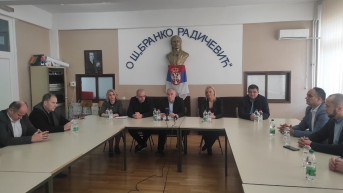
The directors of primary schools in northern Kosovo held a meeting to discuss the recent situation in educational institutions following the decision of the Central Bank of Kosovo to abolish the dinar on February 1st.
The President of the Primary School Association, Milorad Jovanovic, stated that the situation was alarming and that normal operation and functioning had been hindered, noting that this decision would primarily affect hygiene, food, and heating in these institutions.
After the meeting, Jovanovic emphasized that the situation was alarming because Pristina's unilateral decision to abolish dinar payments had directly led to problems that hindered the smooth operation of schools.
"The public procurement system is not functioning due to reduced inflow of dinars, and suppliers are unwilling to deliver goods. This leads to a significant risk of epidemics in schools because there are no funds for maintaining hygiene, disinfection, and pest control in school premises, which are difficult to implement," he said.
In the era of digitization and artificial intelligence, adds Jovanovic, this unreasonable regulation by institutions in Pristina is regressive because they cannot even provide chalk and sponges. He emphasizes that these measures have caused major problems in the operation of schools.
He recalls that in the past years, the distribution of textbooks in Kosovo, provided by the relevant ministry in Serbia and the Office for Kosovo and Metohija, has been prohibited.
"This school year, we had to compel parents to go to Raska or Novi Pazar, incurring additional expenses, to collect textbooks because this was prevented at the border," he recalls, adding that this primarily affects socioeconomically vulnerable families.
Jovanovic emphasized that it was not just about children of Serbian nationality; schools in the north also enrolled other minorities - Bosniaks, Roma people, Egyptians, and others.
"Is this a story to prevent these children from attending regular classes, which are a constitutionally guaranteed category? Probably that's their goal," he concludes.
He points out that they encounter many other problems, such as heating fuel, and adds that they find themselves in a situation where schools remain cold when the heating season starts.
"Is the aim of these attempts to prevent these children from being in warm environments, making them freeze? Again, I say, probably that's the goal, to have children not in warm spaces and classrooms ready for uninterrupted work during winter."
He emphasizes that the abolition of the dinar directly affects the school's activities.
"According to the work plan of primary schools in Serbia, including in Kosovo and Metohija, we have mandatory field trips, proms, and excursions, all done through public procurement, and everything is paid in dinars. With fewer dinars available, parents cannot pay their installments, so the school faces problems and lawsuits," Jovanovic says.
One of the problems is also the student snacks that parents pay for, and now, he notes, parents are not in a position to pay for those snacks.
"The school then incurs debts to the suppliers, and we come to the point where these children's snacks at school need to be cut off. Probably that's the aim of all these measures being implemented unilaterally, without the consent of Serbia, the EU, and the broader international community," he emphasizes.
Gifted children who compete and represent their schools are also facing problems because with the abolition of the dinar, transportation, and accommodation cannot be provided for them.
Teachers and other staff in schools are also at risk because they cannot access their earned money and are forced to go to central Serbia.
"I make a public appeal to EU representatives and ambassadors of the Quint countries to invest maximum effort and, through their behavior and diplomatic activities, try to suspend this unreasonable decision and enable us to live and work normally in Kosovo and Metohija. Our schools are apolitical, and therefore, in solving all problems through peaceful dialogue, we expect all of them to make an effort and show goodwill to resolve this issue in the interest of our children," he stated.
Marta Popovic, the Director of the school for children with special needs "Kosovski Bozur," particularly emphasized that the lives of these children and their parents, which were already difficult and complicated, had been put in an extremely bad position by Pristina's decision.
"This unreasonable decision of Kosovo has complicated their lives. Parents don't know where the way out is and whether their children will have treatment tomorrow. This regulation has caused a significant problem," Popovic says.
She states that the supply of medical materials is also difficult, which is especially challenging for students from socially disadvantaged families. Additionally, they cannot access social benefits, which means they cannot afford to attend regular medical check-ups.
"Our work is made more difficult, but primarily, their lives are endangered. It often happens that parents have to split one treatment between their children because they cannot afford to acquire more. As a director, I am particularly concerned about hygiene, which must be at a high level due to the specific atmosphere in which we work, but we are not able to maintain it properly," she says.

comments