
Djurdjevic: The entry of Serbian goods into Kosovo through a single crossing is more a political than a security measure
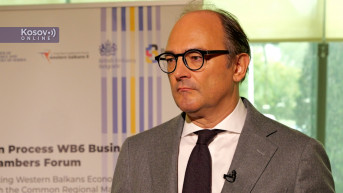
Nenad Djurdjevic, advisor to the President of the Serbian Chamber of Commerce, stated for Kosovo Online that the increase in transport costs is a direct consequence of the fact that for over a year, Serbian goods have been allowed to enter Kosovo only through a single crossing. This, he says, complicates and raises costs for everyone in the economic chain, including citizens. The Serbian Chamber of Commerce has repeatedly called for this situation to be changed.
Djurdjevic believes that there is essentially no reason for such a measure and that it is more political than security-related.
Due to the decision of the authorities in Pristina from October 7, 2024, allowing Serbian goods to enter only via Merdare, the damage, according to Djurdjevic, is significant, but still smaller than during the full blockade.
"The very fact that passage is allowed only through a single crossing complicates business for companies, drivers, and trucks, as long queues form at the entrance to Kosovo. The direct consequence of this is an increase in transport costs, as drivers do not want to operate at certain prices due to longer waiting times, fewer trips, and inadequate conditions at the crossing for long delays," Djurdjevic emphasizes.
He says it was suggested that the reason for implementing such a measure was the procurement of scanners to ensure better control of goods entering at all crossings, as a kind of anti-terrorism or security measure.
"However, until now, we have had communication at all crossings between our customs authorities and the Kosovo customs authorities without any problems. I think such a measure is more political, aimed at reducing the flow of goods from Serbia to Kosovo, rather than truly serving anti-terrorism purposes. It should also be noted that Kosovo Customs was established according to international principles by the international community when technical institutions began to be built in Kosovo. It is among the best-equipped services and very professional. So essentially, if we really look at the procedural aspects, there is no reason for such a measure," our interlocutor notes.
He stresses that this practice also violates the CEFTA agreement, as well as the spirit and ideas of the Berlin Process, which aim to enable better communication, integration, and the creation of a common market in the Western Balkans.
"There is an action plan adopted by the governments, including Kosovo and Serbia, which includes many measures to facilitate communication and border-crossing control. Taking all this into account, this one measure is a major step backward, not to mention its impact on trust between the two communities. The business community has trust, but this complicates and raises the cost of goods, including for Kosovo companies importing goods, raw materials from Serbia, grain, which they then process and release to the market. In essence, it complicates and increases costs for everyone in the economic chain, including citizens," Djurdjevic emphasizes.
He underlines that it is the governments, not the business communities, that are responsible for implementing the action plan.
"I appeal for the action plan within the Berlin Process to be implemented. The business communities are not obliged to implement it; the governments adopted it on behalf of their business communities and for their citizens. We will see if our appeal, and the international framework more broadly, helps to change the situation and open all crossings," Djurdjevic concludes.

0 comments