
Djuric: Kurti is not a favorite person in Washington
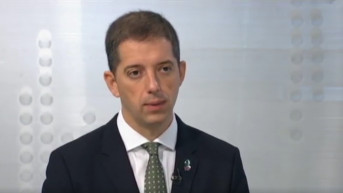
The Ambassador of Serbia to the United States of America, Marko Djuric, said tonight that the crisis in Kosovo had been de-escalated for now thanks to the skill of the team led by the President of Serbia, Aleksandar Vucic. However, as he says, Albin Kurti continues with provocations and pushes things in the direction of conflict, which is why it is extremely important that the Serbs remain united and dedicated to their goals.
"Behind us is a dangerous cycle of escalation, a crisis that, thanks to the skill of the team led by President Vucic, who showed courage and determination to stand behind the people at the barricades, has been dismantled, for now, because Kurti continues with provocations," Djuric told TV B92.
He pointed out that he was satisfied with what he saw in Raska, among other things, a strong Serbian leader who is not ready to accept blackmail and threats, nor to be afraid or shy away from them, but to stand behind the people on the barricades to the end, who are only looking for protection human rights - not to be persecuted, arrested, blackmailed, or expelled from their homes.
"I saw Serbian representatives from Kosovo and Metohija, who could have gone to many places, but they decided to defend their centuries-old doorstep, and I saw our armed forces in a drastically better condition than a few years ago," said Djuric.
That is why he points out that, if the same course is continued, which is a combination of thoughtful and wise diplomacy and an attempt to find a 'fair deal' for Serbia where such agreements can be made, with determination and determination to defend Serbian interests at all costs, "there are serious chances not only to save what we have, but also to win a step higher for our people in Kosovo and Metohija".
He pointed out that there were written guarantees from the EU and the US that there would be no arrests of people for participating in peaceful protests and barricades, a guarantee from KFOR that there would be no deployment of the Kosovo Security Forces to the north, and indications that in the coming days and weeks, talks on the formation of CSM would begin.
"Are the guarantees sufficient - they are not, is it better to have them than not to have them - it is better.I have no doubt that Kurti will continue with his radical agenda, and that is why it is important that in the coming weeks we are, and will be, in constant communication with international representatives to inform them about the situation on the ground," Djuric said.
When asked if communication with Washington was tense, he says that it has been tense in the minds of those in Pristina who wanted a conflict at any cost, when they realized that they did not have the support of Washington or Brussels to break the barricades with violent methods.
Communication with Washington, as he said, had been correct, even though the question of the status of Kosovo was viewed differently.
"We worked together to de-escalate the crisis, and they have shown that they do not support unilateral incursions and attempts to change things on the ground beyond dialogue and agreement at the table. And I thank them for that. I have no doubt that Kruti will continue his irresponsible actions, and Serbia is firmly determined to preserve peace and security," Djuric said.
When has been asked if it has been at least now clear in Washington who they are dealing with, Djuric says that Kurti is not a favorite person in Washington, nor are his politics and radical moves.
He reminded that Kurti had had a history with the USA that was not at all positive since 2015, when his deputies, on his order in the Assembly of Kosovo, physically had attacked the then US Ambassador Tracy Jacobson, which had been followed by a complete interruption of Self-Determination communication with the American administration.
"Kurti showed that he is very personal in everything he does, and with his personal bitterness in relations with Serbia, he managed to alienate a part of the people who were traditionally their supporters from the Albanian cause," said Djuric.
This, he says, "we should not look forward to, because Kurti directly, physically threatens our compatriots in Kosovo", but the contrast between the irresponsible policy of Kurti, and the responsible and future-oriented politics of Serbia and Aleksandar Vucic, especially in the economy, has never been bigger.
He added that he felt that the Serbs from Kosovo knew that the state of Serbia was behind them and that there was no going back, as well as that from the north of Kosovo, in a personal, family and material sense, they had no reason or intention to retreat, and that "if we continue to act harmoniously and uniquely, moderately and rationally, we can be above the level of play that Kurti tries to impose with violent moves".
When asked what it meant that models were being sought for the formation of the CSM and whether any concession was being sought from the Serbian side, Djuric said that it was very good that the USA was leading in the demands for the formation of the CSM. He stated that it was perhaps unusual that many European countries had not been more vocal in their demand for the Article of the Brussels Agreement to be implemented without delay for 10 years. This, he adds, is because they do not agree with the first six Articles, so they have objections when the application of the Article related to the police structure in the north of Kosovo, which must follow the ethnic structure, is requested.
There would be no joint statement by the USA and the EU, he points out, if the USA does not consider that there are legal reasons for the Serbs in the north of Kosovo that should be heard. He conveyed that from the conversation with the US envoy for the Balkans and other American officials, he had got the impression that they were looking at the issue in the context of broader relations in the region and that they would like to improve the relations of all actors in the Western Balkans, so from there the proposal for common license plates, personal documents came.
When it comes to the Brussels Agreement, Djuric says that in Washington they love, respect and value people who talk honestly, who want to see the agreement implemented. He pointed out that the role of the USA in solving regional issues was growing.
"Behavior towards Kosovo and Metohija they measure with ours to some extent. We are forced to follow a balance, and that our perception of how the US formulates policy towards us is not quite right. The USA formulates its policy rationally and based on its interests. They know that the Serbs are the key to the stability of the region and the entire geopolitical architecture of this part of the world," he added.
The future, he says, is in cooperation and even better connection.
"In 2023 right from the start, the year shows all the prerequisites to be very good for Serbian-American relations. A large delegation of American businessmen is expected to arrive in February," he said.
Also, he points out, it is planned to launch a strategic dialogue with the USA, which would open new channels of cooperation and dialogue, in order to discuss the agreement on avoiding double taxation, visa liberalization.
He also says that he expects the signing of a memorandum of understanding between the Ministry of Foreign Affairs of Serbia and US Ambassador Christopher Hill, which will enable the internship of Serbian diplomats in the US, which is symbolic, but in the long term, it represents an important step that expands the real capacities of cooperation.
comments