
Djuric responds to Rama: An attempt to change the subject and ignore the systematic destruction of Serbian property
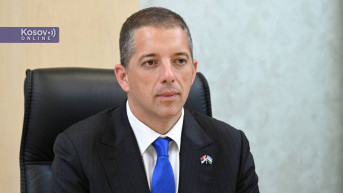
Serbian Foreign Minister Marko Djuric told Albanian Prime Minister Edi Rama, in response to his post about the possible diversion of the Ibar River, that Serbia's position on Kosovo is not folklore but is based on the Constitution, and that discussions about the Ibar were initiated only because the authorities in Pristina are using this summer to demolish Serbian homes, without due process, along the shores of Lake Gazivode and the Ibar River.
"A polished summertime attempt to change the subject. We are actually discussing the Ibar river for one reason alone: Albin Kurti’s government is using this summer to demolish Serbian homes, without due process, along the shores of Lake Gazivode and the Ibar, depriving people of their property, access and livelihoods through actions that are plainly ethnically discriminatory. That is the concrete reality. Everything else is secondary," Djuric wrote on the social media platform X.
He stressed that Albanian Prime Minister Edi Rama had written a long and elegant text about geography, history and European values, but had chosen not to mention the systematic destruction of Serbian property that is taking place right now.
"Since geography has been mentioned: the Ibar originates in Montenegro, flows through Serbia, including Kosovo and Metohija, and continues through the Danube basin toward the Black Sea. It never enters Albania and is not part of the Albanian river system. The Ibar is a transboundary watercourse, but Albania is not a riparian state. International water law does not grant riparian standing through ethnic affinity. Any legitimate concerns should be addressed by the parties directly concerned, through established mechanisms and on the basis of facts, not through public pronouncements from non-riparian capitals," Djuric stressed.
The head of Serbian diplomacy emphasized that "Serbia's position on Kosovo and Metohija is not folklore."
"It is grounded in our Constitution, international law and UN Security Council Resolution 1244. Albania may disagree, but it cannot unilaterally declare the issue settled. I welcome Prime Minister Rama’s recognition that the rights and security of the Serbian community matter. We now expect that recognition to be matched by practical support - beginning with a clear call to end the demolition of Serbian homes and similar actions by Kurti’s government, and to establish the Community of Serb Municipalities, an obligation that remains unfulfilled," Djuric wrote.
He also proposed to Rama and Albanian Foreign Minister Ferit Hoxha that, "although interesting, we should leave loudspeaker diplomacy behind."
"Our doors and telephone lines remain open. Our people seriously deserve fewer exchanges of statements and more concrete examples of what Serbs and Albanians can accomplish together. P.S. This whole exchange is totally unsurprising. Let’s surprise everyone positively by finding more ways to work around our differences," Djuric said.
Last night, Rama wrote that the Ibar is a transboundary water system, that Serbia has lost Kosovo, and that Tirana has no claims whatsoever to Serbian territory.
"Very interesting summer exchange between our foreign ministers. Although I expected an answer about the Ibar, somehow we moved from hydrology to international law, made the obligatory stop at 'Greater Albania', passed through 'Kosovo and Metohija', and finally arrived at the familiar museum of Serbian historical anxieties. There is one unusual part of the political folklore in Belgrade that seems immune to time: whenever Albania talks about Kosovo, 'Greater Albania' must immediately be invoked, as if repeating it might one day turn an old ghost into a relevant argument," Rama wrote on the social media platform X.
Earlier, Albanian Foreign Minister Ferit Hoxha expressed "deep concern" over Serbian President Aleksandar Vucic's statement regarding the possibility of changing the course of the Ibar River, saying that water "cannot be used as an instrument of political pressure or as a means of punishing another country or population."
Djuric reminded his counterpart that Albania has no grounds to interfere in the management of the Ibar and that Serbia makes its own decisions regarding its resources.

0 comments