
Djuric: Serbia offers a hand but does not accept violations of Resolution 1244 or the rights of Serbs in Kosovo
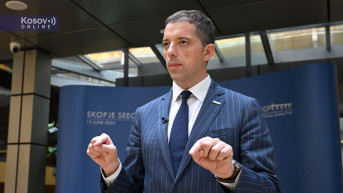
Serbia has sent a strong message at the Southeast European Cooperation Process (SEECP) Summit in Skopje, indicating its readiness to foster a new type of relationship in the region, while firmly opposing any violations of UN Security Council Resolution 1244 or the rights of Serbs in Kosovo, said Minister of Foreign Affairs Marko Djuric.
"Today was a good day for regional cooperation in Skopje. Serbia sends a strong message of an outstretched hand and openness to a new type of relationship in the region," Djuric told reporters.
He noted that the dynamic growth achieved in the past decade has been primarily based on the strength of a unified regional market.
"We need to build stronger infrastructure, and Serbia is leading in this area," Djuric added.
Djuric conveyed that the situation in Kosovo was discussed in Skopje, and he clearly pointed out the unacceptable nature of violating the UN Charter and UNSC Resolution 1244.
"I pointed out directly in front of the leaders of Southeast Europe the violation of the human rights of the Serbian population in Kosovo and Metohija by Pristina institutions, the systematic trampling of domestic and international acts, and the creation of an impossible climate for our people. Because the truth needs to be known. We should always talk about an outstretched hand and cooperation, but also point out that there are some problems," emphasized the Serbian Foreign Minister.
He noted that this did not sit well with the representatives of Pristina.
"But our job is to bring to light what the facts are, while they try to distort that picture with their narratives," Djuric pointed out.
The minister expressed satisfaction that Serbia's voice was strongly heard in Skopje today, showing that the country firmly upholds an international order based on the rule of law and democracy, both internally and regionally, and aims to help strengthen economic and social mobility, keeping young people in our region.
"Such summits are not just spaces for many empty talks, but also for concrete agreements on things like joint and unified tolls in our region or lanes for shorter waiting times at borders, and much more that President Aleksandar Vucic, among other things, initiated through the Open Balkan process," Djuric added.
Therefore, he said, at the Summit in Skopje, Serbia continued to implement President Vucic's vision for a united, cohesive region focused on economic growth, cooperation, but also a region where "things are called by their real names" and where problems are discussed honestly.
"We are not here to win a debate, but to solve problems," concluded Djuric.

0 comments