
Drecun: Kurti's statements show Albanians' unwillingness to coexist with Serbs
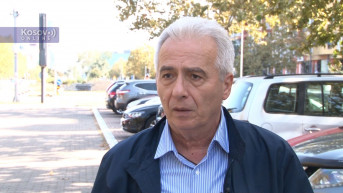
The behavior of Self-Determination and its leader Albin Kurti demonstrates the complete unwillingness of Albanians to coexist with Serbs and take responsibility for the pogrom, with a tendency towards a policy dominated by anti-Serb sentiments, the former President of the Committee for Kosovo and Metohija of the Serbian Assembly, Milovan Drecun said, adding that the difficult position of the Serbian community was being used by the international community and Pristina for political trading.
"Nothing else is happening but the spread of hatred towards the Serbs," Drecun emphasized in the morning program of RTS.
He pointed out that despite the confirmation that Serbs were not guilty of the drowning of Serbian boys, Kurti persisted in stereotypes that Serbs were responsible.
"When you look at the events related to Racak, the arrests of those who speak about it, you see the stereotype that Serbs are to blame for everything and that Albanians have not committed any crimes. That is worrying," Drecun added.
He noted that the consequences of the March Pogrom had not been eliminated, which had been just one link in the events intended to completely cleanse Kosovo of Serbs, preventing the Serbs from returning and continuing their lives from where they had been expelled.
He emphasized that the political background of what had happened was a very interesting question because the entire action of Albanian separatists had had a political aim.
"There was a preceding political narrative. The UN accepted the plan of the head of UNMIK, which envisaged 'standards before status.' The Albanians were seeking independence. UNMIK's plan stated that if they met the standards, then in 2005, there would be a review, and the status could be discussed. The Albanians were not satisfied with that and came up with the thesis 'status first, then standards.' To force the international community to switch to that narrative, violence was needed to intimidate the world," he pointed out.
He reminded that Veton Surroi had openly stated that the pogrom had been an uprising against international forces in Kosovo.
"A strong wave of violence was needed to show that they were ready to use force. After the pogrom, the international community began to act in accordance with Albanian demands, which led to the unilateral declaration of independence in 2008," Drecun explained.
He emphasized that the main organizer of the pogrom had been the People's Movement for Kosovo, the same Leninist-Marxist group that had formed its military wing, the KLA.
Drecun mentioned that the German public broadcaster ZDF aired a report stating that the German intelligence service BND had intercepted conversations of Kosovo leaders and had known about the intentions to carry out violence.
The fact that no one reacted, and the behavior of a part of KFOR, indicates, he believes, that there was a kind of tolerance towards violence against the Serbs.
Drecun says that, although the international community understands the difficult situation of the Serbian community well, it uses it for its political trading.
"The Serbs have been placed in the role of a collective hostage for the goals that the international community and Pristina want to achieve," he emphasized.
He said that the opening of the issue of Kosovo's possible membership in the Council of Europe had led Pristina to agree to new talks.
He added that Belgrade was being blackmailed with the difficult situation of the Serbs to force it into de facto recognition of Kosovo.
"Everything that is done to the Serbs has an extremely negative impact on the state of Serbia. Allowing Kosovo to take unilateral actions aims to exert pressure on Belgrade," Drecun emphasized.

comments