
Drecun: Without UNMIK, Resolution 1244 would lose some of its practical significance on the ground
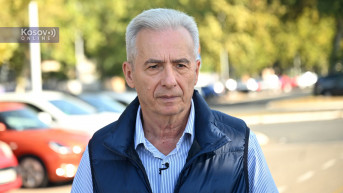
Former Chairman of the Serbian Parliament’s Committee on Defense and Internal Affairs Milovan Drecun said that UNMIK reports highlighted the problems facing the Serbian people in Kosovo, but that concrete measures capable of changing the situation on the ground were lacking.
Commenting on last night’s UN Security Council session, at which UNMIK’s semi-annual report was discussed, Drecun stressed that the submission of such reports was important because it confirmed the continued practical relevance of Resolution 1244, but said that the problems were largely merely being recorded.
Speaking to Newsmax Balkans, Drecun said that UNMIK had significantly fewer powers than in the past, but that it was important for the mission to continue to exist because, without it, Resolution 1244 would lose some of its practical significance on the ground.
“It is good that we have these reports. Leading Western countries have sought to reduce them to annual reports or eliminate them altogether. It is good that attention was drawn to Pristina’s attempt to completely obstruct the work of the Specialist Chambers, influence the judgments being handed down and institutionally deny the crimes committed by the terrorist KLA,” Drecun stressed.
Commenting on the criticism voiced at the session over Pristina’s attempts to influence the work of the Kosovo Specialist Chambers, Drecun said that the problem was that, in his view, Kosovo’s political representatives were unwilling to acknowledge crimes committed against Serbs, as well as against Albanians, for which he attributed responsibility to KLA members.
Drecun said that calls for reconciliation could not be realized unless there was a willingness to prosecute those responsible for crimes. He also argued that public discourse focused on the suffering of one side while neglecting Serbian victims.
“There can be no reconciliation if any side is unwilling to confront the past and prosecute those responsible for crimes. When it comes to the conduct of the Albanians and Pristina, it is perfectly clear that they view reconciliation in a one-sided manner. They want to condemn the Serbian state and our security forces for a nonexistent genocide against Albanians, while they are unwilling to acknowledge crimes committed against Serbs, as well as against Albanians themselves, by the KLA,” Drecun explained.
He said that reconciliation required the issue of victims and accountability to be addressed without a selective approach. Referring to the issue of missing persons, he noted that the report mentioned around 1,500 missing Serbs and Albanians, but criticized what he viewed as the shifting of responsibility for resolving their fate from one side to the other.
Speaking about the Belgrade-Pristina dialogue, Drecun said that there were no conditions for progress as long as, in his view, Serbia was expected to accept de facto recognition of Kosovo as a precondition for discussions on other issues.
According to him, the Franco-German proposal for the Agreement on the Path to Normalization had become an obstacle to progress because a demand that Serbia did not accept had been placed at the forefront, while the issue of the Community of Serb Municipalities was being pushed aside.
“The dialogue has been brought to a standstill by the Franco-German proposal for the Agreement on the Path to Normalization. De facto recognition of the so-called Kosovo by Belgrade has been placed at the forefront. As long as this remains the case, and as long as the European Union pressures Serbia by incorporating that agreement into Chapter 35 as a mandatory condition, there will be no progress,” Drecun concluded.
He recalled that the establishment of the Community of Serb Municipalities had been agreed as far back as 2013 and criticized the fact that, in his view, Pristina had failed to implement the agreement, while international actors had not taken sufficiently concrete measures to change that.
He added that, in his opinion, leading Western countries and the European Union should respond more clearly to the failure to fulfill agreed obligations and exert pressure to ensure that the agreements were implemented.
Commenting on reports of increased tensions in Kosovo over the previous six months, Drecun said that the report recorded the developments but did not contain sufficiently strong messages about what the international community should do to change the situation.
According to him, merely listing cases illustrating the problems facing the Serbian community was not enough; concrete measures needed to follow.
Drecun welcomed the fact that the representatives of Russia and China had called at the UN Security Council session for support for and strengthening of UNMIK. According to him, such a position was consistent with their advocacy of respect for Resolution 1244.
He stressed that UNMIK’s significance could not be viewed separately from the presence of international forces in Kosovo, but criticized the manner in which KFOR, in his assessment, was responding to security challenges and the development of security structures in Pristina.


comments