
Drecun: Rapid arming of security structures in Pristina a challenge for Serbia

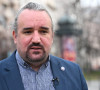
The President of the Defense and Internal Affairs Committee of the Serbian Parliament, Milovan Drecun, stated today that the accelerated arming of security structures in Pristina, the development of the military industry in Kosovo, and increasingly intensive cooperation with certain NATO member states represent a serious security and geopolitical challenge for Serbia, RTV reports.
Speaking to Tanjug, Drecun assessed that Pristina’s ultimate goal is long-term positioning for membership in the Alliance.
He said that it has not yet been precisely specified what the latest package of military assistance from the United States to Pristina, worth 14 million dollars, includes, but that, based on previous announcements and earlier agreements, it can be assumed that it concerns part of the previously agreed arms deliveries.
As he stated, based solely on the list of weapons that Pristina is procuring, in the segment of systems that have not yet been delivered by the United States but have already been agreed upon, there are Javelin anti-tank mobile systems, six mobile 105-millimeter vehicle-mounted howitzers, and four helicopters.
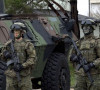
“The transformation of the so-called Kosovo Security Force has entered its third and final phase, and by 2028 this formation is expected to acquire full operational capabilities and be fully staffed to maximum capacity,” Drecun said.
He emphasized that this third phase is also nearing completion, and that the recruitment of members of those forces is being intensified, with the number of active personnel set to increase by around 500, alongside additional armament and intensive training.
According to him, the goal is for those forces to become fully interoperable with NATO forces, meaning organized, equipped, and trained according to Alliance standards.
Drecun also stated that Pristina is simultaneously working on the development of its own defense industry, recalling that 140 hectares of land have already been allocated in Djakovica for military production.
Speaking about the possibility of Kosovo’s membership in NATO, Drecun said that Pristina currently cannot become a member due to opposition from four member states that do not recognize Kosovo, but warned that there are attempts through political pressure and various other maneuvers to create room for such a scenario.
He assessed that it is particularly important for Serbia not to accept, under any circumstances, solutions that could be interpreted as “de facto” recognition of Kosovo.
Drecun also pointed to the strengthening of military cooperation between Croatia, Albania, and Pristina, stating that joint military activities and agreements further complicate the security situation in the region.
He particularly highlighted the role of Turkey, which he said has significant influence in the Balkans and participates in equipping the security forces in Pristina, RTV reports.
On the other hand, Drecun assessed that Serbia, despite this, must take care of its strategic interests and, despite disagreements, continue developing political and economic relations with Turkey as a regional power.
Speaking about Serbia’s position, he pointed out that Belgrade must continue strengthening its economy and defense capacities, while remaining committed to the policy of military neutrality.
He recalled that Serbia cooperates with NATO through the Partnership for Peace program and assessed that such a policy is important due to the country’s geopolitical position.
“Serbia is surrounded by NATO member states or countries cooperating with the Alliance and must conduct its policy rationally, while our priority is the preservation of peace, protection of state interests, and the peaceful resolution of the issue of Kosovo and Metohija,” Drecun said.
He added that Serbia does not want to be a factor of instability in the region and that its insistence on political dialogue represents its greatest contribution to preserving peace in this area.

0 comments