
Drecun: The situation is difficult; the war in Ukraine forced us into a geopolitical clearance
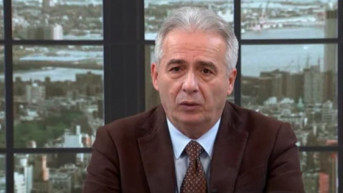
President of the Parliamentary Committee for Kosovo and Metohija, Milovan Drecun, said today that the war in Ukraine had forced Serbia into a geopolitical clearance in terms of solving the Kosovo issue, adding that it was up to Serbia to make progress in the dialogue with Pristina, RTV reports.
Commenting on yesterday's messages of the “big five” that were in Pristina and Belgrade, Drecun told Tanjug that no ultimatums had been set for Serbia, because when the great powers set certain expectations, they were talking about their interests and what they expected the other side to do, and here, unlike an ultimatum, they had room for negotiation.
"The situation is difficult, the war in Ukraine forced us into a geopolitical clearance and now the West is putting us against the wall to be shot," Drecun said.
Recalling the statements of American officials such as that Russian President Vladimir Putin had led Russia into the forest by attacking Ukraine and that it was time to speed up Serbia's path to the West, as well as that Russia had two leverages to influence Serbia - energy, which would be solved by diversification and Kosovo, Drecun says that the US wants to eliminate the leverage of Kosovo.
"That is the geopolitical framework in which they want to resolve the issue. It is not acceptable for them that Russia is in the areas under the influence of the Euro-Atlantic powers. By resolving Kosovo and Metohija, Serbia would be freed from Russian support and enabled to have the opportunity to lead an independent policy." Drecun stated.
When it comes to the Franco-German proposal for solving the Kosovo issue, Drecun says that three steps are planned and that the first is to achieve the normalization of relations without recognition.
As he points out, it is a basic agreement that would serve for discussion until a final solution is reached.
That step implied, as stated by Drecun, that the Serbs accepted certain sovereignty of Kosovo, and Pristina the autonomy of the Serbs and the Community of Serb-majority Municipalities.
"That would enable Kosovo to find itself on the Euro-Atlantic path. Their expectations are not that we recognize de jure Kosovo at this stage. At this stage, they want Serbia not to oppose Kosovo's membership in the European Council, the EU, international organizations, in Euro-Atlantic structures,“ Drecun says.
He adds that, if Serbia did not object, then the US and other leading Western powers could break the resistance of the five EU countries that do not recognize Kosovo's independence and the four NATO members to accept membership in those organizations.
Speaking about the Franco-German proposal, Drecun says that there is no open talk about mutual recognition and points to cynicism, that is, they talk about respect for the UN Charter, international law, respect for territorial integrity, and about the right of people to self-determination.
"We are asked to treat Kosovo as a state. They are not talking about the Community of Serb-majority Municipalities, but certain autonomy for the Serbs," Drecun says.
Commenting on the statement of the EU special envoy for dialogue between Belgrade and Pristina, Miroslav Lajcak, that he had expected more understanding from Prime Minister Kosovo, Albin Kurti for the EU's proposal to normalize relations with Belgrade, Drecun says that it seems that Kurti does not agree with the proposal.
"Kurti insists on mutual recognition and would like that to be reached immediately, and the US tactic is to proceed in three steps, to first have a basic agreement. The second thing that bothers him is the Community of Serb-majority Municipalities," Drecun says.
Drecun points out that the key issue now is the Community of Serb-majority Municipalities because, as he says, America knows that Belgrade will not negotiate further without the CSM, as well as that the legally elected representatives of the Serbs will not return to the institutions in Kosovo before that, and that is why, he adds, the American order is that to form the CSM, and then to give a deadline of six months to agree on a Franco-German agreement.
Drecun also states that Germany sides with Pristina and would like to completely eliminate the Brussels framework of the CSM, which is unacceptable for Belgrade.

0 comments