
Eight months of the Kosovo Government in a caretaker mandate, Belgium holds the record in Europe
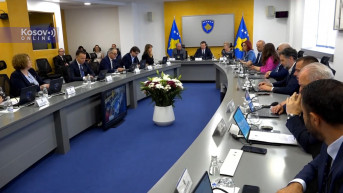
The Kurti 2 government has now entered its eighth month in a caretaker mandate, after its full four-year mandate expired on 23 March. It will remain in this status until 28 December, when new parliamentary elections will be held, as well as during the first weeks, possibly even months, of the new calendar year. This is not something unheard of in Europe. The record for the longest political crisis and the longest period without a fully mandated government is held by Belgium, with 652 days, from December 2018 to October 2020.
After the resignation of Prime Minister Charles Michel, which was accepted by the Belgian king on 21 December 2018, and after two caretaker prime ministers (Michel and Sophie Wilmes), the new prime minister, Alexander De Croo, took office on 1 October 2020, more than 20 months later.
However, the absence of a government with a full mandate was not a new experience for Belgians, as they went through a similar situation after the elections in June 2010, when it took 18 months for the new coalition government, led by Elio Di Rupo, to be sworn in on 6 December 2011.
Yves Leterme, who served as caretaker prime minister before Di Rupo, stated in the spring of 2011 that there were limits to what such a government could do.
“We need a real government. We do handle the most urgent issues and take care of the existential interests of the country. But everything else, structural reforms such as pension reform or immigration and asylum policy, cannot be resolved by a caretaker government,” Leterme said.
Citizens of Pristina yesterday had to manage without public transport, which was suspended due to a lack of funds for fuel and unpaid wages to Public Transportation workers, as a result of the political crisis following the February elections in Kosovo that left Pristina’s budget unresolved.
During Belgium’s 600 days without a full government, institutions such as public transport, schools, and healthcare functioned at full capacity.
“Trains were still running, and police officers were still working,” local media reported.
The Belgians’ neighbors, the Dutch, also experienced what it is like to be without a fully mandated government. Following the resignation of Mark Rutte’s third government and the elections held on 17 March 2021, it took ten months for the Rutte 4 government to take office on 10 January 2022.
The Pew Research Center in Washington published in January 2023 that since World War II, the Netherlands has had more caretaker governments than any other EU country, a total of 11.
In Luxembourg, according to their analyses, caretaker governments also tended to last a long time, and although the country had such governments only on two occasions, their average duration was a little over ten months.


0 comments