
Escobar: I hope that the barricades will be removed soon; if the government in Pristina does not form the CSM, we will work on it
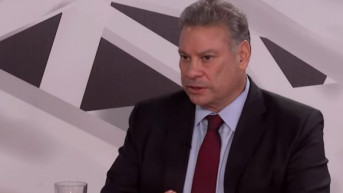
The US Special Envoy for the Western Balkans, Gabriel Escobar, said that he hoped that the barricades in the north of Kosovo would soon be removed, that the Serbs would return to Kosovo's institutions.
In an interview with N1, he said that the formation of the CSM was foreseen by the agreement between Serbia and Kosovo and that one party must not renounce it.
"If the government (of Kosovo) does not work on it (formation of the CSM), we will work on it, because that is our commitment. I will work with those people to make it a reality," Escobar said.
When asked if that was a warning to Kurti, Escobar says he has informed him.
"People know the possibilities of the CSM. North Mitrovica is on the border of four countries and in terms of business it could become a duty-free zone for the Open Balkans or something similar. The CSM will help all countries in the region. There are elements for optimism. We need a more sustainable solution. We want to make this solution more permanent," Escobar said.
Speaking about the roadblocks in the north, he said he had listened to the concerns of the people who put them up and that they were legitimate.
"We want to work with the Serbian community in the north of Kosovo, in order to fulfill their demands. There is a way to move forward, just as there is a reason why they put up the roadblocks and why they will remove them. In addition, Serbs should return to joint institutions, because they are needed there. I think that in the near future, that will happen," says Escobar.
According to him, the priority is to find a solution for the entire region, not just for Serbia and Kosovo.
As he said, he was aware of determination of the President of Serbia, Aleksandar Vucic, to try to work towards the removal of the barricades, but that there was no deadline for removal.
"I hope it will be in a few days," Escobar said.
Speaking about the Franco-German plan, Escobar says that the priority is to find a solution for the entire region, not only for Kosovo, and for that the US considers the Western Balkans to be an important part of the Euro-Atlantic community.
"When we talk about license plates or identity cards, they should be documents that for use everywhere. Instead of arguing about documents, let's talk about removing the need for those documents. There are real opportunities to learn lessons and find solutions for citizens," he said.
As he notes, the fact is that Belgrade has a great influence on the population in the north, and so it should, because they are not only citizens of Kosovo, but also of Serbia.
"They have a full right to the protection of the institutions of Kosovo and to participate in the political life of Serbia. We have to find some solution for that community. First of all, it should be up to the local Serbs, they should deal with this situation, they feel the loss of dialogue in the structures. They should have the main role. They should complain about their vulnerability. We want them to be in structures so that they can have influence from the inside. They are legitimate representatives of the community," said Escobar.
When asked if Vucic gave up on the request to KFOR to send the army, he says that this crisis should not be militarized.
"This is not the time to use the army, but diplomacy," he said and added that the statement that the US provides security guarantees to Kosovo was not a threat to Serbia, because the Serbs in Kosovo and Metohija also had those guarantees.
"We will not allow anyone from Kosovo to threaten Serbia or to threaten the stability of northern Kosovo," Escobar said.
He reiterated that initiatives like the Berlin Process and the Open Balkans could create greater opportunities for the region.
"This implies that Serbia and Kosovo are recognized, that they need a peaceful relationship. I don't know how that will be done. I think that all countries must recognize each other and strive for the EU. What kind of relations will exist is a question that opens up possibilities and that is what we want to achieve," Escobar concluded.

comments