
Experts: Threat of an administrative exodus of Serbs in Kosovo from March 15
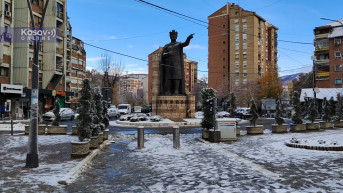
Serbs in Kosovo are calling March 15 “D-Day,” warning that the Law on Foreigners could raise the issue of residence, work, and the survival of thousands of people who function within the system of Serbian institutions. Appeals are coming from Brussels to avoid tensions, but without clear announcements of a postponement, RTS reports.
Assistant Professor Dusko Celic from the Faculty of Law of the University of Pristina temporarily seated in North Mitrovica warns that this institution is the most sensitive, because more than a third of its students are from Central Serbia and northern Montenegro, and almost half of its associates and teaching staff are also from Central Serbia, RTS reports.
The fact is, he adds, that none of them have Kosovo documents and that under this law they will be considered foreigners.
“They will not be allowed to stay longer than three days. In order to stay longer than three days, they must state a reason. If the reason is studying or working at our institution, at our faculty, then that institution must be accredited in Pristina, recognized in the quasi-legal system of Pristina, which, as we know, is not the case,” Celic states.
Examples of a professor and a student
Celic explains what this would look like in the specific case of a professor or a student who enters Kosovo and must stay longer than three days, for example because they teach in North Mitrovica at one of the faculties or attend classes in the second semester.
“You will be obliged to report to a local police station in Kosovska Mitrovica, to state the reason if you wish to stay longer than three days. You must state the reason, and that reason must, in the assessment of the Pristina police, be justified. One of the justified reasons is work, that is studying at an institution accredited in Pristina. If that institution is not accredited, you will receive a rejection and you will be expelled. You will be subject to a misdemeanor, and possibly even a criminal sanction,” Celic says.
Professor Bojan Bojanic from the Faculty of Law of the University of Pristina temporarily seated in North Mitrovica points out that there is nothing particularly unusual in the legal provisions compared to other laws on foreigners, but that the problem is that the consequences of applying this law are discriminatory toward all members of the Serbian community in Kosovo.
“They affect 3,000 students of the University of Pristina temporarily seated in Kosovska Mitrovica. These are students who live in Central Serbia and Montenegro and study in Kosovska Mitrovica. They do not have Kosovo documents and are automatically denied one of the basic human rights, which is the right to education. Almost half of the professors at the Pristina university do not permanently live with their families in the territory of the Autonomous Province of Kosovo and Metohija,” Bojanic states.
The case of returnees without documents
Bojanic also points to examples of people who live in Kosovo but cannot obtain a Pristina identity card.
“We have examples of returnees, for example in Gorazdevac, Osojane and other places, where five members of a family have documentation, and one who was born in Kraljevo, for example, or Nis, does not have the right and cannot obtain a Kosovo document, a Kosovo identity card, even though they live in such an environment, in an enclave,” the professor explains.
On the other hand, Bojanic adds that professors like himself or Duško Celic do not have those identity cards.
“I teach constitutional law of the Republic of Serbia, I teach students the Constitution of Serbia, I begin lectures with the preamble, of course, and then continue in order, all of those are norms on territorial integrity, sovereignty, and so on. It would be hypocritical for me to go tomorrow and obtain an identity card and thereby accept the citizenship of a state that I do not recognize. I would truly have a major problem with my conscience,” Bojanic says.
Example of a specialist doctor
Political scientist Ognjen Gogic pointed out that the health sector is affected, giving the example of a specialist doctor who needs to come for a scheduled procedure in Gracanica or Kosovska Mitrovica.
“And then at the administrative crossings they tell him – you cannot enter because you have exceeded the time you are allowed to stay in Kosovo without registering your residence,” Gogic notes.
Why now – the EU or a hidden agenda
Celic recalls that Pristina adopted the Law on Foreigners back in 2013, and for some reason has decided to implement it now.
Gogic observed that the implementation of the law coincides with the new European entry-exit system in the Schengen area, but also with the issue of taking control over the health and education systems.
Although Pristina has stated that in the accession process it has an obligation to keep records of which persons and in what capacity and for how long they stay in Kosovo, the problem, Gogic emphasizes, is that Serbian citizens are considered foreigners.
“We suspect that there is a hidden agenda here. It is very indicative that along with the issue of the Law on Foreigners, the issue of integrating the health and education systems was also opened, and these are topics that were opened in parallel. It is not by chance that this issue has come onto the agenda,” Gogic points out.
Professor Bojanic agrees that the implementation of the law is synchronized with the announcement of the integration of Serbian institutions, and that education and health care, which function within the system of the Republic of Serbia, are being targeted.
What next
Celic believes that it is not possible to integrate into an environment that does not want you and discriminates against you, recalling cases of professors who were killed or lynched in Kosovo.
Gogic does not see indications that the implementation of the Law on Foreigners can be postponed, but says that even that would not solve the problem, it would only buy time.
One should think about adjustments and measures that the authorities in Pristina can take to facilitate the implementation of the law for Serbs, Gogic believes, adding that it is possible through by-laws to adapt the law so that, for example, documents issued by Serbian educational and health institutions are recognized.
Appeal to the state of Serbia not to renounce its rights
“Now it is a matter for our diplomacy to point out that the implementation of this law is discriminatory, that it asymmetrically affects one group, and to then seek adjustments,” Gogic said.
Bojanic stated that last week they received a request from Pristina to vacate the premises of the Faculty of Technical Sciences.
“So that is one of the mechanisms, and we are precisely asking what will happen on March 12, when those 30 days expire. We need to receive an answer on how to behave and what to expect from our founder, from the Government. Because this is an issue that exceeds the power of the University. The University cannot resolve it,” Bojanic said.
Celic appeals to the Republic of Serbia, as the founder of the university, not to renounce its founding rights.
“I appeal to the state of Serbia not to stand behind, but in front of its people in Kosovo and Metohija,” Celic said.

0 comments