
Ferguson: The CSM should have been established long ago; Arms deliveries are not contrary to UN Security Council Resolution 1244
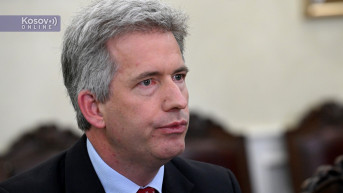
The Ambassador of the United Kingdom to Serbia, Edward Ferguson, stated that responsibility for the lack of dialogue between Belgrade and Pristina is probably shared, but that the international community must also assume its share of responsibility. He noted that it has been said many times in Kosovo that the 2013 Brussels Agreement has still not been fulfilled and that the Community of Serb-majority Municipalities has still not been established, although it should have happened many years ago, but he added that there are also obligations that Serbia must fulfil.
In an interview with Politika, Ferguson also said that, with regard to arms deliveries to Pristina, London does not see this as being contrary to UN Security Council Resolution 1244, because the fact has not been taken into account that the United Kingdom and more than 100 countries have now recognized Kosovo as a sovereign state that has the right to build its own security institutions.
Asked who is to blame for the lack of dialogue between Belgrade and Pristina, the ambassador said that responsibility is probably shared and that these are issues that have lasted for several decades and have not been resolved.
He also stated that the international community must take its share of responsibility.
“But fundamentally, when it comes to the dialogue between Serbia and Kosovo, I think we know how we can move toward normalized relations. The 2023 Ohrid Agreement set out a roadmap. We have not seen enough implementation. And implementation requires political will in both Belgrade and Pristina. We hope this will happen, because we believe stability is key,” Ferguson said.
Asked whether, when he says responsibility is shared, that also means it lies with Kosovo leaders and whether he is calling on them to be more responsible, he replied that responsibility is indeed shared and that it “falls” on leaders in both Serbia and Kosovo.
“In Kosovo, for example, we have said many times that the 2013 Brussels Agreement has still not been fulfilled. The Community of Serb-majority Municipalities has still not been established, and we believe this should have happened many years ago. We want this to happen. But there are also obligations that Serbia must fulfil,” Ferguson said.
Asked whether there is anything from that agreement that Serbia has not fulfilled, he replied in the affirmative, stating that there are issues related, for example, to not obstructing Kosovo’s membership in international organizations.
“We have seen constant efforts by Serbia to prevent membership in international organizations,” the ambassador said.
In response to the remark that this was not an obligation from the 2013 agreement, he said:
“The path is clear and defined by various agreements—whether it is the Brussels Agreement or the Ohrid Agreement. I think we have to look at them all together. These are all undertaken obligations.”
Asked who signed the Ohrid Agreement, he replied: “It was agreed. And an agreement is legally binding.”
Speaking about the development of cooperation between Serbia and the United Kingdom in the field of defence and security, he said that the primary duty of every government is to protect its citizens, which can be achieved through joint work.
“Second, partnerships in defence and security can help build trust between peoples and between institutions. Our armed forces have a long history of cooperation, dating back to the First World War. We are cooperating with the Government of Serbia to help design and build your future cybersecurity agency. The high-level delegation currently visiting London this week is led by the head of the Government IT Office, Mihailo Jovanović. Some of the conspiracy theories you may hear about the United Kingdom do not stand up to reality; what really matters is close operational partnership between our security agencies,” Ferguson said.
Responding to remarks regarding a gathering aboard a British warship of military representatives from Zagreb, Tirana, and Pristina “who had earlier concluded a pact directed against Serbia,” and to claims that Serbia had also been invited “even though it is clear that a Serbian officer cannot sit at the same table with uniformed Kosovo separatists,” Ferguson said that Croatia was not present at that event, because it was organized for six EU candidate countries from the Western Balkans, and added that it is Serbia’s right to decide which events it attends.
“So, Serbia, Bosnia and Herzegovina, North Macedonia, Albania, Kosovo, and Montenegro were invited, and the aim was to discuss regional cooperation. It is, of course, up to Serbia to decide, not for us to decide, which events Serbia will attend. But this was organized in the context of the United Kingdom hosting the Berlin Process last year, where Serbian representatives took part in more than 20 regional events in 10 different countries, together with representatives of Kosovo and other countries from the region. Serbia was invited but decided not to attend, which is Serbia’s right. However, we believe that regional security cooperation is important and we hope to find ways to include Serbia in discussions in the future,” the British ambassador pointed out.
Asked whether, given that Belgrade is closely monitoring arms deliveries to Pristina, in which London is also participating, contrary to UN Security Council Resolution 1244, this leads to greater stability and security in the region, he noted that London has a different view on this issue than Serbia, which is not surprising.
“We do not see this as being contrary to UN Security Council Resolution 1244, because the fact has not been taken into account that the United Kingdom and more than 100 countries have now recognized Kosovo as a sovereign state that has the right to build its own security institutions,” the ambassador said.
In response to the remark that more than 100 countries do not recognize Kosovo, while 80 or 90 do recognize it, which is a minority in the UN General Assembly, he said that he believes there are more than 100 countries that recognize it, although he would need to check, but that fundamentally his country’s position is that every country in the Western Balkans should have the ability to ensure its own stability and security.
“We believe that this is good for individual countries, but also for the stability of the region,” the ambassador added.
Asked whether Serbia can count on London’s support on its European path, he replied that the United Kingdom strongly supports Serbia’s strategic commitment to joining the EU.
“The United Kingdom decided, for its own reasons, to leave the EU, but we have a very different history, geography, and economic structure… We fully understand why Serbia wants to join the EU. I think this is a realistic and vital goal, because it is the best way for Serbia to realize its full potential. In order to get there, Serbia must implement the reforms expected of every EU candidate country—in terms of strengthening democratic institutions and the rule of law, media freedom, and the protection of journalists… We have supported these reforms for years, so we share the disappointment of our friends in the EU when we see Serbia take steps backward, as I believe happened with the judicial laws last week,” Ferguson said.


0 comments