
Gajic: Slovakia has shaken unity within NATO
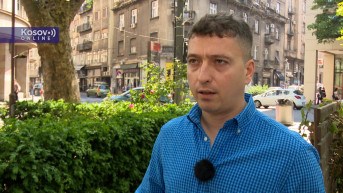
Slovakia's policy has shaken unity within NATO, but criticisms that the election of Peter Pellegrini as president will lead to abandoning the pro-Western course and turning towards Russia are nonsensical, Dr. Stevan Gajic, a research associate at the Institute for European Studies, tells Kosovo Online. He points out that Slovakia's goal is actually to avoid war devastation.
"Slovakia primarily wants to survive. The question is whether, as Americans call it, the theater of military operations will spread further into Europe, which is also one of the options. Two Central European countries, Hungary and now Slovakia, two members of the Visegrad Group, are against this, they want to avoid war devastation. In NATO countries, an atmosphere has been created that if you don't send people to Ukraine with weapons and everything else, then you are against peace and you are a 'Putin's agent.' In that sense, these accusations are completely nonsensical. Slovakia simply wants to be out of all that, to disconnect from it," Gajic says.
He explains that Slovakia has already sent a lot of military aid to Ukraine.
"Let's remember how many of their self-propelled howitzers were sent, they even sent equipment produced in the Soviet Union, 'MiG-29s,' 'S-300' systems, and who knows what else. So, in a sense, the Slovaks have already disarmed themselves quite a bit by sending most of their equipment. But politically, the more significant part is that Slovakia is breaking unity within NATO and strengthening Orban's position, who was isolated in the Visegrad Four," our interlocutor adds.
In his assessment, the goal of both Slovakia and Hungary is to gain geopolitical independence from both the East and the West.
"The Visegrad Group is based on two principles, one is based on connectivity and the protection of Christian values, and the other is geopolitics. In fact, this is an attempt by these Central European countries to gain geopolitical independence from both the East and the West. The problem is that the Poles have completely turned to their geopolitical stereotype of confrontation with the Russians, and in the meantime, they have lost this other pillar, which is the fight for values, considering that the Law and Justice Party lost the elections and that this Roman Catholic course failed with the geopolitical confrontation with Russia," Gajic says.
He mentions that Orban "understood that game" and did everything not to be involved in the war in Eastern Europe, and Slovakia is joining him now.
Regarding the non-recognition of Kosovo, Gajic believes that Slovakia's stance will not change because it is not in their interest, but he sees their distancing from NATO as a problem for Serbia.
"I don't like the military tie of Serbia to France, there's talk of producing grenades just like the ones missing in Ukraine and of comprehensive military cooperation, practically with a NATO country. The point is that NATO will try to compensate for the loss, and I think we are the ones targeted there," Gajic says.

0 comments